French Toast Recipe: Thick, Golden, and Ready in 25 Minutes
This french toast recipe is the one to keep. Thick slices of brioche soak in a rich vanilla cinnamon custard, then fry in butter until deeply golden and crisp at the edges with a soft, creamy middle. It takes about 25 minutes from start to finish, uses simple pantry ingredients, and turns an ordinary morning into something worth sitting down for.
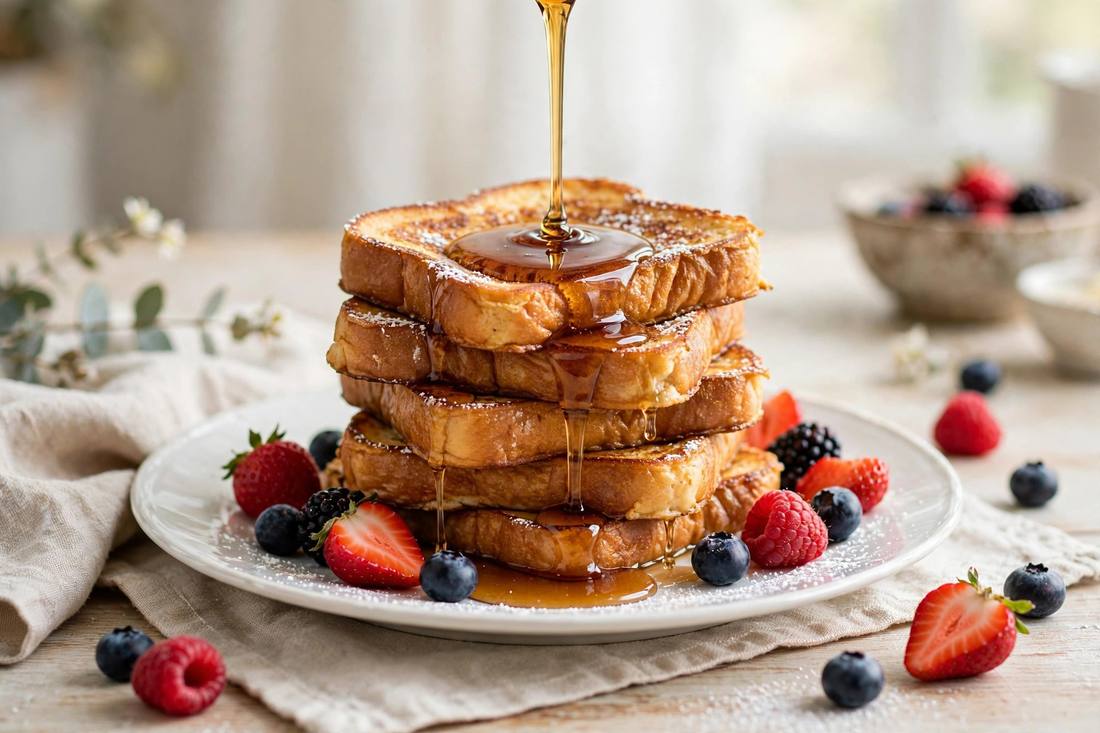
What sets this french toast recipe apart is balance. The custard ratio is tuned so the bread drinks up plenty of flavor without turning soggy, and the cooking method gives you an even, caramelized crust on every slice. It works for a quiet weekend breakfast for two or a full brunch spread for guests, and it scales up easily on a griddle. Follow the steps below and you will get diner quality results from your own stove.
Where This Dish Comes From
The roots of this french toast recipe stretch back much further than most breakfast dishes. The earliest known version appears in a Roman cookbook attributed to Apicius, compiled around the fourth or fifth century. That recipe, called aliter dulcia, instructed cooks to soak bread in milk, coat it in beaten egg, fry it, and serve it with honey. The technique is the same one at the heart of this french toast recipe, which means you are cooking a method that has survived nearly two thousand years of kitchens.
In medieval France the dish was known as pain perdu, or lost bread, because it rescued stale loaves that would otherwise go to waste. English and German cooks had their own versions, and by the nineteenth century the dish had crossed to America, where it picked up the name we use today. Early American cookbooks include fried bread toast recipes that match this one closely: egg, milk, bread, and a hot pan.
That long history explains why the formula feels so settled. Generations of cooks have already worked out the ratios and the pitfalls, so this french toast recipe does not need reinvention. It needs good ingredients, the right bread, and a little attention at the stove, and it rewards all three.
The Tradition Behind the Recipe
In American kitchens, this french toast recipe belongs to the weekend. It is the dish of slow Saturday mornings, of brunch tables with coffee refills and nowhere to be. Diners made it famous as a short order classic, cooked to order on a flat top griddle and served in tall stacks with melting butter. Home cooks adopted it as the centerpiece of holiday breakfasts and birthday mornings.
The tradition also carries a practical wisdom that this french toast recipe keeps. It was always a way to use bread that had gone slightly stale, which is why day old loaves work better than fresh ones. Nothing in the ingredient list was ever fancy or hard to find, because the dish came from home kitchens, not restaurant pantries. Eggs, milk, bread, butter, and a few flavorings are all it has ever needed.
Different households have their own small signatures, and this one leaves room for yours. Some families swear by extra cinnamon, others by a splash of cream in the custard. The base stays the same, and the variations are where personality shows. That flexibility is part of why the dish has lasted: it is a tradition you can make your own without breaking it.
The Ingredients and What Each One Does
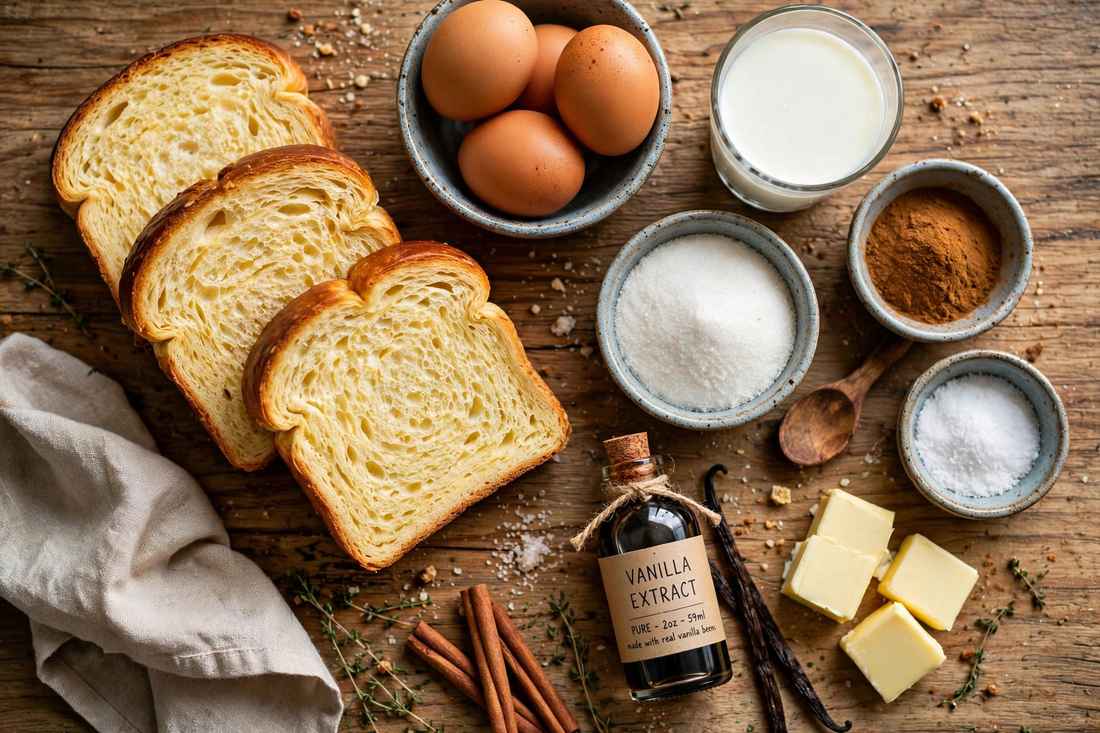
Every ingredient in this french toast recipe has a job, and understanding the roles helps you get consistent results. The bread is the foundation. Thick cut brioche or challah, sliced about an inch thick, gives the best texture because the rich, tight crumb absorbs custard evenly and fries to a deep gold. Day old bread works better than fresh since its drier structure drinks up the egg mixture without falling apart. Eight slices will serve four people generously.
The eggs do the structural work. Four large eggs whisked smooth provide the protein that sets into a creamy custard inside each slice as it cooks. They also give the crust its rich color. Use large eggs at room temperature if you can, since they blend into the milk more easily than cold ones.
Whole milk keeps the custard silky. One cup is the right amount for four eggs, a ratio that gives a rich interior without heaviness. A spoonful of granulated sugar, about two tablespoons, adds a gentle sweetness that helps the crust caramelize. Pure vanilla extract brings the familiar warm bakery note, and ground cinnamon adds the classic spice that most people associate with this french toast recipe. A quarter teaspoon of salt might seem small, but it sharpens every other flavor and keeps the custard from tasting flat.
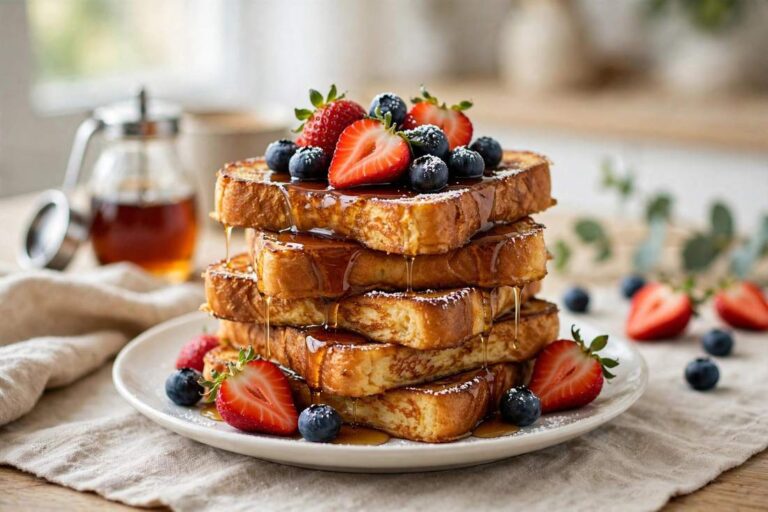
Butter is the cooking fat, and it matters. About three tablespoons, added in batches as you cook, browns the surface beautifully and adds a nutty richness that oil cannot match. For serving, warm maple syrup and fresh berries are the classic finish, though the slices are good enough to eat plain. If you love cozy comfort food beyond breakfast, our chicken noodle soup is another timeless classic worth learning for cold evenings.
How the Method Comes Together
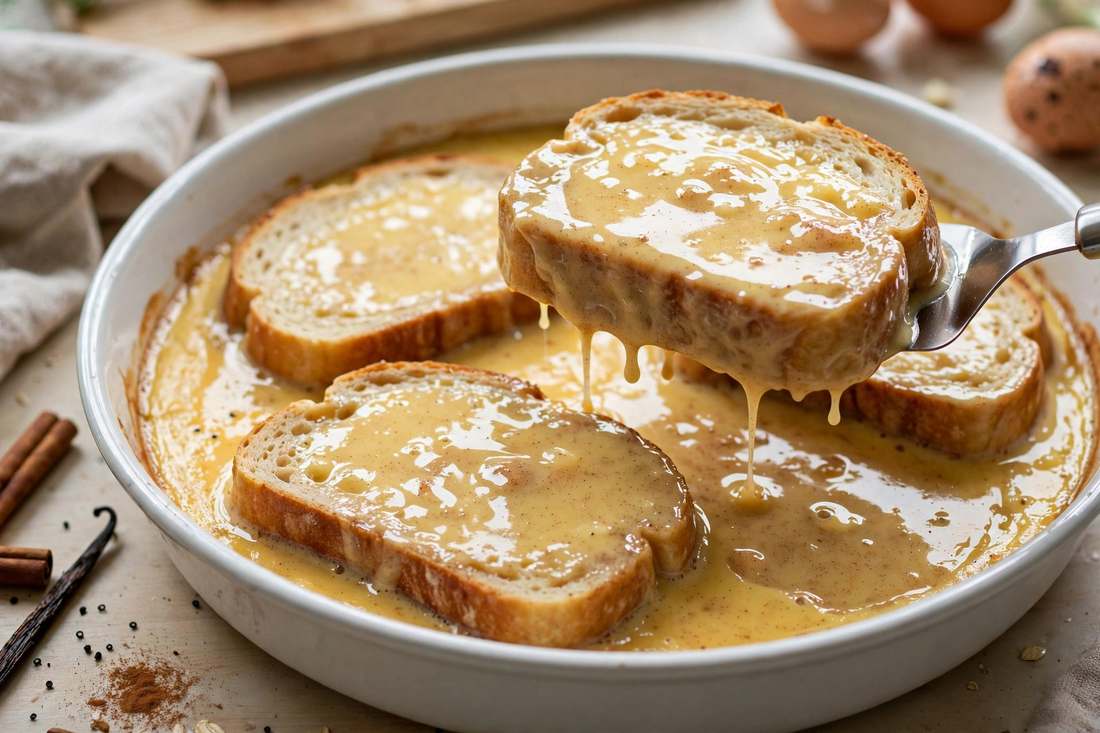
The method for this french toast recipe moves in a simple rhythm: whisk, soak, fry, and keep warm. Start by whisking the eggs, milk, sugar, vanilla, cinnamon, and salt in a shallow dish until the mixture is completely smooth with no streaks of egg white. A wide baking dish or pie plate works best because it lets you lay the slices flat. This step deserves care, since unmixed egg white fries into pale rubbery patches on the finished slices.
Next comes the soak, which is where texture is decided. Lay each slice of bread in the custard and let it rest briefly, then flip it. Dense, day old brioche can take up to a minute per side to absorb enough custard, while softer slices need only twenty to thirty seconds. You want each slice fully moistened and slightly heavy, but still firm enough to lift cleanly with a spatula. If a slice starts to sag, it has soaked too long.
Frying happens over medium heat in a heavy skillet with foaming butter. Lay in as many slices as fit without crowding, since crowded slices steam instead of browning. Each side needs two to three minutes to turn deep golden with slightly darker edges. The surface should look set and feel springy when pressed, never wet. Wipe the pan and add fresh butter between batches so browned milk solids do not turn bitter.
Thick slices sometimes finish browning before the center sets. When that happens, move them to a 200 degree oven for five to ten minutes. The gentle heat finishes the custard inside without darkening the crust further, and the oven doubles as a warming spot so every slice hits the table hot. Serve immediately with warm syrup and berries, and this french toast recipe is at its best within minutes of leaving the pan.
Read Also: Chicken Noodle Soup
Tips for the Best Results
Bread choice decides more than any other factor, so start there. Cut or buy slices at least three quarters of an inch thick, and let fresh bread dry out for a bit if you have time. Slightly stale bread is not a compromise here; it is the goal, because it absorbs custard like a sponge instead of dissolving.
Watch your heat with real attention. Medium heat is the sweet spot for this french toast recipe. Too hot and the outside burns while the inside stays wet; too cool and the slices turn pale and soggy. If your first slice browns in under two minutes, turn the burner down before the second batch.
Whisk the custard until it is truly uniform, and re whisk briefly between batches since cinnamon settles. Lift soaked slices with a wide spatula rather than tongs to avoid tearing. Warm your maple syrup before serving so it does not cool the plate on contact. And if you are cooking for a crowd, an electric griddle set around 350 degrees gives even heat across many slices at once. For another sweet treat the whole table will grab after brunch, our rice krispie treats are a simple crowd pleaser.
One more tip: taste your custard. A tiny drop on your fingertip tells you whether the salt, sugar, and cinnamon are balanced before any bread goes in. Adjusting at this stage takes seconds and saves the whole batch.
Nutritional Values
A serving of this french toast recipe, based on two slices with a light pour of syrup, brings a balanced mix of protein from the eggs, carbohydrates from the bread, and fat from the butter and milk, which is why it keeps you satisfied through the morning. The eggs and milk also contribute nutrients like calcium and B vitamins that come standard with these everyday ingredients.
Toppings shape the final numbers more than the base does. Fresh berries add fiber and natural sweetness with very little added sugar, while generous servings of maple syrup add a meaningful amount of sugar to the plate. Using whole grain bread in place of brioche adds fiber, and trimming the sugar in the custard barely changes the flavor when sweet toppings go on top. As with most breakfasts, the overall balance of the meal matters more than any single component.
Utensils You Will Need
You do not need special equipment for this french toast recipe, just a few kitchen basics in good working order. A heavy skillet or griddle provides the even heat that browns each slice uniformly; cast iron and heavy nonstick both work well. A wide, shallow dish such as a baking dish or pie plate gives the bread room to soak flat. A balloon whisk blends the custard smoothly, a wide spatula lifts the delicate soaked slices without tearing, and a sheet pan in a low oven keeps finished batches warm. A small saucepan is handy for warming the syrup before serving.
Read Also: Rice Krispie Treats
Frequently Asked Questions
Can I make this french toast recipe the night before?
You can prep parts of it ahead. Whisk the custard the night before and refrigerate it in a covered container, then give it a fresh whisk in the morning since the cinnamon settles. Soaking the bread overnight is not recommended because even sturdy slices turn mushy after hours in liquid. Cooked slices, however, refrigerate well for up to three days and reheat crisply in a 350 degree oven for about ten minutes.
What is the best bread for this french toast recipe?
Thick cut brioche or challah gives the richest result, with a tender crumb that soaks evenly and fries to a deep gold. Sourdough is a great choice if you prefer a slight tang against sweet toppings, and thick sliced country white works well too. Choose slices at least three quarters of an inch thick, and day old bread outperforms fresh because its drier structure absorbs custard without falling apart.
Why is my french toast soggy in the middle?
A wet center usually means the heat was too low or the slices were undercooked. Medium heat lets the crust brown at the same pace the custard sets inside. If the outside looks done but the middle feels soft or cool, finish the slices in a 200 degree oven for five to ten minutes. Also check your soak time: very soft bread needs only twenty to thirty seconds per side, and oversoaking leads to a mushy interior that no amount of frying fully fixes.
Can I use non dairy milk in this french toast recipe?
Yes, you can swap the whole milk for an equal amount of unsweetened oat milk or almond milk. The custard will be slightly less rich but still sets properly around the bread. Keep the egg ratio and seasonings the same. For extra richness without dairy, a splash of full fat coconut milk in place of part of the milk works nicely with the cinnamon.
How do I keep french toast warm for a crowd?
Heat your oven to 200 degrees and place a wire rack over a sheet pan inside. As each batch finishes, move the slices to the rack in a single layer. The low heat keeps them warm and the rack lets air circulate so the bottoms stay crisp. Do not stack the slices or cover them tightly with foil, since trapped steam softens the crust you worked to build.
Can I freeze leftover french toast?
Yes, it freezes very well. Cool the cooked slices completely, then layer them between sheets of parchment paper in a freezer bag and freeze for up to two months. Reheat from frozen in the toaster, a 350 degree oven, or an air fryer until hot and crisp. The texture comes back remarkably close to fresh, which makes it a good candidate for weekend batch cooking.
A Recipe Worth Repeating
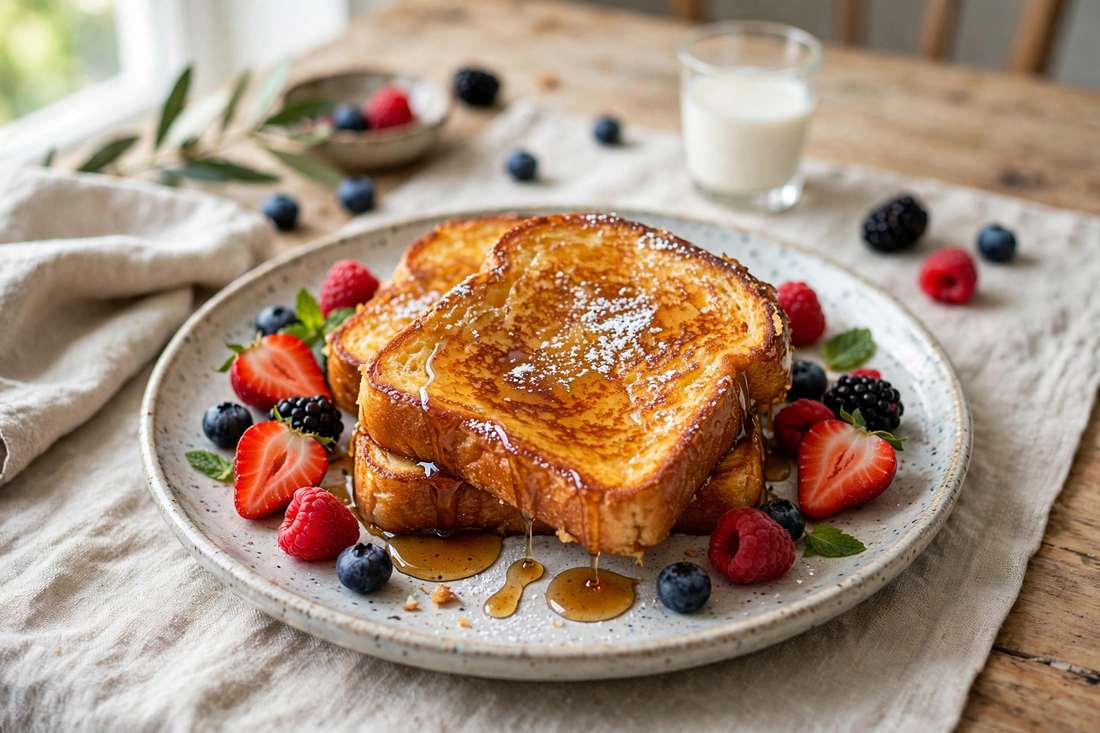
This french toast recipe earns a permanent spot in the breakfast rotation because it gets the fundamentals right. Good bread, a balanced custard, and patient medium heat produce slices that are crisp and golden outside with a creamy center, every single time. The ingredient list stays short, the method stays simple, and the result tastes like something from a favorite brunch spot.
Read Also: Mississippi Pot Roast
Make it once to learn the rhythm, then make it yours with your own toppings and twists. Whether it becomes your Saturday tradition or your go to for feeding overnight guests, this is a french toast recipe that will not let you down. Planning a full weekend menu around it? Our mississippi pot roast makes an effortless slow cooked Sunday dinner to follow the morning feast.
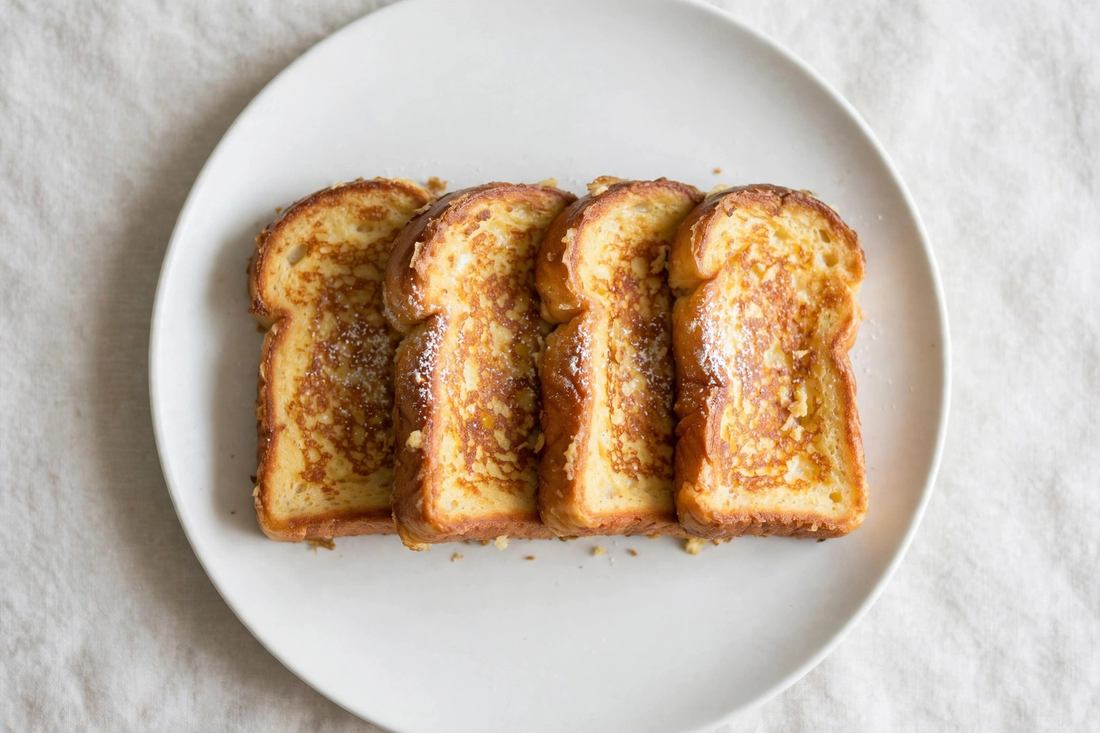
French Toast Recipe
Ingredients
Method
- Whisk the eggs, milk, sugar, vanilla, cinnamon, and salt in a wide shallow dish until completely smooth with no streaks of egg white remaining.
- Heat a heavy skillet over medium heat and melt 1 tablespoon of butter until foaming.
- Lay 2 to 3 bread slices in the custard, soak 20 to 60 seconds per side depending on bread density, and lift out with a wide spatula, letting excess drip off.
- Place the soaked slices in the hot pan without crowding and cook 2 to 3 minutes per side until deep golden brown and set.
- Transfer finished slices to a 200 degree oven on a wire rack set over a sheet pan to stay warm. Wipe the skillet, add fresh butter, and repeat with remaining slices.
- If thick slices brown outside but feel soft or cool in the center, leave them in the 200 degree oven 5 to 10 minutes until the custard is fully set.
- Serve hot with warm maple syrup and fresh berries. Cook until no liquid egg remains and slices feel springy when pressed.
2 Comments
Comments are closed.