French Toast: The Complete Guide to a Breakfast Classic
French toast is one of those rare dishes that feels humble and special at the same time. Thick slices of bread soak up a simple custard of egg and milk, then hit a hot buttered pan and turn crisp and golden on the outside while staying soft and creamy inside. It takes only minutes to make, yet it appears on brunch menus at fine restaurants and on busy family tables alike.
What most people never learn is that french toast is far older than the cafe culture its name suggests. Cooks have been reviving stale bread with egg and milk for nearly two thousand years, and nearly every food culture has its own version of the idea. That long history is part of why the dish works so reliably today. It has been shaped by countless kitchens, and the technique has been refined down to something simple that almost anyone can master.
This guide covers where the dish came from, what makes it taste so good, and how small choices in bread, custard, and cooking method shape the final plate. Whether you are making it for the first time or trying to fix a batch that turned out soggy, you will find clear answers here.
The Long History of French Toast
The story of french toast begins in ancient Rome. A cookbook attributed to the Roman gourmet Apicius, compiled around the fourth or fifth century, includes a recipe called aliter dulcia, meaning another sweet dish. It calls for soaking slices of bread in milk, dipping them in beaten egg, frying them in oil, and serving them with honey. The method is unmistakably the ancestor of the dish we know now, and it shows that the basic idea predates France by more than a thousand years.
By the Middle Ages, the dish had a French name: pain perdu, which means lost bread. The name points to its practical purpose. Bread went stale fast in an era without preservatives, and soaking it in egg and milk was a smart way to rescue loaves that would otherwise go to waste. Medieval English cookbooks include their own versions, such as payn purdyeu, and German cooks made a dish called arme Ritter, or poor knights, built on the same soaked and fried bread idea.
So how did it end up being called french toast? The exact path is fuzzy, and food historians point to a few competing stories. One popular tale credits Joseph French, an American innkeeper, who supposedly served fried bread toast in 1724 and named the dish after himself, with the apostrophe lost over time. Other accounts say the name simply reflected the French style of cooking that was fashionable in nineteenth century America, when the dish showed up in early American cookbooks. Neither story is fully proven, which is fitting for a dish this old. What is certain is that by the 1800s, french toast was a recognized American breakfast, and it has stayed one ever since.
Versions of the dish appear around the world. Spain has torrijas, thick slices soaked in milk or wine and fried, traditionally eaten during Lent and Easter. Hong Kong cafes serve a stuffed version filled with peanut butter and fried until deeply crisp, often finished with condensed milk. In India, a spiced version called Bombay toast adds chilies and turmeric to the custard. Each version follows the same logic as the original Roman recipe: take bread, enrich it, and fry it golden.
What Makes French Toast So Good
Great french toast works because of contrast. The outside of each slice fries in butter until it develops a thin, crisp crust with deep golden color. The inside stays soft, almost pudding like, because the bread has absorbed the egg custard before cooking. That mix of crisp edges and a creamy center is what keeps people coming back to the plate.
Flavor plays its part too. When egg proteins and milk sugars meet a hot pan, browning reactions create the toasty, caramel notes that make fried foods so appealing. Butter adds richness and helps the surface color evenly. A pinch of salt in the custard sharpens everything, while vanilla and cinnamon, the two most common additions, give the dish its familiar warm sweetness. None of these flavors are loud on their own, but together they make something deeply satisfying.
There is also a practical charm to the dish. It turns leftover or day old bread into something better than fresh bread could be, since drier bread soaks up custard without falling apart. It feeds a crowd cheaply, since the ingredient list is short and every item is a pantry staple. And it is forgiving in a way that many breakfast dishes are not. A slightly uneven soak or an extra minute in the pan rarely ruins the result, which makes it a friendly dish for beginner cooks.
Bread Choice: The Foundation of Great French Toast
If one decision matters more than any other, it is the bread. The ideal slice is thick, sturdy, and slightly dry. Thickness matters because a thin slice soaks through too fast and turns floppy, while a slice cut three quarters of an inch to a full inch thick can absorb plenty of custard and still hold its shape in the pan.
Brioche and challah are the two breads most often recommended, and for good reason. Both are enriched breads made with egg and butter, so they are already rich and tender before the custard ever touches them. Their tight but soft crumb drinks up the egg mixture evenly, and they fry to a deep, even gold. If you want the classic diner style french toast with a soft, almost creamy middle, either of these is the safest pick.
Sourdough offers a different experience and one worth trying. Its chewy crumb and mild tang stand up well to soaking, and the slight sourness balances the sweetness of syrup or fruit on top. Country style white loaves and Texas toast, the thick sliced bread sold for exactly this purpose, also work well. What you want to avoid is standard thin sandwich bread. It is too soft and too thin, and it tends to tear or turn to mush in the custard.
Day old bread beats fresh bread every time. As bread sits, it loses moisture and its structure firms up, which lets it absorb the custard like a sponge instead of dissolving into it. If your bread is fresh, you can dry the slices lightly in a low oven for a few minutes before soaking. That small step makes a noticeable difference in the final texture.
The Custard Ratio That Never Fails
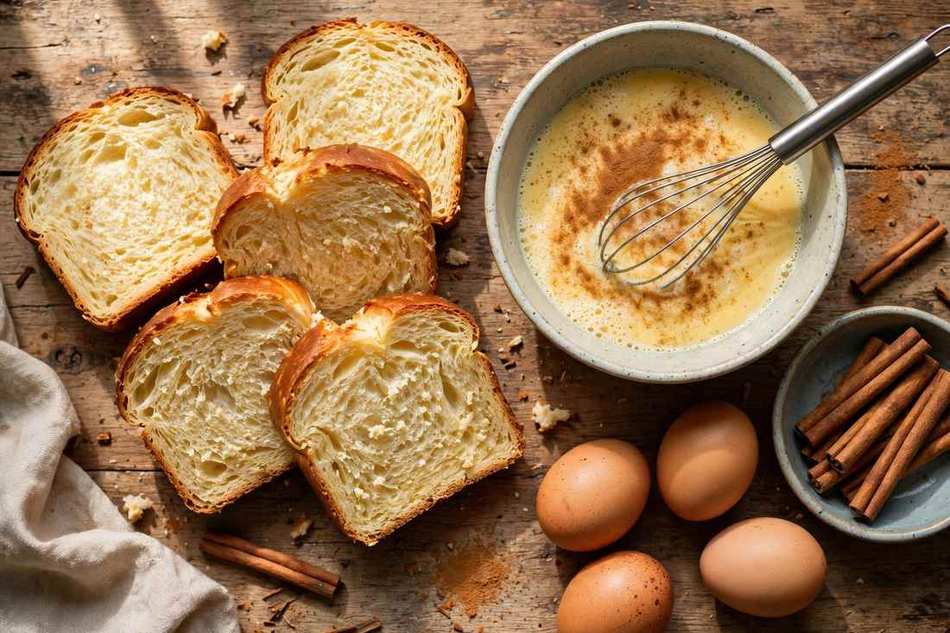
The custard is the second half of the equation, and the ratio is simpler than most people expect. A reliable starting point is one large egg for every quarter cup of milk, which scales neatly: four eggs and one cup of milk will coat about eight thick slices. That ratio gives a custard rich enough to set into a creamy interior without turning rubbery.
Milk choice changes the result in small but real ways. Whole milk is the standard and gives a balanced richness. Half and half or a splash of cream makes the interior denser and more custardy, closer to bread pudding. Low fat milk still works, but the result is a little less silky. Avoid skipping the dairy entirely unless you have a reason to, since the milk proteins help the custard set smoothly around the bread.
Seasoning the custard matters more than many recipes suggest. A pinch of salt is essential because it wakes up the eggy richness and keeps the dish from tasting flat. Vanilla extract, about a teaspoon per four eggs, adds the familiar bakery warmth. Ground cinnamon is optional but classic, and it should be whisked in thoroughly so it does not clump in spots. Whisk the mixture until no streaks of egg white remain. Unmixed white leaves pale rubbery patches on the finished slices, which is one of the most common small flaws in homemade batches.
Soak time depends on the bread. Dense, day old brioche can take a full minute per side to drink up enough custard. Softer or fresher slices need only twenty to thirty seconds per side. The goal is saturation without collapse. The slice should feel heavy and fully moistened but still hold together when you lift it. If it starts to sag or tear, it has soaked too long.
Cooking Method: Heat, Fat, and Timing
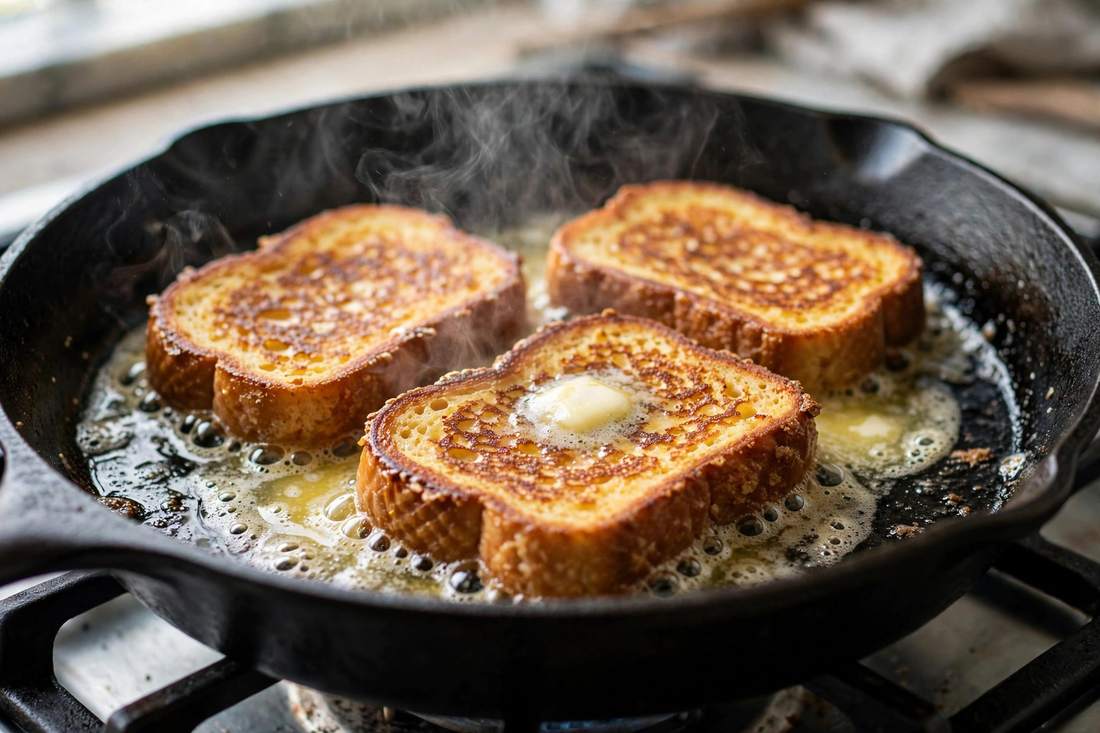
A heavy skillet or griddle over medium heat is the classic setup for the dish. Butter is the traditional cooking fat, and it earns its place: it browns the surface beautifully and adds flavor that oil alone cannot match. Add enough to coat the pan, and let it foam and settle before the first slice goes in. If the butter browns too fast or smells sharp, the heat is too high.
Lay the soaked slices in the pan without crowding them. Crowding drops the pan temperature and steams the bread instead of browning it, so cook in batches if needed. Two to three minutes per side is typical. You are looking for a deep, even gold with slightly darker edges, and the surface should feel set and springy when pressed lightly, not wet or jiggly.
Thick slices sometimes need a finishing step. If the outside is perfectly browned but the center still feels cool or wet, move the slices to a low oven, around 200 degrees Fahrenheit, for five to ten minutes. This gentle heat finishes the custard inside without burning the crust. It is also the best way to keep early batches warm while you cook the rest, so the whole stack hits the table hot.
An electric griddle set to medium, roughly 350 degrees Fahrenheit, gives very even results for big batches and is a favorite for weekend cooking. Whatever you use, wipe out browned butter solids between batches and add fresh butter. Those darkened bits turn bitter and can spot the next slices with off flavors.
Sweet Variations Worth Trying
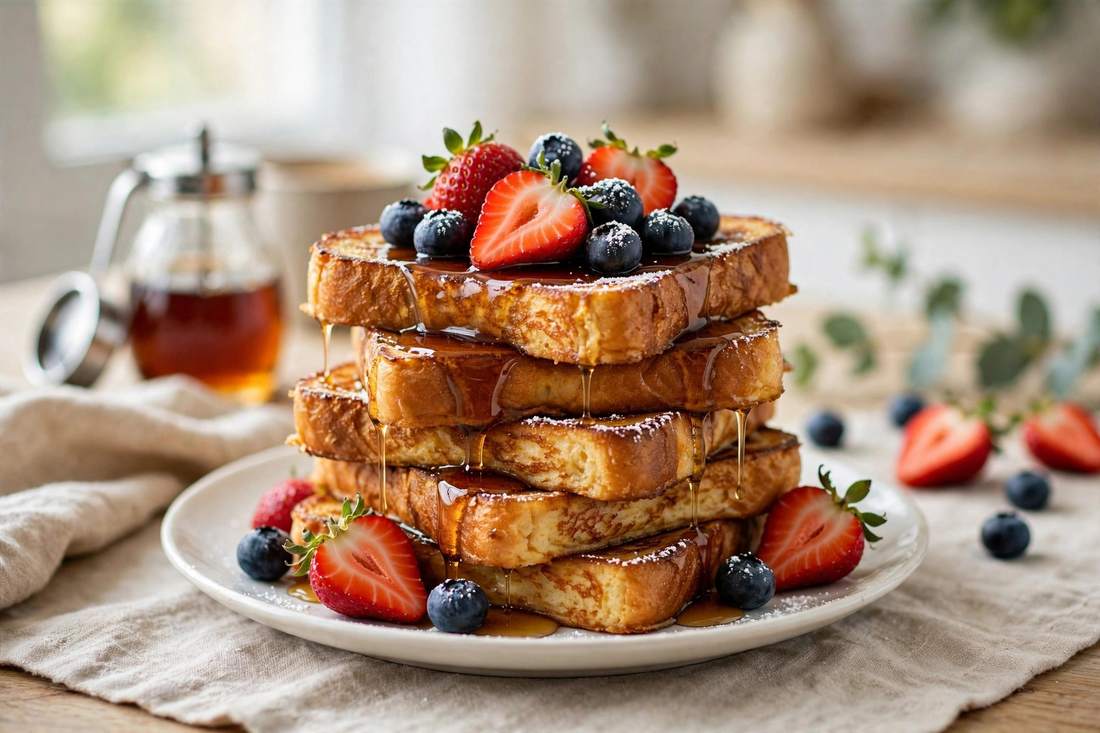
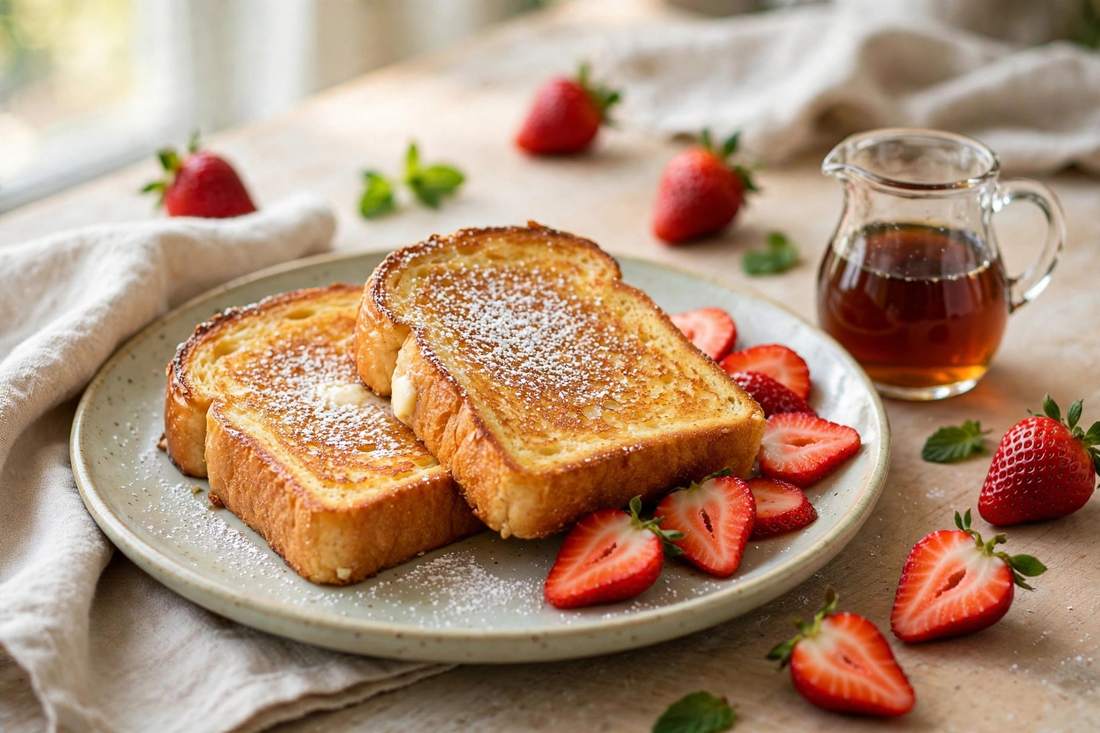
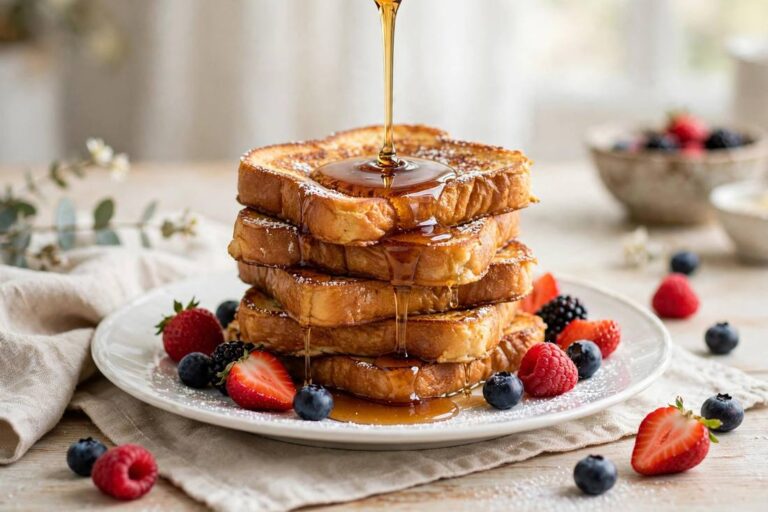
The classic sweet version needs little explanation: a stack of golden slices, warm maple syrup, and a handful of berries. But the dish takes well to upgrades. Stuffed versions spread cream cheese or sweetened ricotta between two thinner slices before soaking, creating a molten center that feels like dessert. A dusting of powdered sugar and a spoonful of macerated strawberries turn a simple breakfast into something worthy of guests, and if you love berries in the morning, our strawberry cake with fresh berry filling carries that same bright fruit flavor into dessert.
Fruit compotes are another easy win. Blueberries, peaches, or apples simmered briefly with a spoonful of sugar and a squeeze of lemon make a warm topping that beats plain syrup. For a richer twist, a thin spread of peanut butter on each hot slice melts into a salty sweet layer that kids especially love, and that same flavor shows up in our peanut butter cookies if you want it in baked form.
Toppings from other cuisines work too. The Hong Kong style version layers peanut butter between slices and fries the whole stack until crisp, then finishes it with condensed milk. A drizzle of dulce de leche and a pinch of flaky salt gives a caramel forward version. Even a simple change of spice, cardamom instead of cinnamon or a little orange zest in the custard, can make the familiar dish feel new again.
Savory French Toast Deserves Attention
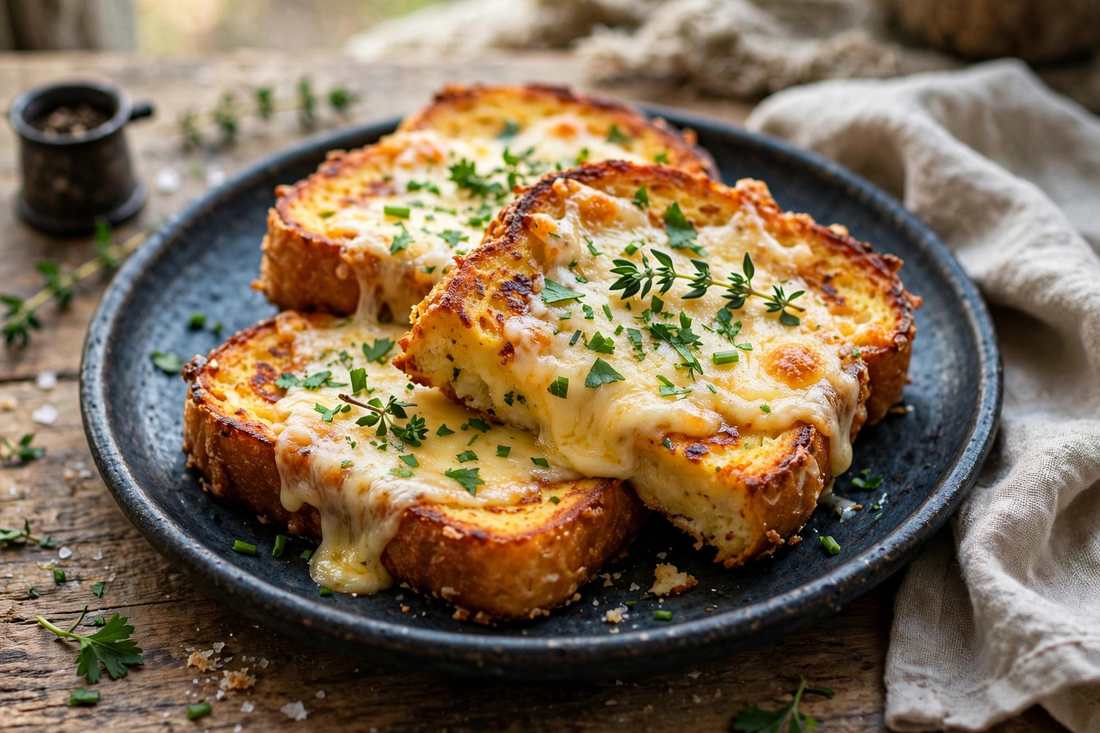
Sweet gets the spotlight, but savory french toast is an underrated branch of the family. The method is identical; only the custard changes. Leave out the sugar, vanilla, and cinnamon, and season the egg and milk with salt, black pepper, and herbs like chives, thyme, or parsley. Grated parmesan or sharp cheddar stirred into the custard melts into the bread as it cooks, giving a crisp, cheesy crust.
Savory slices eat almost like a grilled cheese crossed with an omelet, and they pair naturally with dinner style sides. Top them with sauteed mushrooms, wilted spinach, or a fried egg, or serve them next to a simple salad for a light supper. If savory breakfasts that eat like dinner appeal to you, our meatball recipes offer another hearty option for those evenings when only comfort food will do.
This savory direction also connects back to the dish’s history. Before sweet versions dominated, eggy fried bread was often a plain, savory food, closer to a peasant supper than a brunch showpiece. Trying it savory is not a modern twist so much as a return to the dish’s roots.
Common Mistakes and How to Fix Them
Most problems come from a short list of mistakes. Soaking too long is the biggest one. Bread left sitting in custard turns to mush and falls apart in the pan. Keep soak times short for soft bread, and lift each slice with a spatula rather than tongs so it does not tear.
Heat that runs too high is the second classic error. A ripping hot pan browns the outside in a minute while the custard inside stays raw and wet. Medium heat and patience give the center time to set. If your slices keep burning before they cook through, your burner is simply too hot.
Skipping the salt, or forgetting to whisk the custard fully, causes quieter flaws. Unsalted custard tastes flat no matter how good the toppings are. Streaks of unmixed egg white fry into pale, rubbery patches. Both are fixed in seconds at the mixing bowl stage, which is why the custard deserves your full attention before any bread goes in.
Finally, do not drown the finished slices in cold syrup straight from the fridge. Warm the syrup gently and the whole plate stays hot longer, which keeps the crisp edges from softening too fast. Small details like this separate good french toast from great french toast.
Nutritional Notes
A serving built on eggs, milk, and bread delivers a solid mix of protein, carbohydrates, and fat, which is why it keeps you full through the morning. The eggs contribute protein and the milk adds calcium, while the bread supplies the energy. Toppings decide how indulgent the plate becomes: fresh fruit adds fiber and natural sweetness, while generous syrup pours add a significant amount of added sugar.
If you want a lighter plate without losing what makes the dish good, a few swaps help. Whole grain bread adds fiber and a nuttier flavor that stands up well to custard. Cutting the added sugar in the custard to a minimum, or leaving it out entirely, barely changes the result when syrup or fruit goes on top. Cooking in a well seasoned nonstick pan lets you use less butter while still getting good browning. As with any breakfast, balance across the whole meal matters more than any single ingredient.
Frequently Asked Questions
Why is it called french toast if it did not come from France?
The name is one of the dish’s mysteries. The technique itself goes back to ancient Rome, and medieval France called it pain perdu, but the English name french toast likely arose in nineteenth century America, when French style cooking was fashionable. One legend credits an American innkeeper named Joseph French, but historians have never confirmed it. The name stuck regardless of its true origin.
What is the best bread for french toast?
Thick cut brioche and challah are the top choices because their rich, eggy crumb soaks up custard evenly and fries to a deep gold. Sourdough is excellent if you like a slight tang, and thick sliced country white or Texas toast works well too. Whatever you choose, pick slices at least three quarters of an inch thick, and day old bread outperforms fresh bread because it absorbs custard without falling apart.
Why did my french toast turn out soggy?
Sogginess usually means the bread soaked too long, the pan heat was too low, or both. Oversaturated slices cannot firm up properly, and low heat steams them instead of browning them. Use thick, slightly dry bread, keep soak times brief for soft slices, and cook over steady medium heat until each side is deep golden and set. A short finish in a low oven can rescue slices that browned outside but stayed wet inside.
Can I make french toast without milk?
Yes. You can replace the milk with an equal amount of half and half, cream, or a plain unsweetened non dairy milk such as oat or almond milk. The texture will differ slightly: cream makes a richer, denser interior, while thinner non dairy milks give a lighter result. Keep the egg ratio the same and season the custard as usual.
Can I make french toast ahead of time?
You can prep it ahead in two ways. Soaked, uncooked slices can rest on a tray in the refrigerator for up to a few hours, though very soft bread may get mushy. Cooked slices reheat well: warm them in a 350 degree oven for about ten minutes and they crisp back up nicely. For longer storage, freeze cooked slices between sheets of parchment and reheat from frozen in the toaster or oven.
A Dish Worth Mastering
French toast earns its place as a breakfast classic for simple reasons. It is built on pantry staples, it rescues bread that would otherwise go stale, and it rewards a little technique with a plate that tastes far richer than its ingredient list suggests. The history stretches back to Rome, but the method in your kitchen is the same one cooks have trusted for centuries: good bread, a well seasoned custard, and a hot buttered pan.
Start with thick slices and a gentle hand on the soak, keep the heat at medium, and taste as you go. Once the basics feel easy, the variations open up, from berry topped stacks to savory herb versions. Few dishes offer this much return for this little effort, which is exactly why french toast has survived for two thousand years and will keep showing up on breakfast tables for many more.
2 Comments
Comments are closed.