Creamy Overnight Chia Seed Pudding
Breakfast is the meal most likely to get skipped, and it is easy to see why. Mornings are rushed, and anything that takes real effort rarely survives the alarm clock. Chia seed pudding is the rare breakfast that asks for almost nothing and gives back a lot. You stir a few ingredients together at night, slide the jar into the fridge, and wake up to something cool, creamy, and ready to eat.
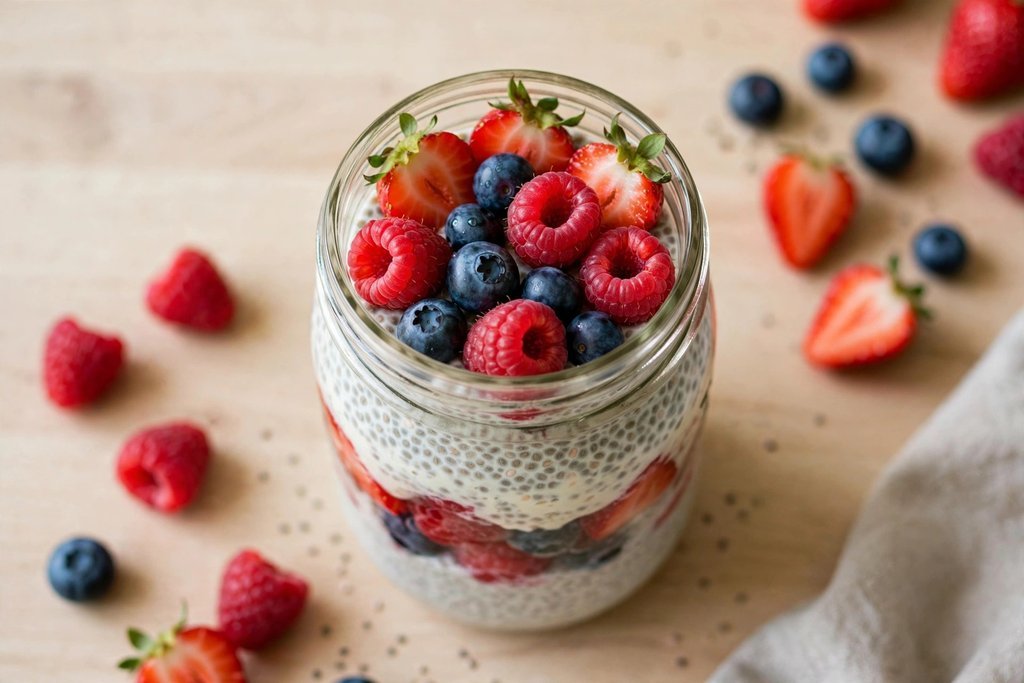
The thickening power comes from the seeds themselves. Chia seeds can absorb many times their weight in liquid, forming a natural gel as they soak. That gel is what converts plain milk into a thick, scoopable pudding with no cooking, no eggs, and no gelatin. Along the way, those tiny seeds bring fiber, plant-based omega-3 fatty acids, and protein.
This version keeps the ingredient list short: chia seeds, milk, a little maple syrup, and vanilla. From that simple base, you can build endless variations. Top your chia seed pudding with fresh berries for brightness, swirl in peanut butter for richness, or layer it with yogurt and fruit for a parfait that looks as good as it tastes.
Where Chia Seed Pudding Comes From
The pudding itself is a modern invention, but its star ingredient has a long past. Chia seeds come from Salvia hispanica, a mint-family flowering plant native to southern Mexico, Guatemala, and the surrounding parts of Central America. Long before they appeared in health food aisles, these tiny seeds were a staple crop for the Aztec and Maya civilizations, valued alongside corn and beans as a sustaining food.
For those ancient cultures, chia was more than a snack. Historical accounts describe warriors and messengers eating it on long journeys, and it was ground into flour, pressed for oil, and mixed into hydrating drinks.
Once Spanish colonizers brought European grains into the picture, chia fields shrank from view, and for centuries the seed was largely forgotten. It was rediscovered in the late twentieth century by researchers studying ancient crops, and by the early 2000s it had found a new audience among health-conscious eaters in the United States.
Chia seed pudding arrived with the overnight breakfast trend of the 2010s. As overnight oats became popular, home cooks began experimenting with chia’s natural gelling power and discovered it could create a creamy, no-cook pudding with even less effort. Cafes and breakfast bloggers ran with the idea, and the humble jar of chia seed pudding settled into morning routines everywhere.
Chia in Traditional Cooking
Long before chia seed pudding ever existed, cooks across Mexico and Central America already had their own ways of using the seed. The most enduring is chia fresca, also called agua de chia, a simple drink made by stirring chia seeds into water with lime juice and a little sugar. As the seeds swell, the drink takes on a lightly gelled texture that is both refreshing and filling. It is still sold by street vendors and in markets across Mexico today.
Ground chia also had a place in traditional kitchens. Toasted seeds were milled and stirred into drinks and porridges, stretching staple foods with extra nourishment. Elsewhere, the seeds were sprouted and eaten as greens, a habit still alive in parts of Mexico, where chia sprouts show up in fresh salads.
The core idea has barely changed. Traditional chia fresca and modern chia seed pudding both rely on the same property: the seed’s remarkable ability to gel in liquid. The flavors have shifted toward breakfast tastes like vanilla, berries, and maple, but the technique is centuries old.
What Goes Into Chia Seed Pudding
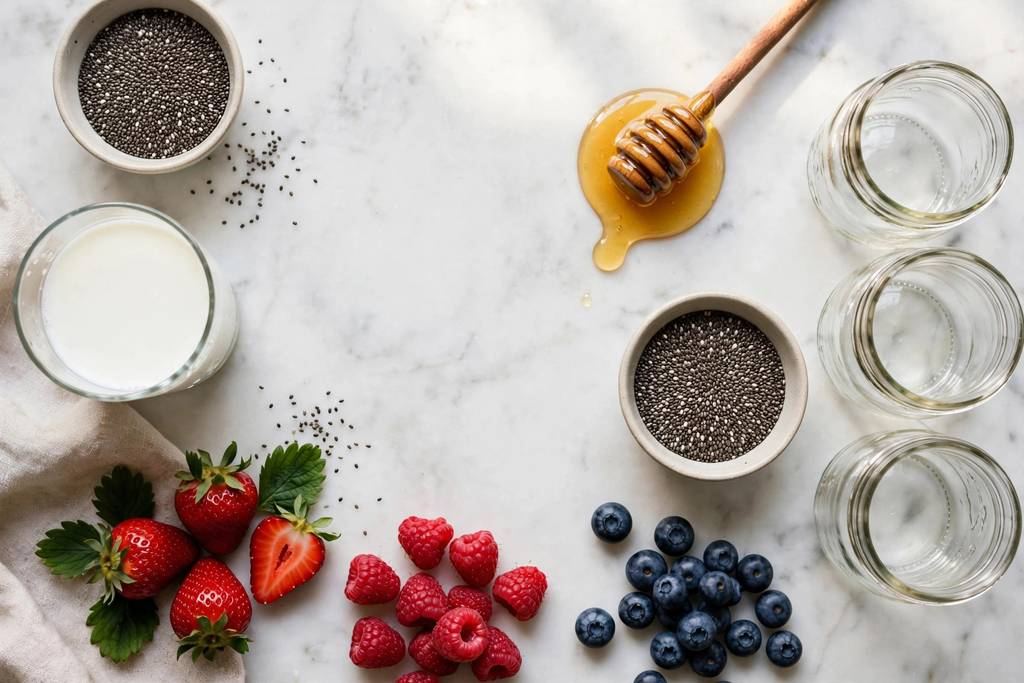
The ingredient list for chia seed pudding is refreshingly short, but each component earns its place. Once you know what each ingredient contributes, you can adjust the recipe to your own taste without giving up the smooth, creamy texture that makes the dish shine.
Chia seeds are the foundation. You will find both black and white seeds at the store, and the difference is only cosmetic. They behave the same way in liquid and offer the same nutrition, so buy whichever looks better or costs less. Whole seeds are the standard choice; ground chia will thicken faster but gives a smoother, less pudding-like texture.
Milk provides the liquid the seeds need to swell, and nearly any kind works. Dairy milk gives the richest result, while almond, oat, and coconut milks all make excellent chia seed pudding. Thicker milks like canned coconut milk or oat milk produce a creamier finished pudding, while thinner milks like almond milk give a lighter set. Skip water on its own: the pudding needs the substance that milk lends it.
Maple syrup adds gentle sweetness that blends smoothly into cold liquid. Honey works too, though it should not be served to children under one year old. Start with a modest amount and adjust after chilling, since cold dulls sweetness and you can always stir in a little more before serving.
Vanilla extract and a pinch of salt are small additions with a big payoff. Vanilla lends a warm, almost dessert-like depth, while a pinch of salt wakes up the other flavors and keeps the sweetness from falling flat. Neither is traditional, but both make the finished chia seed pudding taste noticeably better.
Toppings are where you make it your own. Fresh berries, sliced banana, chopped mango, toasted nuts, shredded coconut, and granola all work beautifully. Add them just before serving so they stay fresh and keep their texture against the creamy base.
How to Make Chia Seed Pudding
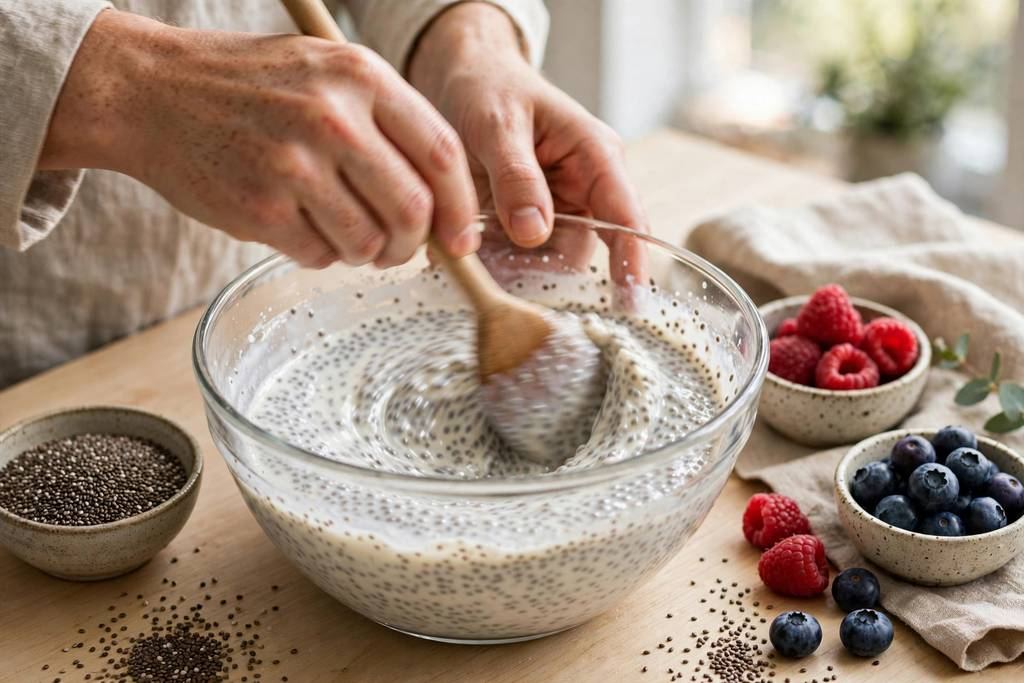
Making chia seed pudding is less a recipe and more a ratio. The standard proportion is two tablespoons of chia seeds for every half cup of milk, which sets into a thick, spoonable pudding. Learn that ratio and you can scale the recipe up for meal prep or down for a single serving without thinking twice.
Start by whisking the milk, maple syrup, vanilla, and salt together in a jar or bowl. Getting the sweetener fully dissolved before the seeds go in prevents pockets of syrup at the bottom. Then add the chia seeds and whisk briskly for a full thirty seconds, making sure to scrape the corners where dry seeds like to hide.
Here is the step most people skip: let the mixture rest for ten minutes, then whisk it a second time. Chia seeds begin gelling almost immediately, and the first ones to swell can clump together into lumps. That second whisk breaks up any early clumps and redistributes the seeds so the finished chia seed pudding sets evenly.
Cover the jar and refrigerate for at least four hours, though overnight gives the best texture. The long chill lets every seed fully hydrate, which is what creates that characteristic creamy gel. For food safety, get the mixture into the fridge promptly rather than leaving it on the counter, and plan to eat it within four days.
Before serving, give the pudding a good stir. It will look very thick straight from the fridge, and stirring loosens it back to a spoonable consistency. If it turns out thicker than you like, whisk in a splash of milk. If it still seems too thin, stir in one more teaspoon of chia seeds and let it chill for another thirty minutes. Then add your toppings and enjoy.
Read Also: For another fresh vegetable staple to keep on hand, learn all about corn and the best ways to cook it.
Tips for Perfect Chia Seed Pudding
A great chia seed pudding comes down to a few small habits. These tips solve the most common problems and will give you a smooth, creamy result every time.
Whisk twice, not once. The ten-minute rest followed by a second whisk is the single best defense against lumps. Chia seeds gel fast, and seeds that settle together early form clumps that never fully break down. That second stir takes twenty seconds and makes all the difference.
Respect the ratio. Two tablespoons of seeds per half cup of milk is the sweet spot for a classic pudding texture. Too many seeds and the mixture turns stiff and pasty; too few and it stays soupy. Measure your first few batches until you can eyeball it, then adjust to taste from there.
Sweeten after chilling. Cold mutes flavor, so a pudding that tastes perfectly sweet when you mix it can taste bland in the morning. Taste your chia seed pudding after the overnight chill and stir in a little extra maple syrup if it needs it. You will use less sweetener overall this way.
Layer for parfaits. For a breakfast that looks bakery-made, spoon the set pudding into glasses in alternating layers with yogurt and fresh fruit. The contrast of creamy pudding, tangy yogurt, and juicy berries turns a simple chia seed pudding into something worth serving to guests.
Fix the texture before serving. Pudding too thick? Whisk in milk a tablespoon at a time. Too thin? Add a teaspoon of seeds and chill briefly. The gel stays adjustable even after setting, so there is no need to start over.
Prep a week’s worth. Chia seed pudding keeps well for four days in the fridge, which makes it ideal for meal prep. Whip up a few jars on Sunday evening, store the toppings on the side, and breakfast is packed and ready for the whole week. Glass jars with tight lids work best for storage.
Read Also: Pair your breakfast prep with a make-ahead lunch like our classic broccoli salad for easy weekday meals.
Chia Seed Pudding Nutrition
Chia seed pudding earns its healthy reputation honestly. Two tablespoons of chia seeds deliver roughly ten grams of fiber, a solid chunk of what you need each day and a major reason this breakfast holds you over for hours. That fiber also slows the pace of digestion, carrying the feeling of fullness through the morning.
The seeds are also one of the richest plant sources of alpha-linolenic acid, an omega-3 fatty acid, along with a respectable amount of protein, calcium, magnesium, and iron for such a small seed. Combined with milk, which adds more protein and calcium, the pudding becomes a genuinely nourishing start to the day.
Keep perspective on the sweetener, though. Each serving still holds a tablespoon or two of real sugar from the maple syrup, so think of this as a gently sweetened breakfast rather than a health food you can eat without limits. Loading it with sugary toppings can quickly turn a balanced chia seed pudding into dessert. Fresh fruit, nuts, and a modest drizzle of syrup keep it in the breakfast zone.
Frequently Asked Questions
Why is my chia seed pudding lumpy? Lumps form when chia seeds settle together and gel into clumps before they are evenly distributed. The fix is the double-whisk method: stir well when you mix everything, let it rest for ten minutes, then whisk again to break up early clumps. Using the right ratio matters too. Far too many seeds for the amount of milk will always clump, no matter how well you stir, so measure carefully.
Is it possible to make chia seed pudding with no added sweetener? Absolutely, and plenty of people like it best that way. Unsweetened chia seed pudding has a mild, neutral flavor that works well with naturally sweet toppings like ripe banana, mango, or berries. If you skip the maple syrup entirely, consider adding a little extra vanilla or cinnamon for flavor. You can also sweeten individual servings later, which lets everyone at the table customize their own jar.
How many days will chia seed pudding keep in the fridge? Properly stored in a covered jar, it stays good for up to four days. Keep it chilled the whole time, and add any fresh fruit toppings right before serving instead of storing them mixed in, since cut fruit spoils faster. If it gives off an odd smell or the texture turns slimy beyond its normal gel, throw it out. When in doubt, make smaller batches more often.
Can I use water instead of milk? You can, though it comes out thinner and far less satisfying. Milk gives chia seed pudding the creamy body that makes it feel like a treat, while water produces a plain gel with little flavor. Dairy-free? Reach for a creamy plant milk such as oat or coconut instead of water. Even the modest fat and protein in milk or plant milk shape the final texture in a big way.
Why is my pudding too thin even after overnight chilling? The most common cause is an off ratio, usually too much liquid for the seeds. Whisk in another teaspoon or two of chia seeds and chill for one more hour. Old seeds can also lose some gelling power, so check that your bag is fresh. Finally, make sure you actually refrigerated it long enough. Four hours is the minimum, and an overnight rest gives a noticeably thicker set.
Is chia seed pudding good for meal prep? It is one of the best meal prep breakfasts around, since the pudding needs its long chill anyway. It holds its texture for four days refrigerated, travels well in sealed jars, and needs no reheating. Keep toppings in separate small containers so everything stays fresh, and assemble each jar the night before or morning of.
Conclusion
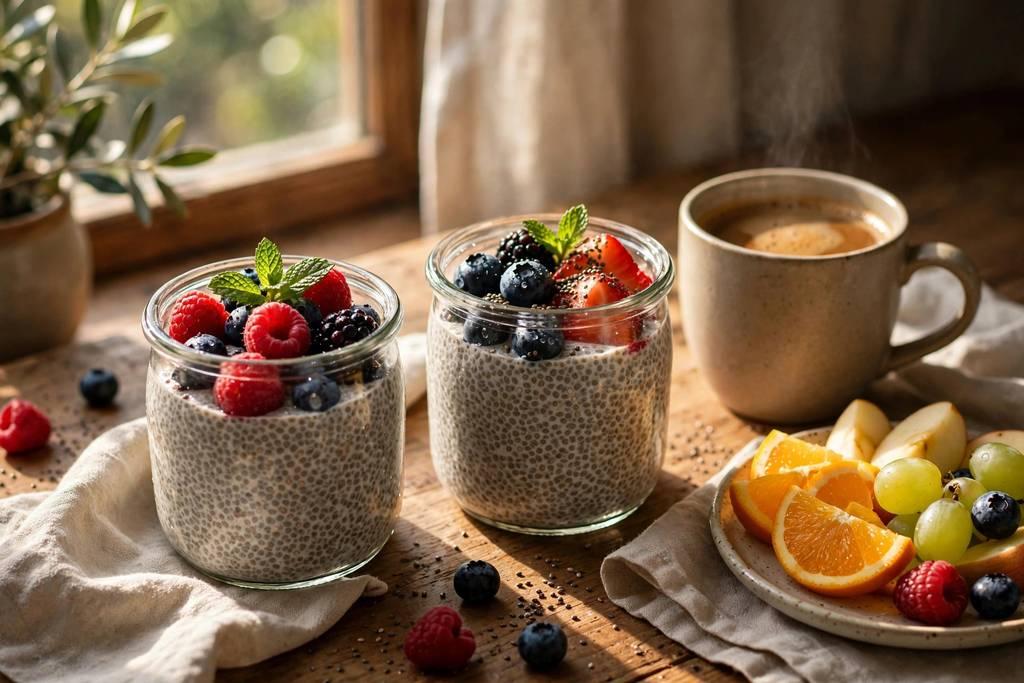
Chia seed pudding proves that the easiest breakfasts are often the best ones. Five minutes of stirring at night, a quiet transformation in the fridge, and a creamy, nourishing pudding waiting in the morning. It is endlessly adaptable, genuinely filling, and simple enough to become a weekly habit.
Begin with the classic vanilla version, then make the recipe your own. Try chocolate with peanut butter, mango with coconut milk, or apple pie spices with diced apple. Once you have the ratio down, every jar of chia seed pudding is a small blank canvas. Mix one tonight and see how good mornings can taste.
Read Also: Planning savory meals too? Try our collection of easy shredded chicken recipes for weeknight dinners.
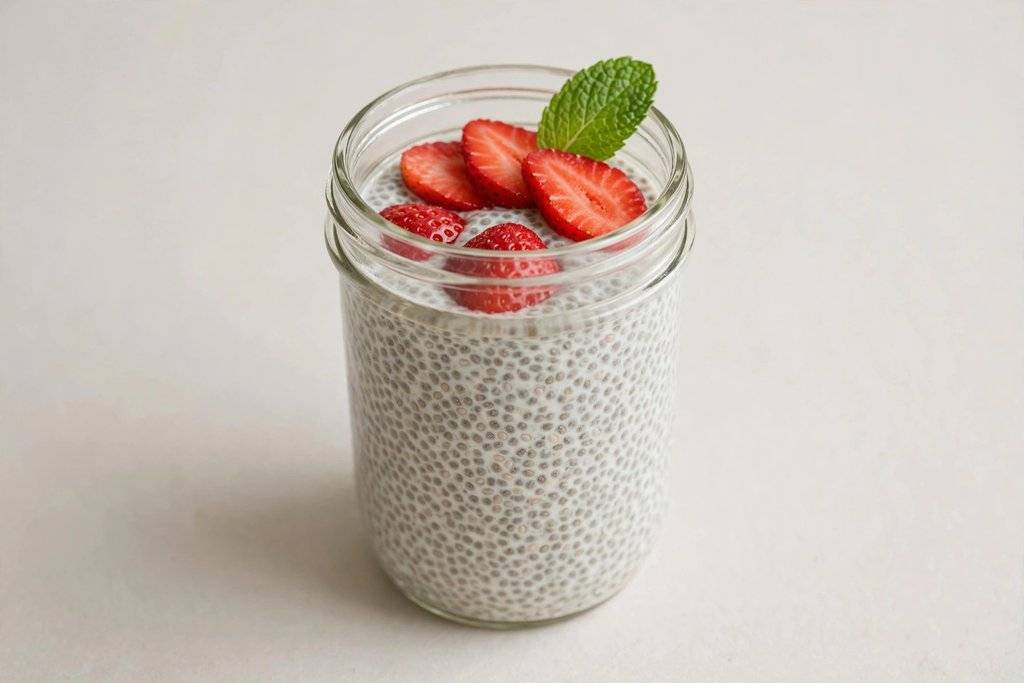
Classic Overnight Chia Seed Pudding
Ingredients
Method
- Add the milk, maple syrup, vanilla extract, and salt to a medium jar or bowl. Whisk until the syrup is fully dissolved.
- Add the chia seeds and whisk briskly for 30 seconds, scraping the corners so no dry seeds remain.
- Let the mixture rest for 10 minutes, then whisk a second time to break up any clumps.
- Cover tightly and refrigerate for at least 4 hours, preferably overnight, until thick and spoonable.
- Stir well before serving. Adjust sweetness or thin with a splash of milk if needed, add toppings, and serve chilled.