Chicken Noodle Soup
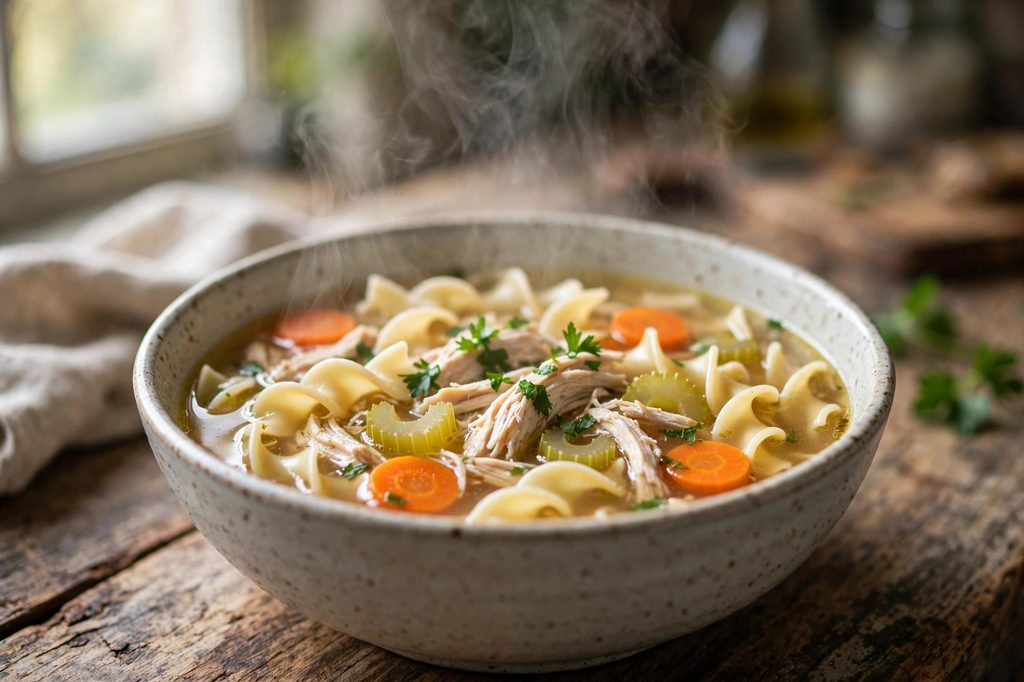
Few meals can quiet a chaotic day the way a steaming bowl of chicken noodle soup can. The moment the lid comes off, warm savory steam rises with the sweetness of carrots, the earthiness of celery, and the richness of slow-simmered broth. This is chicken noodle soup done right: tender chicken that falls apart into soft strands, silky egg noodles that soak up flavor, and golden broth that tastes unhurried. It comes together in about forty-five minutes, yet tastes like it simmered all afternoon.
Chicken noodle soup has earned its place as the ultimate comfort food in American kitchens, and this recipe shows exactly why. Every spoonful delivers that familiar combination of warmth and nourishment that so many of us grew up with. Whether it is a cold evening or simply a Tuesday that calls for something cozy, this chicken noodle soup answers the call. It is the kind of recipe you memorize without trying, the one you make once and return to for years.
What makes this version special is the way it builds flavor in layers rather than relying on a single shortcut. Giving the vegetables a few minutes alone in the pot coaxes out their natural sweetness before anything else goes in. The broth is seasoned at several points so no single sip tastes flat. The noodles go in at just the right moment so they finish tender without turning to mush. This chicken noodle soup is simple enough for a weeknight yet satisfying enough to serve to guests.
Where Chicken Noodle Soup Comes From
Chicken noodle soup stretches back further than most people realize. Cooks across many cultures have simmered poultry with water and grain-based noodles for centuries, because the combination is inexpensive, nourishing, and satisfying. Long before anyone called it by its modern name, families across Europe and Asia were already stretching a modest bird into brothy bowls of chicken, vegetables, and noodles that could feed everyone at the table.
In America, chicken noodle soup became a true cultural icon through a mix of tradition and convenience. Immigrant families brought their own versions with them, from Jewish penicillin with matzo balls to Italian wedding soup with tiny meatballs and greens. Over time the egg noodle version won the broadest affection, helped in the twentieth century when canned versions put it on every grocery shelf in the country. The can introduced millions of Americans to the flavor, but the homemade bowl is the one people remember.
Today, chicken noodle soup holds its status as the American classic for a reason beyond nostalgia. It sits at the intersection of affordable, wholesome, and genuinely delicious. The steam, the salt, the hydration, and the easy-to-digest ingredients all do their part when someone feels under the weather. No special occasion is needed to justify a pot of it. This chicken noodle soup belongs on regular rotation, the dependable pot that shows up whenever the temperature drops.
What Goes Into This Chicken Noodle Soup
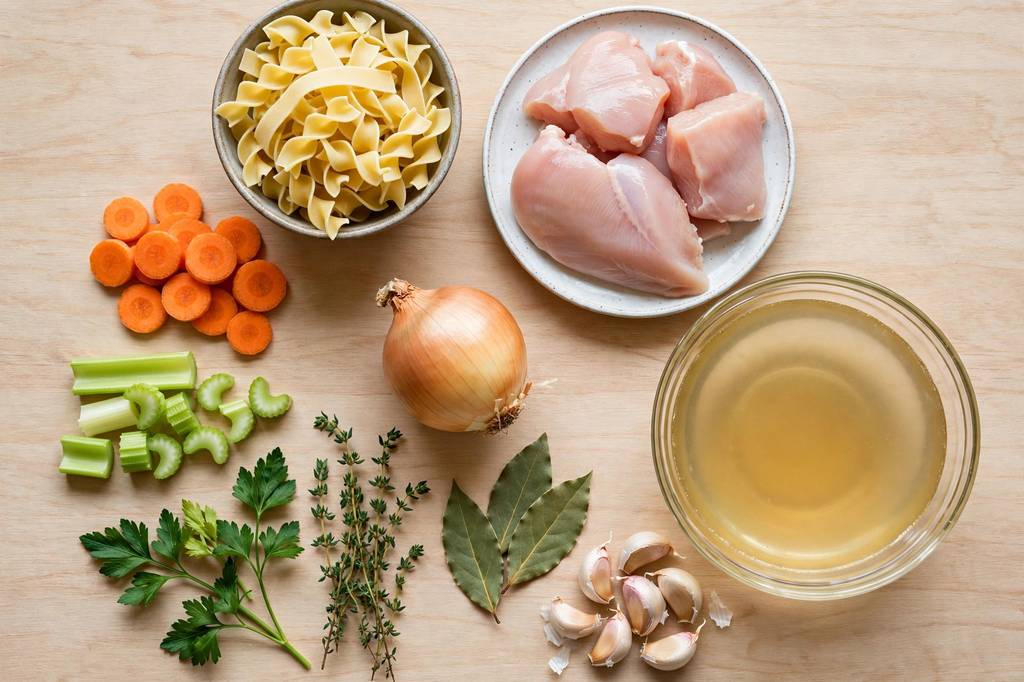
A great bowl of chicken noodle soup starts with chicken that actually tastes like chicken. Boneless, skinless chicken breasts work beautifully because they cook quickly and shred into neat, tender pieces that distribute evenly through every serving. Thighs work too, with richer flavor and forgiving texture. What matters is that the chicken goes into the pot whole and comes out juicy, which gentle simmering achieves.
The vegetables form the classic trio that every traditional bowl relies on: carrots, celery, and onion. Carrots bring mellow sweetness that balances the savory broth and hold their shape well when cut into even coins. Celery lends a gently peppery freshness and a crisp bite that stops the soup from tasting flat and one-dimensional. Onion melts into the background, building the savory foundation of the whole pot. Garlic joins near the end of the saute so its flavor stays bright instead of turning bitter.
Egg noodles are the soul of this chicken noodle soup, and choosing the right kind makes a real difference. Wide or extra-wide egg noodles are the traditional pick, with soft, slightly chewy texture and golden color. They cook in minutes and soak up broth quickly, which is why timing matters. Anyone who has watched noodles disappear into broth overnight knows why the timing guidance here exists.
The broth is where homemade chicken noodle soup separates itself from everything else. Good quality chicken broth or stock forms the base, with bay leaves, thyme, and parsley simmering gently to perfume the pot. Salt and black pepper go in at several points, never all at once, so the flavors develop depth as the soup cooks. A splash of lemon juice at the end might sound unusual, but that brightness wakes up the bowl and keeps the richness from feeling heavy.
How to Make Chicken Noodle Soup
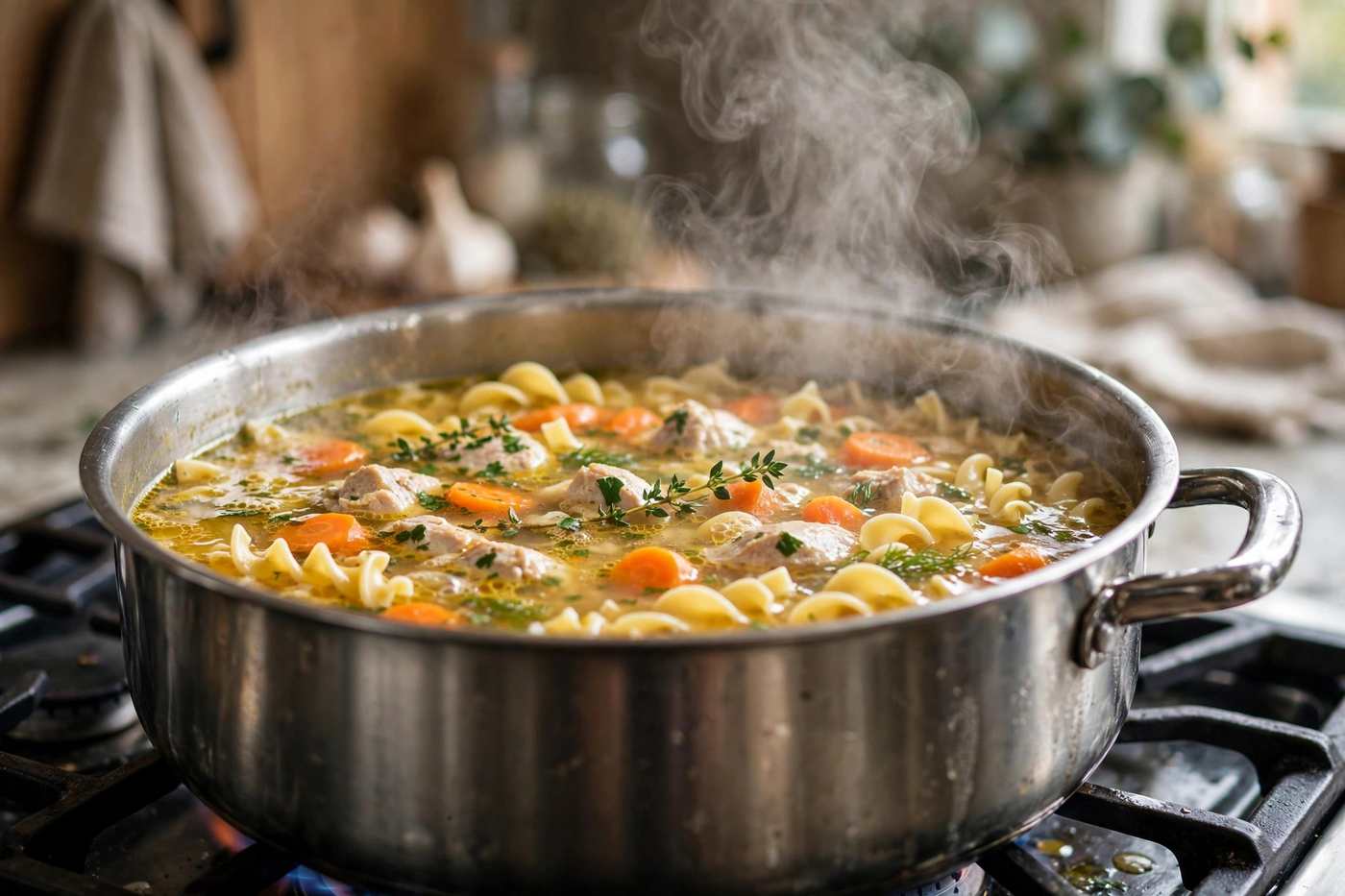
Making chicken noodle soup is mostly a matter of patience and order, not complicated technique. Everything starts with softening the aromatic vegetables in a little olive oil in a heavy pot. The onion goes first and cooks until translucent and sweet, then the carrots and celery follow and get a few minutes to release their flavors. This small step is the difference between a soup that tastes like boiled water and one that tastes like a real meal.
Once fragrant, the garlic goes in for a short stir, followed by the broth and bay leaves. The chicken pieces are nestled into the liquid at this point, and the whole pot comes up to a gentle simmer. During this slow simmer, the chicken perfumes the liquid around it, and the liquid in turn keeps the meat juicy instead of stringy. Keeping the heat at a low, lazy bubble rather than a rolling boil is the secret, because hard boiling makes chicken tough and broth cloudy.
Once the chicken is cooked through, it comes out of the pot for shredding while the noodles go in. Egg noodles need only a few minutes, and they should be cooked just until tender because they will keep softening in the hot broth. While the noodles finish, the chicken is shredded into bite-sized pieces and returned to the pot along with fresh herbs. A final taste for seasoning, a squeeze of lemon if you like, and the chicken noodle soup is ready to ladle into bowls.
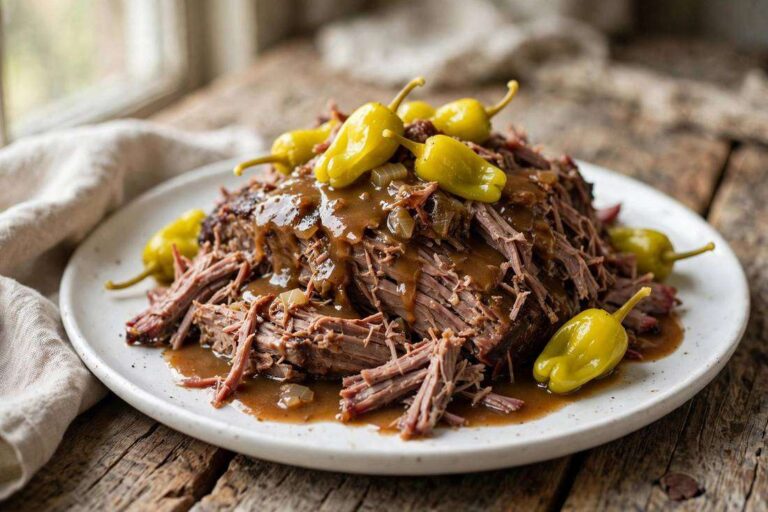
Read Also: If you love cozy, set-it-and-forget-it dinners, this mississippi pot roast is another family favorite worth trying.
Tips for the Best Chicken Noodle Soup
Homemade stock wins, but good store-bought low-sodium chicken broth comes close once you layer in the aromatics and herbs. Low-sodium broth lets you control the salt yourself, seasoning gradually until the flavors sing. If your broth tastes thin, the full simmer with chicken and vegetables will concentrate and deepen it.
Shredding the chicken properly keeps every bite tender. Rest the cooked chicken a few minutes, then pull it into bite-sized strands with two forks instead of chopping. Shredded chicken absorbs broth better and feels more satisfying in the spoon. Pull the chicken out as soon as it is cooked through, because overcooked meat turns dry and stringy.
Cooking the noodles separately is the single best trick for leftovers. Egg noodles keep absorbing liquid, so soup stored overnight can turn into stew by morning. If you plan to have leftovers, cook the noodles in a separate pot of salted water, add a portion to each bowl, ladle the broth over the top, and store any extra noodles apart from the soup. This keeps the noodles in your chicken noodle soup perfectly textured for days.
Skimming the surface during the simmer gives you a cleaner, more golden broth. During cooking, a light foam gathers on the chicken’s surface. Skim it off a couple of times with a spoon, leaving the flavorful fat behind. The result is a broth that looks as good as it tastes.
Seasoning in layers is what separates good soup from great soup. Salt the vegetables as they soften, add a pinch when the broth goes in, and adjust once more after the noodles and herbs join the pot. Tasting as you go is not optional here; it is the whole method. Black pepper goes in near the end so its bite stays lively, and fresh herbs should be stirred in off the heat so their flavor stays vivid.
Reheating deserves the same care as the original cooking. Warm the soup gently over medium-low heat rather than blasting it, which can make the chicken rubbery and the noodles gummy. Should the liquid turn thick and syrupy in the fridge, warm the soup with a pour of additional broth or water until it moves freely again. A fresh sprinkle of parsley on reheated bowls makes them taste just-made, and this chicken noodle soup is even better on day two.
Read Also: For another quick and satisfying weeknight meal, try this easy fried rice that comes together in minutes.
Chicken Noodle Soup Nutrition
Chicken noodle soup has a well-earned reputation as a wholesome choice, and a quick look at the bowl explains why. Each serving delivers lean chicken protein that keeps you full and satisfied long after the meal. The carrots, celery, and onion add fiber and vitamins, while the egg noodles provide the comforting carbohydrates that make the soup a complete meal.
A typical low-sodium-broth bowl lands in a reasonable calorie range, with most energy from the noodles and chicken rather than added fats. Skimming the broth and using lean chicken keeps the fat modest, so the meal feels indulgent without weighing you down. The warm liquid also aids hydration, one reason the soup is so popular during cold and flu season.
Cooking the soup yourself puts every choice in your hands — how much salt goes in, how much oil coats the vegetables, and how generous the vegetable portions are. Loading up on extra carrots and celery boosts the fiber and nutrients without adding much to the calorie count. This information is general guidance for everyday cooking, not medical advice, so if you are managing a specific health condition, check with a professional about what fits your needs.
Frequently Asked Questions
Is rotisserie chicken a good option for this chicken noodle soup?
Absolutely, it is one of the best weeknight shortcuts. Shred about three to four cups of the meat and stir it into the soup during the last few minutes, just long enough to heat through. Since the meat is already cooked, shorten the simmering time and add the shredded chicken near the end so it stays juicy.
What is the refrigerator storage time for chicken noodle soup?
Stored in airtight containers, chicken noodle soup stays fresh in the refrigerator for three to four days. Cool it to room temperature within two hours of cooking before refrigerating for food safety. Keeping the noodles in their own container, apart from the broth, gives the best texture. When ready to eat, reheat only the portion you need and keep the rest chilled.
Can I freeze chicken noodle soup?
Yes, with one important trick: freeze the broth, chicken, and vegetables without the noodles. Cooked egg noodles turn mushy after freezing, so cook fresh noodles when you reheat. Cool completely, portion into freezer-safe containers with an inch of headspace, and freeze for up to three months. Thaw overnight in the refrigerator, bring to a gentle simmer, and add freshly cooked noodles before serving.
Which noodles work best in chicken noodle soup?
The traditional pick is wide or extra-wide egg noodles. Their soft, slightly chewy texture and rich golden color are exactly right for the traditional bowl. In a pinch, medium egg noodles, rotini, or even broken spaghetti will work, though the texture will differ slightly. Cook any shape just until tender and serve promptly, since all pasta keeps softening in hot broth.
How can I stop the noodles from turning mushy?
Timing and separation are the two answers. Add noodles only in the last several minutes and take the pot off the heat once they are tender, since residual heat keeps cooking them. Even more effective is the separate-pot method: cook the noodles apart, portion them into serving bowls, and ladle the hot soup over the top. Noodles stored apart from the broth stay firm for days, which solves the leftover problem too.
Is the slow cooker a good way to make chicken noodle soup?
Yes, it is a great option for busy days. Add the chicken, broth, vegetables, garlic, and seasonings to the slow cooker and cook on low for six to seven hours or on high for three to four hours. Stir in the egg noodles during the last twenty to thirty minutes on high so they cook through without overcooking. Shred the chicken, return it to the pot, finish with fresh herbs, and serve.
Conclusion
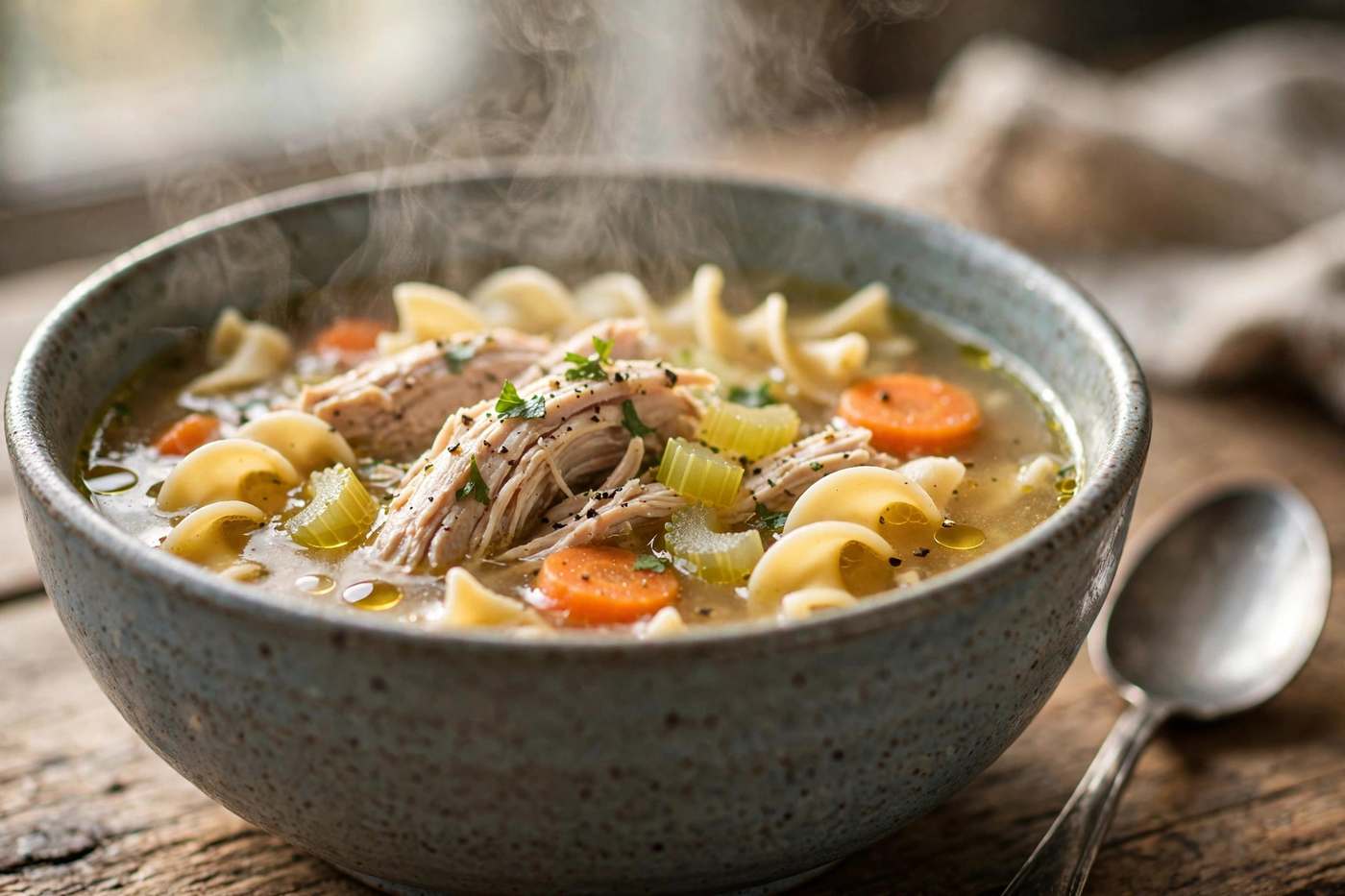
This chicken noodle soup earns a permanent place in a family’s weekly routine, the kind of recipe everyone requests by name. Simple enough for a tired weeknight, comforting enough to bring a friend who needs cheering up, and reliable enough to replace the can entirely. The tender shredded chicken, sweet carrots and celery, silky egg noodles, and golden broth seasoned in layers all work together in one comforting bowl.
Make a big pot this week and see how quickly it disappears. Serve it with crusty bread, pack the leftovers for lunches, and remember the noodle trick so every bowl tastes as good as the first. Once this chicken noodle soup is in your rotation, you will wonder how you ever got through soup season without it.
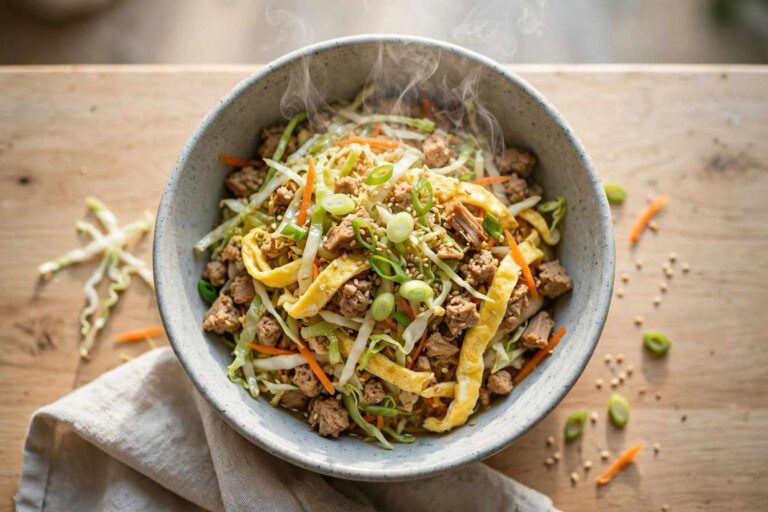
Read Also: Craving more one-pan comfort? This egg roll in a bowl delivers big flavor with minimal effort.
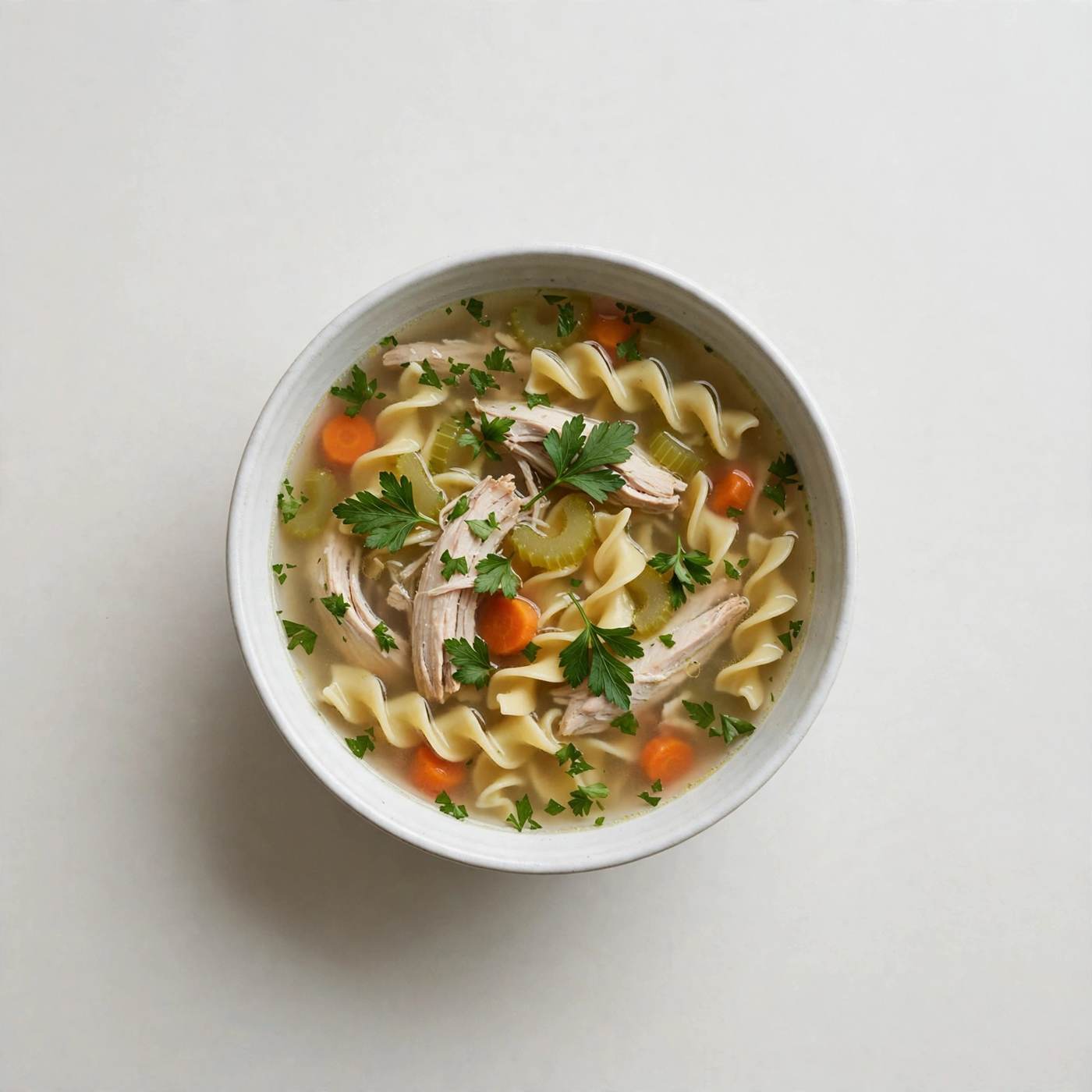
Classic Homemade Chicken Noodle Soup
Ingredients
Method
- Heat the olive oil in a large pot or Dutch oven over medium heat. Add the onion and cook for 4 to 5 minutes until softened and translucent, then stir in the carrots and celery and cook for another 5 minutes until they begin to soften.
- Stir in the garlic and cook for 30 seconds until fragrant. Pour in the chicken broth, add the bay leaves and thyme, and stir in 1/2 teaspoon of the salt.
- Nestle the chicken breasts into the liquid, bring the pot to a gentle simmer, and cook for 15 to 20 minutes, skimming any foam from the surface, until the chicken is cooked through and tender.
- Remove the chicken to a plate and let it rest for 5 minutes. Meanwhile, stir the egg noodles into the simmering broth and cook for 6 to 8 minutes until just tender.
- While the noodles cook, shred the chicken into bite-sized pieces using two forks.
- Return the shredded chicken to the pot along with the remaining salt, the black pepper, and the lemon juice if using. Discard the bay leaves.
- Taste and adjust the seasoning, stir in the fresh parsley, and ladle the hot soup into bowls. Serve immediately.