Thanksgiving Side Dishes Easy Ideas for a Full Holiday Table
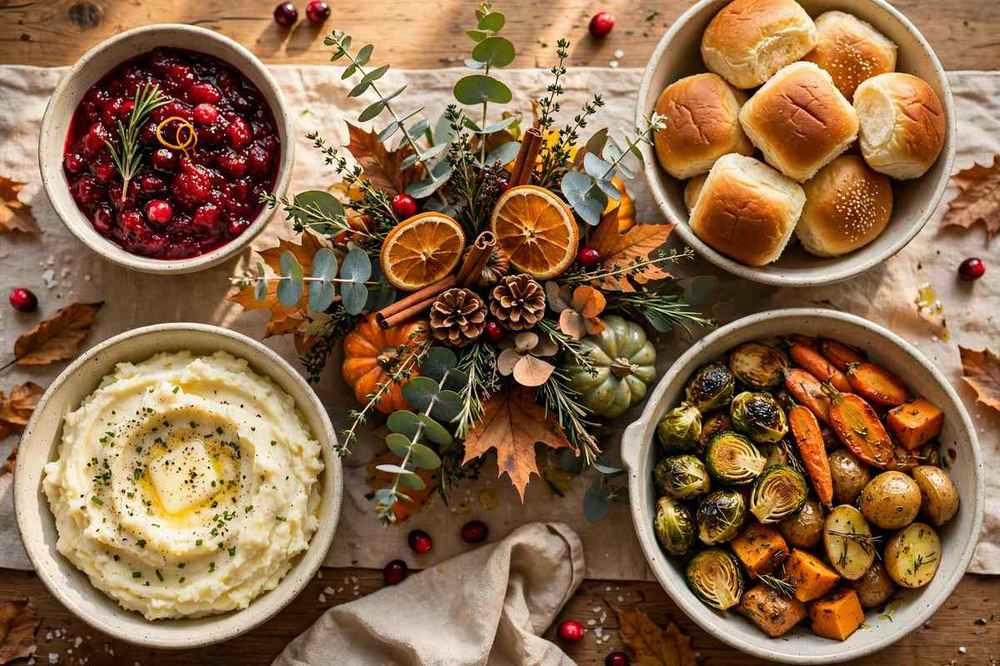
Thanksgiving side dishes often decide whether the meal feels complete. The main roast may sit at the center of the table, but guests reach first for the bowls around it, and they return for seconds of the creamy, savory, and bright flavors that fill those bowls. A good set of sides gives the plate balance, color, and comfort, and it lets a host serve a crowd without cooking a dozen separate main courses.
This guide pulls together the classic thanksgiving side dishes that work year after year, along with simple ways to vary them. You will find mashed potatoes, stuffing, green beans, sweet potatoes, cranberry sauce, roasted vegetables, rolls, and a few lighter options that keep the table from feeling too heavy. The focus stays on food that can be made ahead, held warm, and served family style, so the cook can sit down and enjoy the meal too.
Introduction
Thanksgiving side dishes work best when they cover a few clear jobs on the plate. One dish should be soft and rich, like mashed potatoes or a baked macaroni dish. One should be savory and filling, like stuffing or a grain pilaf. One should be fresh or sharp, like cranberry sauce or a crisp salad, to cut through the richness. When those jobs are covered, the rest of the table can be simple, and guests can build plates that suit their own tastes.
Planning the menu this way also keeps shopping and cooking under control. Pick three or four core thanksgiving side dishes that you know well, then add one or two new ideas if you have time and oven space. A table with five or six well made sides beats a table crowded with ten dishes that are rushed or under seasoned. The recipes in this guide are meant to be mixed and matched, so a small family dinner and a large gathering can both use the same ideas at different scales.
Origin
Thanksgiving side dishes in the United States grew out of the harvest cooking of New England and the Mid Atlantic, where autumn crops shaped what went on the table. Corn, squash, beans, potatoes, and cranberries were local, plentiful, and easy to store, so they became the base of the holiday meal. Early holiday tables were not fixed menus. Cooks used what the season gave them, and they cooked it in the ways their families already knew, by roasting, mashing, baking, and stewing.
Over time, certain thanksgiving side dishes settled into tradition because they traveled well, fed many people, and used ingredients that were cheap in November. Mashed potatoes spread as potatoes became a staple crop. Stuffing grew out of the old habit of baking bread with herbs and broth to stretch a meal. Cranberry sauce turned a tart native berry into a bright partner for rich meat. These dishes stayed because they were practical first, and they became symbols of the holiday only later, as families repeated them year after year.
Traditional Background
The traditional background of this holiday table is a mix of farm cooking and church supper cooking. Thanksgiving side dishes were made in large pans, served warm from the oven, and passed around the table. Cooks favored food that could wait a little while without losing quality, since a large meal takes time to put together and guests often arrive at different times. That is why baked dishes, mashed dishes, and slow cooked vegetables fit the day so well.
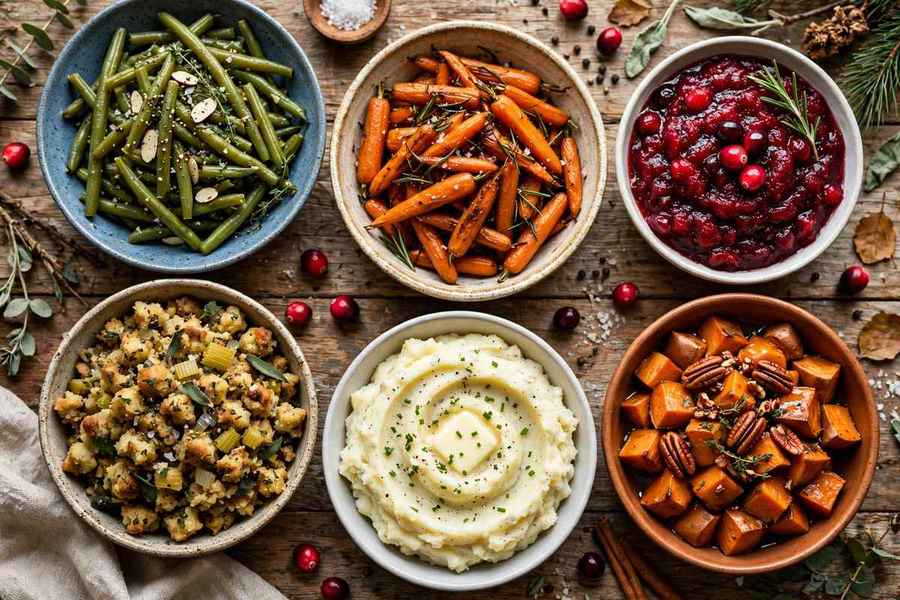
Another part of the tradition is variety without fuss. A classic table of thanksgiving side dishes might hold a potato dish, a bread dish, a green vegetable, an orange vegetable, and a fruit sauce. Each dish has its own color and texture, so the plate looks full even before the main roast is added. Families also kept their own small twists, like a pinch of nutmeg in sweet potatoes, toasted nuts on green beans, or orange zest in cranberry sauce. Those small twists are what make one family table feel different from another, even when the dish names are the same.
Ingredients
The ingredients for thanksgiving side dishes start with the vegetables that define the season. Potatoes, sweet potatoes, green beans, Brussels sprouts, carrots, cauliflower, and squash all hold up to roasting and mashing, and they take seasoning well. Butter, cream, milk, olive oil, garlic, thyme, sage, rosemary, and black pepper form the flavor base for most of the dishes here. Bread, broth, celery, and onion give stuffing its body, while cranberries, sugar, and orange give cranberry sauce its sweet and tart balance.
Thanksgiving side dishes also benefit from a few pantry helpers that add texture and richness. Toasted pecans or almonds add crunch to green beans and sweet potatoes. Grated cheese adds depth to cauliflower or a baked potato dish. Dried fruit, like raisins or dried cranberries, adds sweetness to a grain pilaf or a stuffing made with cornbread. Fresh herbs at the end, especially parsley and thyme, lift the flavor of rich dishes without adding work. Keep the seasoning simple and taste as you go, since the dishes will sit beside each other on the plate and no single dish should overpower the rest.
Thanksgiving side dishes of this kind do not need rare ingredients. Fresh vegetables, good butter, and a well stocked spice shelf cover most of the cooking. Frozen green beans and frozen cranberries work well when fresh ones are hard to find, and canned pumpkin puree makes a smooth base for a baked squash dish. Buy a little extra broth and butter, since both get used in more than one dish, and set aside fresh herbs for garnish so the finished bowls look as good as they taste.
Method
The method for thanksgiving side dishes starts with a plan for oven and stove space. Roasted vegetables and baked dishes can share an oven at a moderate heat, while mashed potatoes and gravy stay warm on the stove. Start with dishes that can be made ahead, like cranberry sauce and a cold salad, then move to baked dishes that need oven time, and finish with mashed potatoes and green beans close to serving time. This order keeps hot food hot and avoids a last minute rush.
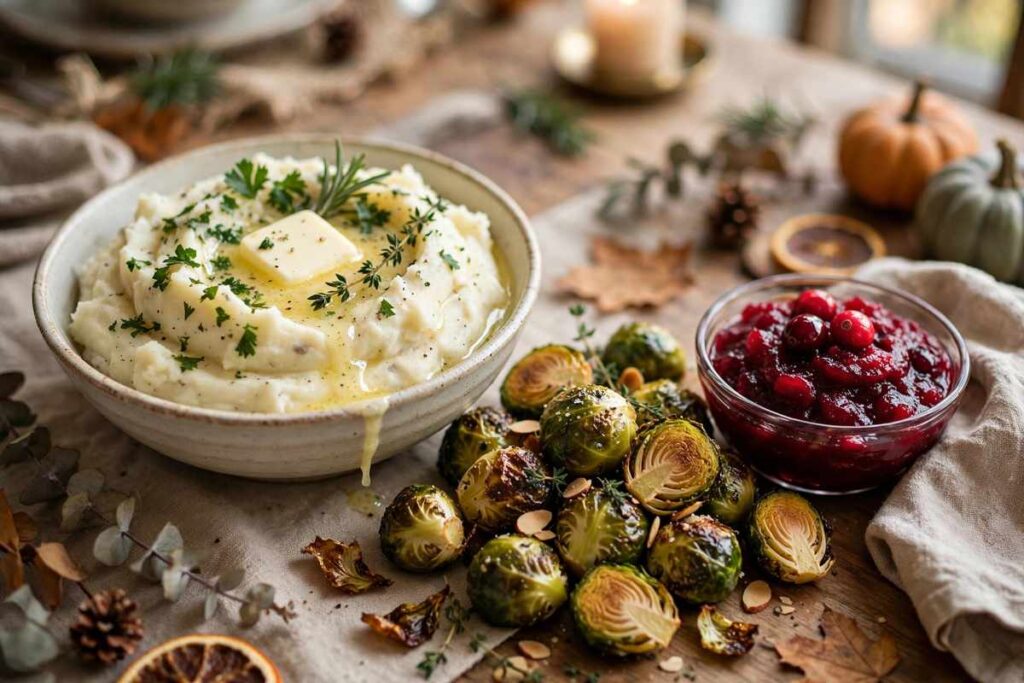
Thanksgiving side dishes come together through a few repeat steps. Potatoes are boiled until tender, then mashed with warm milk, butter, and salt until smooth. Sweet potatoes are roasted or boiled, then mashed with butter and a little brown sugar or maple syrup, or sliced and layered in a baking dish. Green beans are blanched until bright, then tossed in a hot pan with garlic, butter, and toasted almonds. Brussels sprouts are halved and roasted until crisp at the edges. Stuffing is built by toasting bread cubes, cooking onion and celery in butter, and moistening the mix with broth before baking until crisp on top.
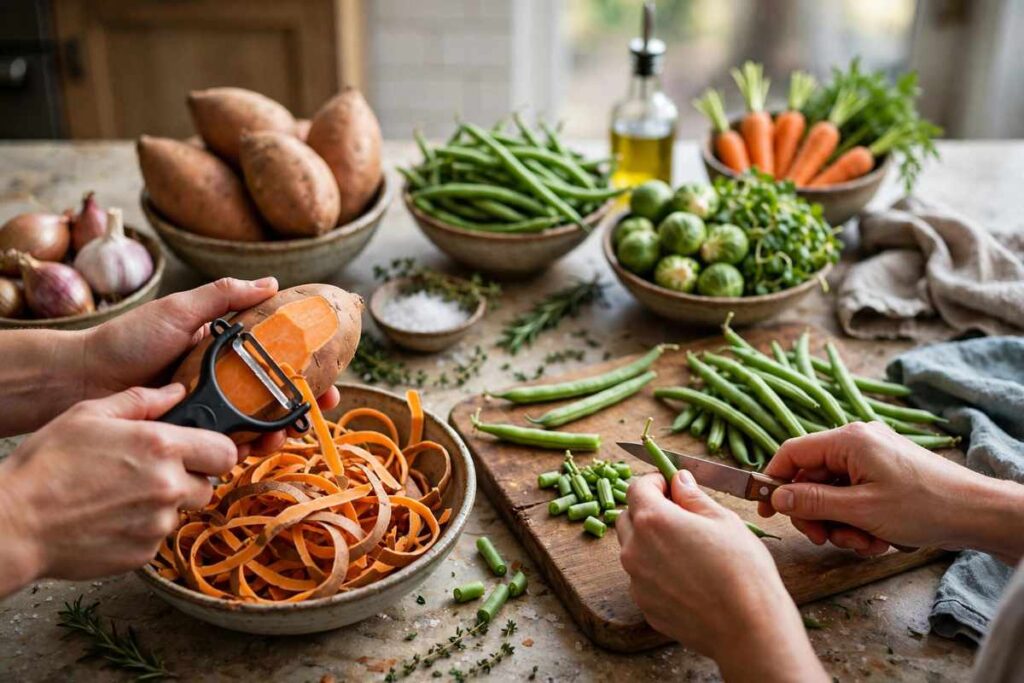
Preparation of thanksgiving side dishes in the days before the meal makes the day itself much easier. Bread for stuffing can be cubed and dried a day ahead. Cranberry sauce keeps well in the refrigerator for several days. Sweet potatoes can be peeled and cut the night before and kept in cold water. Vegetables can be washed, trimmed, and stored in containers so they are ready to cook. On the day, set out serving bowls and spoons early, label dishes if guests are bringing food, and keep a small pot of extra broth warm for loosening mashed potatoes or stuffing that has thickened while waiting.
Tips
Taste each of the thanksgiving side dishes before it goes to the table, and season in small steps. Rich dishes need enough salt to taste alive, but they should not taste salty on their own, since they will be eaten with gravy and other savory food. Add acid where a dish feels flat: a squeeze of lemon on green beans, a spoon of vinegar in a slaw, or orange zest in cranberry sauce can wake up the whole plate. Fresh herbs added at the end keep their color and scent, while dried herbs work better when cooked into a baked dish.
Thanksgiving side dishes hold best when they are kept covered and warm, not left to dry out on a hot stove. Cover baked dishes with foil after they come out of the oven, and stir mashed potatoes before serving so the top does not form a skin. If a dish cools too much, warm it gently with a splash of milk or broth rather than blasting it with high heat. For a large crowd, use two smaller baking dishes instead of one very deep dish, since smaller dishes heat evenly and are easier to pass around the table.
Plan for leftovers from the start. Cook a little extra of the thanksgiving side dishes that reheat well, like mashed potatoes, stuffing, and roasted vegetables, and store them in shallow containers so they cool quickly. Leftover sides make good next day plates with sliced turkey or chicken, and they can be turned into new meals, like a potato cake from mashed potatoes or a grain bowl from pilaf and roasted vegetables. Label containers with the date, and use leftovers within three to four days for the best flavor and safety.
Read Also: For a creamy picnic classic, try this easy macaroni salad with a tangy dressing and crisp vegetables.
Nutritional Values
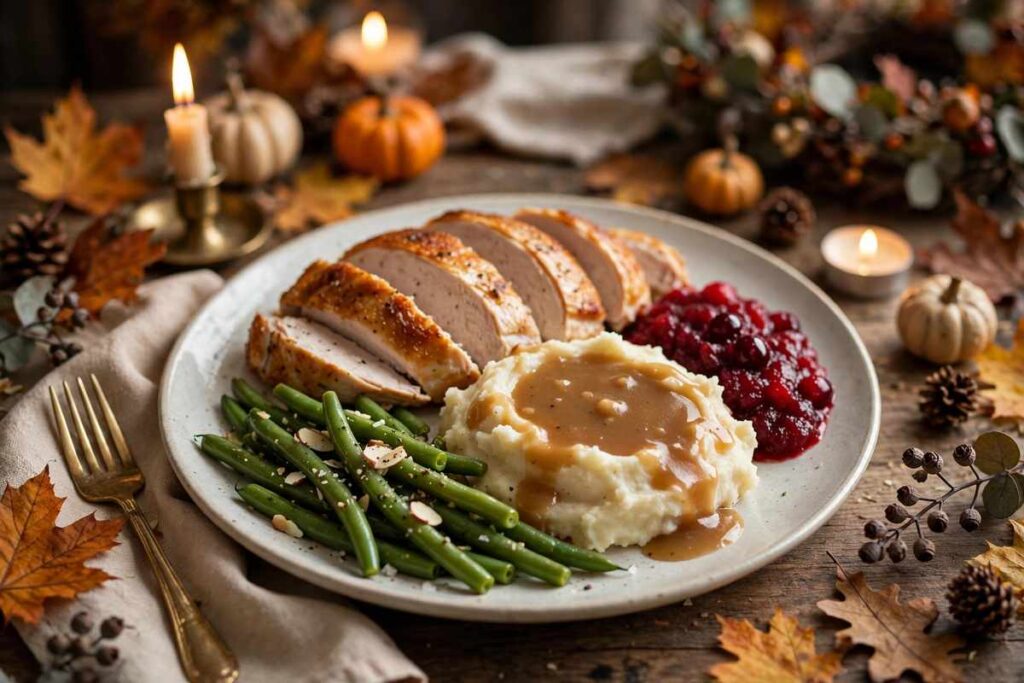
Thanksgiving side dishes vary widely in nutrition, which is one reason a mixed table works well. Starchy dishes like mashed potatoes and stuffing give energy and comfort, but they are also rich in butter and refined bread. Vegetable dishes like green beans, Brussels sprouts, and roasted carrots add fiber, vitamins, and color with fewer calories. Cranberry sauce adds fruit and brightness, though sweetened versions add sugar. A plate that mixes a starchy dish with two vegetable dishes and a spoon of cranberry sauce is usually more balanced than a plate piled high with only rich dishes.
You can lighten the table without changing the thanksgiving side dishes guests expect. Use part milk and part broth in mashed potatoes, roast vegetables with olive oil instead of heavy butter, and add nuts or seeds for crunch instead of fried toppings. Keep portions in check by using smaller serving spoons and letting guests take seconds if they want them. A simple green salad or a raw vegetable plate on the side also helps, since it gives guests a fresh option and adds volume to the meal without adding much fat or sugar.
Utensils
You need only standard kitchen tools for thanksgiving side dishes, but having enough of them matters more than having fancy ones. A large pot for boiling potatoes, a colander, a potato masher or ricer, a roasting pan or sheet pans, and several baking dishes cover most of the cooking. A sharp knife, a cutting board, a vegetable peeler, and mixing bowls handle the prep. Serving bowls, a gravy boat, and serving spoons should be set out before cooking starts, so hot dishes can go straight into their bowls.
A table of thanksgiving side dishes also benefits from a few simple helpers. Foil and clean kitchen towels keep dishes warm while they wait. A thermometer helps check that baked dishes are hot through, especially when a dish has been made ahead and reheated. Slow cookers can hold mashed potatoes or a warm vegetable dish and free up stove space. Labeling serving dishes with small cards helps guests with food questions find what they need, and it keeps the host from answering the same question at the table again and again.
Read Also: For a sweet finish, browse these fresh strawberry desserts for cakes, tarts, and chilled treats.
FAQs
How many side dishes should I serve for Thanksgiving?
Four to six dishes suit most tables. Pick one potato dish, one stuffing or grain dish, one green vegetable, one orange or roasted vegetable, and cranberry sauce. That mix gives variety in color, texture, and flavor without overloading the oven or the cook. For a very small group, three dishes plus cranberry sauce are enough. For a large crowd, add one extra vegetable and one extra baked dish, and use two smaller pans for the most popular dish so it does not run out early.
Can I make the sides ahead of time?
Yes, many holiday dishes can be made ahead. Cranberry sauce keeps for several days in the refrigerator. Stuffing can be assembled a day ahead and baked on the day. Sweet potatoes can be peeled and cut the night before. Green beans can be trimmed and blanched a day ahead, then finished quickly in a pan. Mashed potatoes can be made a few hours ahead and held warm in a slow cooker or a covered pot over low heat, with a splash of warm milk stirred in before serving.
What is the best way to keep sides warm?
Cover dishes with foil and hold them in a low oven, around 200 degrees Fahrenheit, until serving time. Mashed potatoes hold well in a slow cooker on the warm setting. Roasted vegetables stay crisp longer on a sheet pan in a warm oven than in a covered bowl, where steam can soften them. Do not leave dishes sitting out at room temperature beyond a couple of hours. If guests arrive late, reheat dishes gently with a little broth or milk to restore moisture.
How do I plan oven space for many dishes?
Start by listing each dish with its oven temperature and time, then group dishes that can share a temperature. Baked dishes and roasted vegetables often share a moderate oven well. Dishes that need a high heat can go in first and then rest covered while other dishes bake. Use the stove for mashed potatoes, gravy, and green beans so the oven stays free for baked dishes. A simple written schedule, with times for each dish to go in and come out, prevents the common problem of everything needing the oven at once.
Which dishes are best for a small Thanksgiving dinner?
For a small dinner, choose dishes that scale down well and reheat well. Mashed potatoes, a small pan of stuffing, roasted carrots or Brussels sprouts, and cranberry sauce make a complete table for four to six people. Skip dishes that need a large pan to work, and use half recipes in smaller baking dishes. A single sheet pan of mixed roasted vegetables can replace two separate vegetable dishes and still give the plate color and variety.
Conclusion
A good holiday table does not need to be complicated. Choose a few dishes you trust, cook them well, and give the plate a mix of soft, savory, fresh, and sweet flavors. Mashed potatoes, stuffing, green beans, sweet potatoes, and cranberry sauce have lasted because they do those jobs well, and small twists in seasoning keep them interesting year after year. Plan the oven, prep what you can ahead, and leave room for guests to enjoy seconds.
Thanksgiving side dishes are also a chance to set your own family pattern. Keep the dishes your guests ask for each year, try one new idea when you have room, and drop anything that caused stress last time. Over time, that pattern becomes its own tradition, and the table will feel familiar even as the guest list changes. Cook with enough time, season with care, and serve the food warm and family style.
Read Also: For a crisp and creamy partner to rich holiday food, try this classic coleslaw recipe with shredded cabbage and carrots.