Creamy Beef Stroganoff with Mushrooms: A 35-Minute Classic
Weeknight dinners can still feel special, and this beef stroganoff is the proof: on the table in roughly 35 minutes with real restaurant-level flavor. Thin strips of tender beef get a hard, quick sear, then fold into a silky sauce of sour cream and mushrooms that blankets a bed of buttery egg noodles. It eats like a slow Sunday supper while fitting easily into a hectic weeknight.
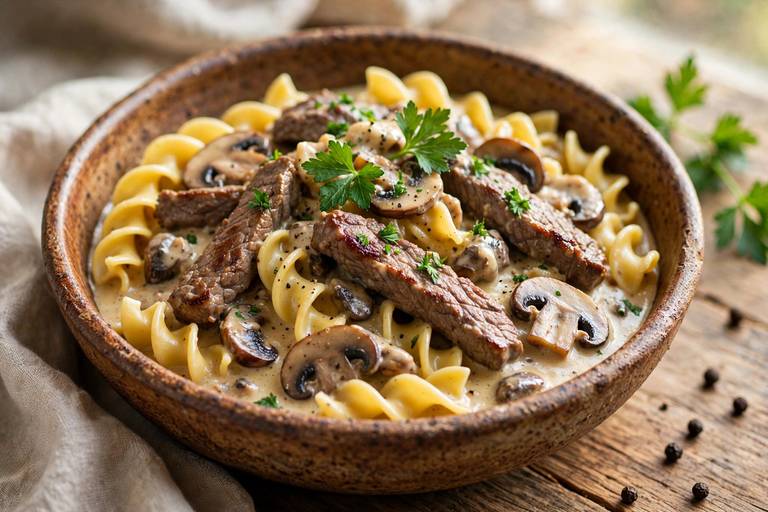
What makes beef stroganoff work is the play of contrasts. A hard, fast sear gives the beef its deep, browned savoriness, while the sauce stays soft and mellow, lifted by the gentle tang of sour cream and a faint thread of mustard. The earthy mushrooms anchor everything beneath, while the broad noodles soak up the sauce in every bite. It is the kind of dinner that brings a noisy table to a hush.
This recipe holds to the classic method while trimming it for real weeknights. The rhythm is straightforward: brown the beef in uncrowded batches so it sears instead of steaming, let the savory fond left behind become the backbone of the sauce, and whisk the sour cream in away from the heat so the finish stays glossy and smooth. Cook it once or twice and beef stroganoff will claim a permanent place in the weeknight meals you circle back to again and again.
Where Beef Stroganoff Comes From
The story of beef stroganoff begins in 19th-century Russia, where it took its name from the Stroganov family, one of the country’s wealthy merchant dynasties. The earliest printed recipes describe thin ribbons of beef flash-cooked in a screaming-hot pan, then combined with a sour cream sauce, mustard or tomato added whenever the cook wanted a brighter bite. Sour cream fit the dish effortlessly: it was central to Russian kitchens, and its mild tang balanced the richness of the beef.
What started in Russian kitchens became a global dish during the early-to-mid 1900s, carried outward by emigres and picked up in international cookbooks. In America it found a second life: home cooks folded in sliced mushrooms and traded the crisp fried potatoes of the Russian table for a bed of egg noodles. Through the 1950s and 60s, beef stroganoff became a go-to dinner-party dish across the United States, one a host could prepare in advance and bring to the table with real confidence.
The dish’s staying power comes down to balance. Beef stroganoff tastes rich yet never heavy, looks impressive yet asks little of the cook, and feels familiar yet never dull. It still ranks among the most loved creamy beef dishes in American home cooking, equally at home on a weeknight table and on a holiday spread.
The Traditional Background of Beef Stroganoff
At its core, traditional beef stroganoff rests on a spare Russian method: beef kissed by high heat for seconds, finished in a sour cream sauce. The original versions favored the best cuts they could get, cut thin across the grain so a flash of heat left them tender. Mustard turned up often in those early recipes, its bite playing against the mellow sour cream, and some cooks stirred in tomato paste for a blush of color and depth.
Post-war kitchens are where today’s beef stroganoff took its definitive shape. Mushrooms shifted from optional to standard, a dusting of flour gave the sauce a slightly sturdier body, and wide egg noodles displaced potatoes as the classic base. Community cookbooks preserved that take, family tables embraced it: a creamy, mushroom-heavy dish that settles into pure comfort.
Here the handling matters more than any single ingredient. The beef wants fierce heat, plenty of room, and a short stay in the pan, so it builds a browned crust instead of stewing in its own juices. The sour cream waits for the very end and goes in off the heat, so the sauce turns out smooth rather than split. Honor those two moves and the dish nearly cooks itself.
Read Also: If you want something lighter earlier in the day, a protein-packed yogurt bowl with fruit and granola makes an easy breakfast before this hearty dinner.
What Goes Into Beef Stroganoff
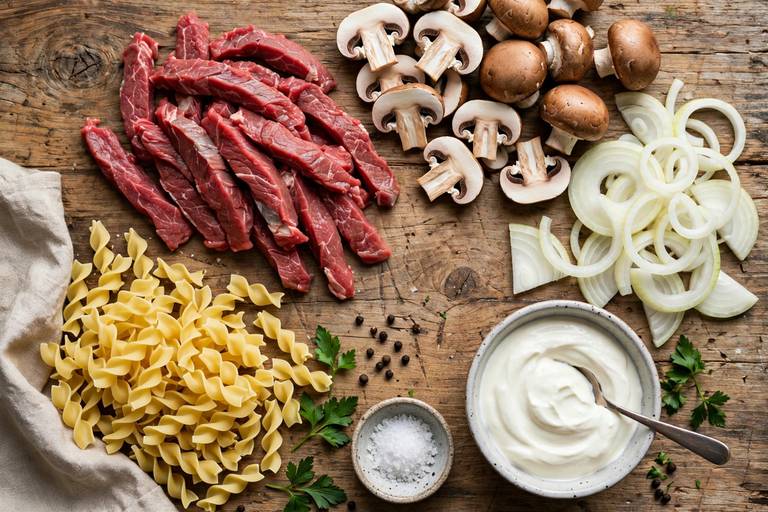
One of beef stroganoff’s quiet strengths is how little it asks of the pantry. Each ingredient pulls its weight, and together in a single skillet they build rich, well-layered taste.
The beef is the star, so choose well. Sirloin is the classic weeknight choice: tender enough for quick searing, flavorful, and widely available. Slice it thin, about a quarter inch thick, and always cut against the grain so the short muscle fibers stay tender instead of chewy. Before the strips touch the pan, press them firmly dry with paper towels; any water clinging to the surface will work against the sear you are after.
Mushrooms bring the earthy depth that defines the dish. Cremini mushrooms, also sold as baby bellas, have more flavor than plain white button mushrooms and hold their shape well. Slice them thick so they stay meaty. Onion and garlic form the aromatic base, softening into sweetness as they cook.
The sauce comes together from beef broth, a little flour for body, Dijon mustard for sharpness, and sour cream for that signature tang. Use full-fat sour cream and let it sit at room temperature for 15 minutes before cooking; cold sour cream hitting a hot pan is the main cause of a split sauce. Wide egg noodles are the traditional bed for the sauce, though mashed potatoes or rice work when you want a change.
How to Make Beef Stroganoff
Beef stroganoff moves fast once the pan is hot, so get everything sliced and measured before you start. The whole method follows a simple rhythm: sear the beef, build the sauce in the same pan, then bring them back together at the end.
Start by searing the beef in batches over high heat with a little oil. Crowding the pan drops the temperature and steams the meat gray instead of browning it, so give the strips space and let them sit undisturbed for a minute or two per side. They only need color, not thorough cooking, since they will finish in the sauce. Once a batch takes on color, move it out of the skillet and onto a plate.
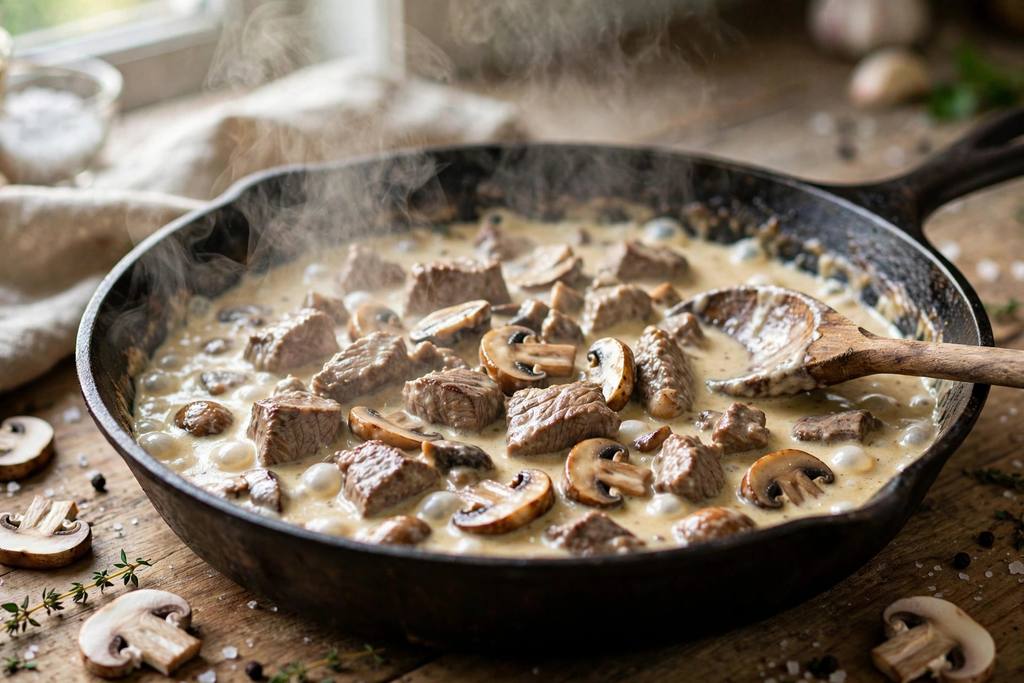
Next, lower the heat and saute the mushrooms, onion, and garlic in the same pan, scraping up the browned bits left by the beef. Those bits are pure flavor. Once the mushrooms have released their liquid and started to brown, sprinkle in the flour and stir for a minute to cook out the raw taste. Stream the beef broth into the pan a little at a time, whisking so the sauce stays lump-free, then stir through the Dijon mustard. Give the sauce a gentle simmer until it turns thick enough to leave a coating on the back of a spoon.
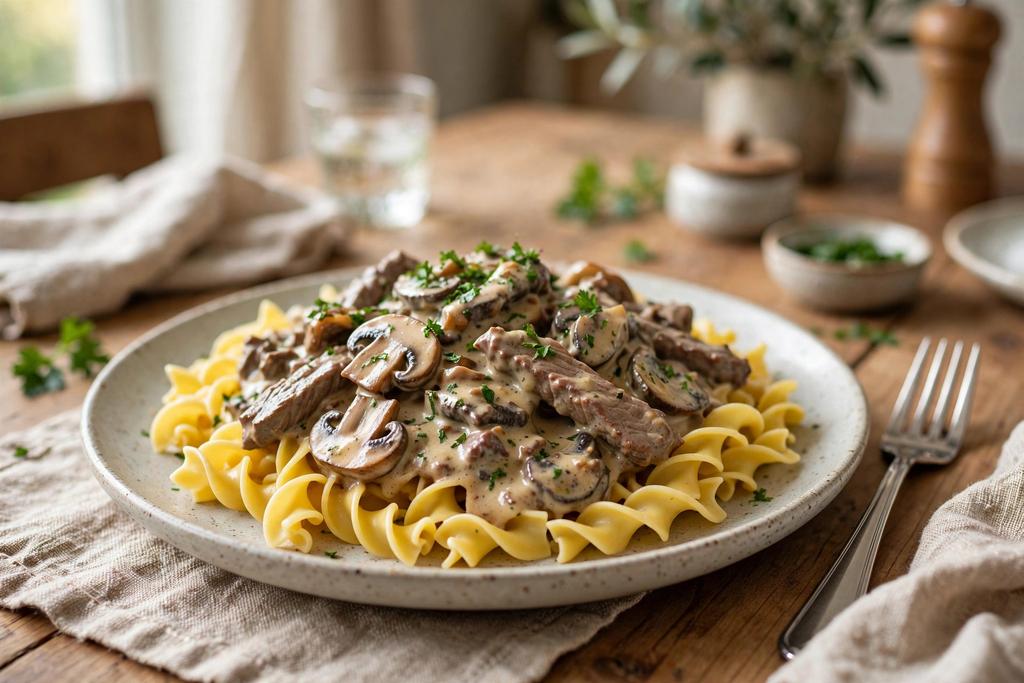
Now take the pan off the heat. This is the crucial moment for a silky beef stroganoff. Stir in the room-temperature sour cream until fully blended, then return the beef and any accumulated juices to the pan. Warm everything through gently without letting it boil. Serve immediately over hot buttered egg noodles with a sprinkle of fresh parsley.
Tips for the Best Beef Stroganoff
Small details separate a good beef stroganoff from a great one. These tips address the most common pitfalls.
Give the beef room to brown. Never load the skillet all at once, because tightly packed meat releases steam and turns gray instead of crusting. Work through two or three smaller rounds with generous gaps between the strips; that rich, dark crust is the engine of the dish’s flavor, and it only builds when each strip has breathing space. Those extra few minutes show up in every bite.
Thin slicing matters, and direction matters just as much. Spot the grain lines running through the meat, then cut across them so every slice stays tender. Thin slices cook in a flash and stay tender, while thick or with-the-grain cuts turn chewy no matter how carefully you cook them.
Temper the sour cream. Cold dairy plus hot sauce equals curdling. Set the sour cream on the counter while you prep, stir a spoonful of the warm sauce into it first, and always add it off the heat. Your sauce will stay glossy and smooth.
Do not boil after adding sour cream. Once the sour cream is in, keep the heat gentle. A hard boil can split even a well-made sauce. Warm it through, check the seasoning, and serve.
Salt in layers. Season the beef before searing, the mushrooms as they cook, and the finished sauce at the end. Layered seasoning tastes deeper and more balanced than a single big addition at the finish.
Serve it right away. Beef stroganoff waits for no one. The noodles keep absorbing sauce and the beef keeps cooking from residual heat, so plate it the moment it is done for the best texture.
Beef Stroganoff Nutrition
Beef stroganoff is a rich, satisfying main dish, best enjoyed as part of a balanced plate. A serving delivers solid protein from the beef along with B vitamins and iron. The richness comes from the sour cream and butter, so keep portions in check: one moderate scoop over noodles next to a simple vegetable side adds up to a complete, satisfying dinner.
For a lighter take that keeps the spirit of the dish, pick a leaner cut such as sirloin tip, ease back on the butter, and replace part of the sour cream with plain Greek yogurt. Mushrooms add fiber and nutrients while stretching the meat further. Pairing beef stroganoff with a simple green salad or steamed green beans balances the plate with freshness and crunch.
Frequently Asked Questions
Which beef cuts give you the most tender stroganoff? Sirloin is the best all-around choice for homemade beef stroganoff: tender, flavorful, and affordable enough for a weeknight. Tenderloin works beautifully but costs more. Steer clear of stewing cuts like chuck, since they only relax through a long, slow braise and will eat tough in a brief pan-fry. Whatever cut you choose, slice it thin and always cut against the grain for the most tender bite.
Why did my stroganoff sauce curdle? Curdling almost always comes from temperature shock or boiling. Adding cold sour cream to a hot pan, or boiling the sauce after the sour cream goes in, causes the dairy proteins to tighten and separate. Prevent it by bringing the sour cream to room temperature first, stirring it in off the heat, and keeping the finished dish at a gentle warmth. If it does split slightly, a vigorous whisk can often bring it back together.
Can I make beef stroganoff ahead of time? You can prep the components ahead, but it is best assembled fresh. Slice the beef, mushrooms, and onion up to a day ahead and refrigerate them separately. Cook the dish just before serving, since the beef toughens with reheating and the sauce can separate. When leftovers need warming, take it slow on the lowest burner with a spoonful of broth added, and keep the dish well below a boil at all times.
Can I use ground beef instead of strips? Yes, and many families do. Brown the ground beef thoroughly, breaking it into small crumbles, drain off excess fat, and continue with the recipe as written. The texture is different from classic beef stroganoff made with strips, heartier and more casual, but the creamy mushroom sauce carries it beautifully. It is also a budget-friendly option that kids tend to love.
What should I serve with beef stroganoff? Wide egg noodles are the classic pairing, tossed with a little butter so the sauce clings. Mashed potatoes and steamed rice are excellent alternatives. For vegetables, simple steamed green beans, roasted carrots, or a crisp green salad balance the richness. A slice of crusty bread never hurts either, since you will want something to catch the last of the sauce.
Can I freeze beef stroganoff? Freezing is not ideal. Once thawed, dairy-based sauces often split and go grainy, while the beef can end up tough. If you want to get ahead, freeze the seared beef and mushroom mixture before adding the sour cream, then thaw it and finish the sauce fresh. Stored in the refrigerator, leftovers stay good for up to three days; warm them gently on the stove.
Read Also: For another make-ahead classic that feeds a crowd, try our creamy potato salad at your next cookout or family gathering.
Conclusion
Beef stroganoff proves that a restaurant-worthy dinner does not need a special occasion or a long evening. Tender seared beef, earthy mushrooms, and a silky sour cream sauce come together in one pan in about 35 minutes, and the result tastes like far more effort than it took. Master the two key moves, a hard sear in batches and sour cream off the heat, and this dish will never let you down. Plate it over buttery egg noodles, watch the whole pan disappear, and make beef stroganoff a regular in your rotation whenever a busy week calls for a little comfort.
Read Also: Love set-and-forget comfort food? Our chicken crockpot recipes collection brings the same cozy flavors to the slow cooker.
Classic Beef Stroganoff
Ingredients
Method
- Pat the beef strips very dry with paper towels. Season with 1/2 teaspoon salt and the black pepper.
- Heat 1 tablespoon oil in a large skillet over high heat until shimmering. Sear half the beef in a single layer, undisturbed, for 1 to 2 minutes per side until browned. Transfer to a plate. Repeat with the remaining beef and oil.
- Reduce heat to medium. Add the mushrooms and onion to the same skillet and cook, stirring occasionally, until the mushrooms release their liquid and begin to brown, about 6 minutes. Stir in the garlic and cook 1 minute more.
- Sprinkle the flour over the vegetables and stir for 1 minute. Gradually pour in the beef broth, stirring constantly to prevent lumps. Stir in the Dijon mustard and remaining 1/2 teaspoon salt.
- Simmer gently until the sauce thickens enough to coat the back of a spoon, about 4 to 5 minutes.
- Remove the skillet from the heat. Stir in the room-temperature sour cream until completely smooth.
- Return the beef and any accumulated juices to the skillet. Warm gently over low heat for 2 minutes without boiling. Taste and adjust salt as needed.
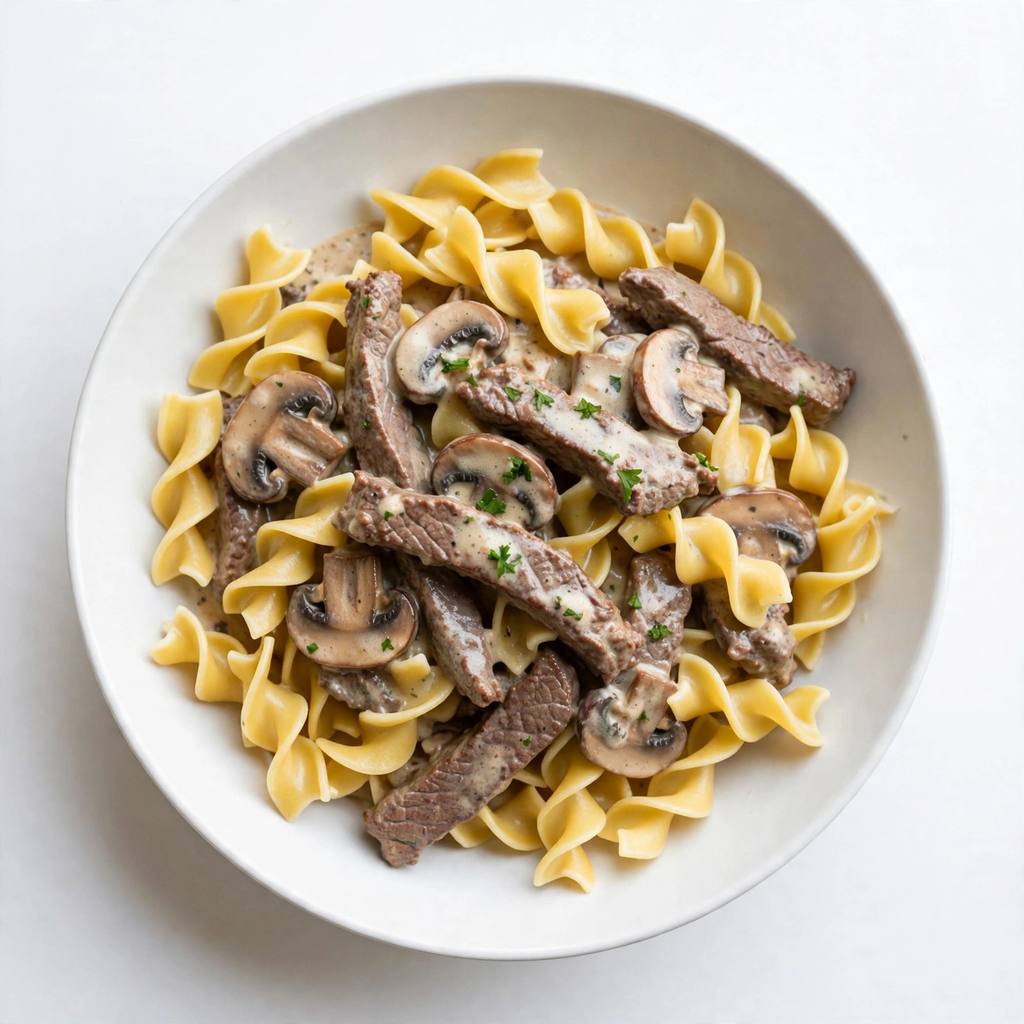
- Serve immediately over hot buttered egg noodles, garnished with fresh parsley.