Classic Meatloaf Recipe: Juicy, Glazed, and Family-Approved
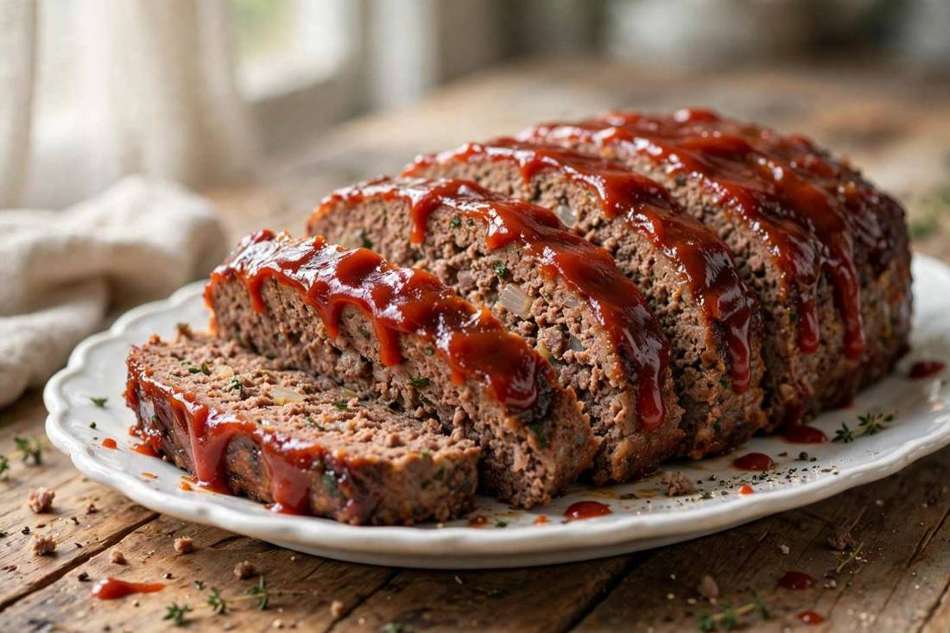
Meatloaf is one of those dinners that never goes out of style. A tender, well-seasoned loaf of ground beef with a sweet, glossy ketchup glaze checks every box for a weeknight family meal: it is affordable, filling, and the leftovers taste even better the next day. This classic meatloaf recipe keeps things simple with pantry ingredients you probably already have in your kitchen.
The secret to a great result is balance. You want beef with enough fat to stay juicy, breadcrumbs soaked in milk to keep the texture soft, and a glaze that caramelizes in the oven instead of burning. This version bakes free-form in about an hour and a quarter, and a short rest before slicing keeps every slice neat and intact. Once you try this homemade meatloaf, the frozen kind from the store will not tempt you again.
It serves eight people comfortably, which makes it a solid pick for Sunday dinner or a small gathering. You can shape the loaf a day ahead and refrigerate it, then bake it when you get home from work. This is the kind of recipe you will memorize after one try, and it is ready to earn a permanent spot in your dinner rotation.
The Origin of Meatloaf
Meatloaf has deeper roots than most people expect. Seasoned ground meat shaped and cooked as a single portion shows up in ancient Roman cookbooks, and medieval Europe had its own versions of minced meat baked with spices. The German Hackbraten, a classic meatloaf made from mixed ground meats, is one of the direct ancestors of the American version. German immigrants brought the idea with them in the 1800s, and it settled into home kitchens across the country.
The modern American meatloaf found its moment during the Great Depression. Ground meat was one of the cheapest proteins available, and stretching it with breadcrumbs, oats, or cracker crumbs fed more mouths for less money. Home cooks got creative, and the loaf became a canvas for whatever seasonings and sauces they had on hand. By the 1950s, it had become a diner and home-kitchen staple, often served as a thick slice with gravy or a ketchup glaze beside mashed potatoes. That mid-century meatloaf is the version most of us picture today: humble, hearty, and deeply comforting.
Traditional Background
These days meatloaf holds its ground as the definition of American comfort cooking. You will find it on the table at family gatherings, church potlucks, and diners from one coast to the other. The idea is simple enough that every cook tweaks it a little. Some swap the glaze for a brown gravy, others mix in different seasonings or a handful of grated cheese, but the heart of the dish stays the same. A great meatloaf is judged by two things: a juicy, tender interior and a flavorful crust that makes you reach for a second slice.
It also holds a special place in the weekly dinner rhythm. A single bake feeds a family with enough left over for sandwiches the next day, which is why so many home cooks return to it again and again. Few dishes stretch a grocery budget this far while still feeling like a proper, sit-down meal.
Classic Meatloaf Ingredients
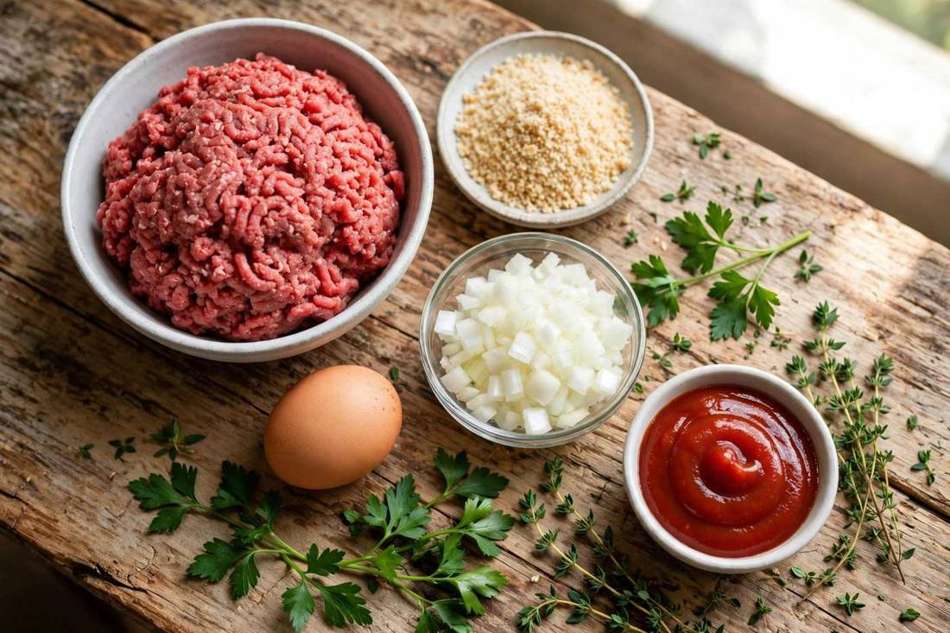
The base of this recipe is two pounds of 80/20 ground beef. The fat content matters more than any other detail, because leaner beef turns dry and crumbly during a long bake. If you only have leaner ground beef on hand, add a tablespoon of olive oil to the mix to keep it moist. The meat should feel cool and fresh, and it works best if it is not ice cold straight from the fridge, so let it sit on the counter for about fifteen minutes before you mix.
Binders and softeners do the quiet work in the background. One cup of plain breadcrumbs soaked in three quarters of a cup of whole milk swells into a soft paste that keeps the finished meatloaf tender instead of dense. Two large eggs hold everything together and add richness to every bite. One medium onion, diced fine, melts into the meat as it bakes, while three minced garlic cloves give the loaf a gentle savory edge without overpowering it.
Seasoning stays straightforward: two tablespoons of Worcestershire sauce, one and a half teaspoons of fine salt, one teaspoon of black pepper, and half a teaspoon of smoked paprika for a whisper of color and warmth. A spoonful of Worcestershire sauce gives the mix a rounded, meaty depth that brings out the flavor of the ground beef. The glaze is a simple mix of three quarters of a cup of ketchup, two tablespoons of packed brown sugar, and one tablespoon of yellow mustard. It thickens and caramelizes in the oven into a sweet, tangy shell that is the signature of a classic meatloaf.
How to Bake Meatloaf
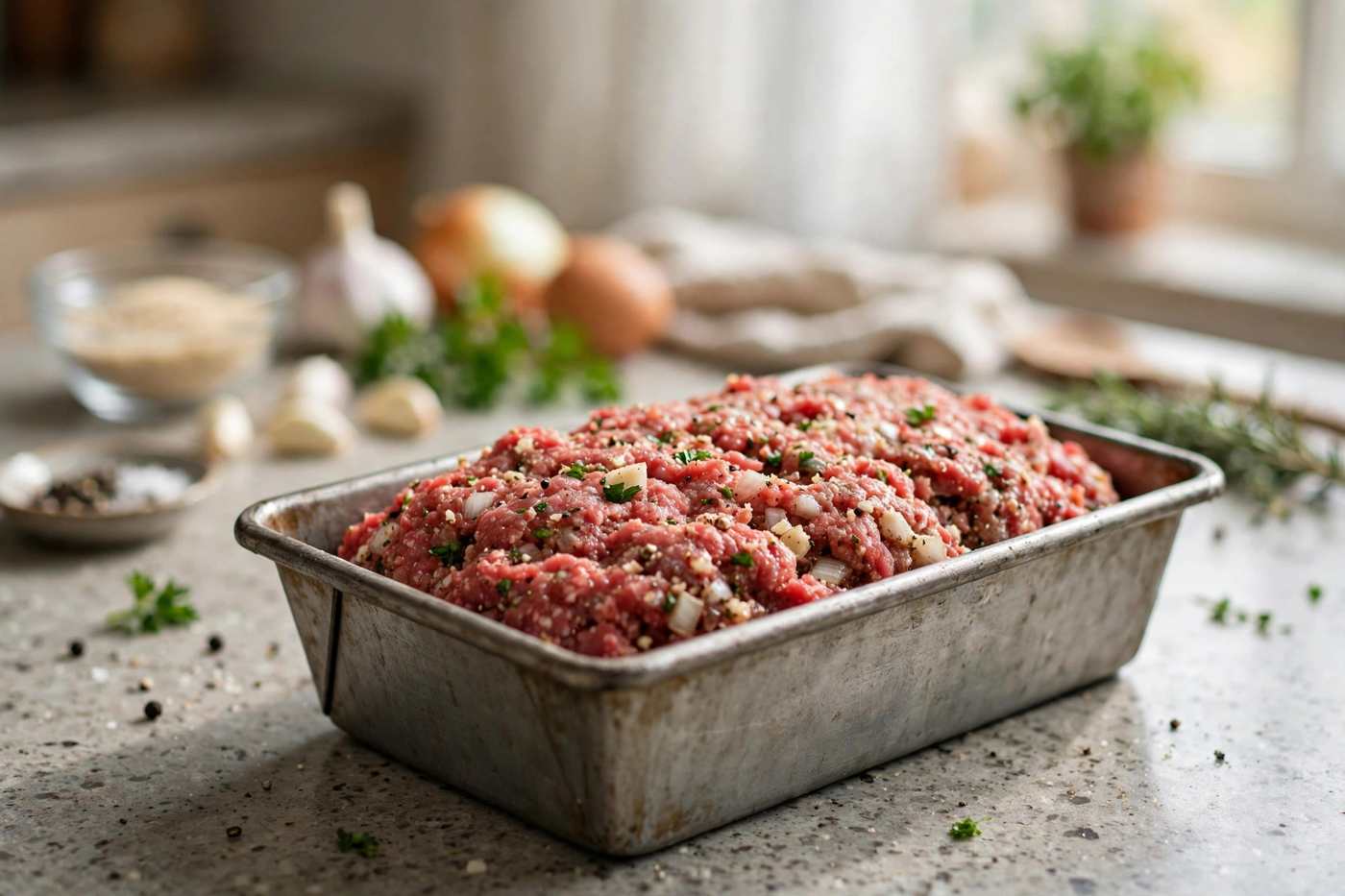
Set the oven to 350°F and cover a 9×13-inch baking pan with foil so cleanup takes seconds. Stir the breadcrumbs and milk together in a large bowl, then leave them alone for five minutes so the crumbs drink up the milk and turn soft. Add the ground beef, eggs, diced onion, garlic, Worcestershire sauce, salt, pepper, and paprika. Work the mixture with your hands only until you cannot see any dry patches left. Overmixing is the most common meatloaf mistake, because it compresses the meat and turns the texture tough and springy instead of tender.
Shape the mixture into a loaf about nine inches long and four inches wide on the prepared pan, keeping it free-form rather than packed into a loaf pan. A free-form meatloaf lets hot air circulate around the sides, which gives you a better crust all over and lets excess fat drain away instead of pooling around the meat. Using damp hands, even out the top of the loaf, then combine the ketchup, brown sugar, and mustard and coat the loaf with half of the mixture.
Bake for 45 minutes, then spread on the rest of the glaze and slide the meatloaf back into the oven for 25 to 30 minutes more. The loaf is ready once the glaze looks set and bubbles around the edges, and a thermometer pushed into the middle of it shows 160°F. Allow the meatloaf to sit undisturbed for 10 minutes before cutting. That short wait allows the juices to spread back through the loaf, keeping each slice firm and juicy. Cut with a sharp serrated knife into thick slices and serve warm.
Read Also: Our creamy sweet potato casserole makes a cozy, classic side for this dinner.
Tips
Do not skip the rest. Ten minutes on the cutting board lets the juices redistribute through the loaf, which is what keeps thick slices from crumbling on the plate. If you cut too soon, the steam escapes and the meatloaf dries out faster.
A thermometer is the only reliable way to know your meatloaf is done. Judging by color alone is unreliable, so push an instant-read thermometer into the thickest part of the loaf and check for 160°F. Take it out as soon as it hits that reading, because the heat left inside will carry it up another degree or two during the rest.
Brush the glaze on in two rounds. The first layer bakes into the meat and flavors the crust, while the second layer goes on near the end and turns into the glossy, caramelized shell everyone fights over. Brushing it all on at the start can make the sugars darken too much over the full bake.
Shape the loaf with damp hands and keep the ends slightly rounded. Sharp corners dry out in the oven, while a smooth, even shape cooks at the same rate all the way through. If you prefer a loaf pan, line it with parchment and expect a softer crust with a little more rendered fat around the base.
Get a head start on hectic evenings by preparing it in advance. Assemble and shape the loaf a full day before you plan to bake, wrap it up tight, and keep it chilled in the refrigerator. Add about five extra minutes to the bake time since it starts cold, and brush the glaze on just before it goes into the oven.
Leftover meatloaf sandwiches are a reward worth planning for. A thick cold slice on toasted bread with a little extra ketchup or mustard is a classic lunch, and the loaf slices cleanly once it has chilled overnight in the refrigerator.
Read Also: A tidy prep station helps weeknight cooking flow smoothly, so browse our kitchen organization ideas before you start.
Nutrition Information
Each serving is one thick slice, and the recipe makes eight servings. The figures below are rough guides and may move slightly depending on your specific ingredients and how thick you cut each slice.
- Calories: about 380 per serving
- Carbohydrates: about 21 grams
- Protein: about 24 grams
- Fat: about 22 grams
- Fiber: about 1 gram
- Sodium: about 710 milligrams
To trim the sodium a bit, use a low-sodium ketchup in the glaze and cut the added salt to one teaspoon. These values are based on the USDA’s published nutrition data for these ingredients.
Frequently Asked Questions
Why did my meatloaf fall apart when I sliced it?
A meatloaf that crumbles usually needed more binder, a gentler mix, or a longer rest. Make sure both eggs go in and the breadcrumb and milk mixture is fully soaked before it meets the meat. Mix just until combined, since overworking develops a springy texture that squeezes out juices. The ten-minute rest after baking is just as important, because it lets the juices settle and the structure firm up. Slice with a serrated knife using a gentle sawing motion instead of pressing straight down.
Can I make meatloaf ahead of time?
Yes, and it is one of the best make-ahead dinners around. Mix and shape the loaf up to one day before baking, cover it tightly with plastic wrap or foil, and refrigerate. Brush the glaze on right before it goes into the oven and add about five extra minutes to the bake time, since it starts cold. You can also freeze the shaped, unbaked loaf for up to three months; thaw it overnight in the refrigerator before baking as usual.
What internal temperature should meatloaf reach?
Meatloaf made with ground beef is done at 160°F in the center of the loaf. An instant-read thermometer is the only reliable way to check, because the outside can look browned long before the middle is cooked through. Push the thermometer into the thickest section, being careful not to let it touch the pan. Pull the loaf from the oven right at 160°F and let it rest for ten minutes, during which carryover heat nudges the temperature a touch higher while the juices settle.
Can I freeze leftover meatloaf?
Yes. Cool the leftovers completely, then wrap individual slices tightly in plastic wrap and place them in a freezer bag with the air pressed out. They keep well for up to three months. Thaw slices overnight in the refrigerator, then reheat in a 350°F oven for about 15 minutes until hot through. The oven keeps the crust and glaze intact much better than a microwave, which can make the slices rubbery. A splash of extra ketchup on top before reheating keeps things moist.
What should I serve with meatloaf?
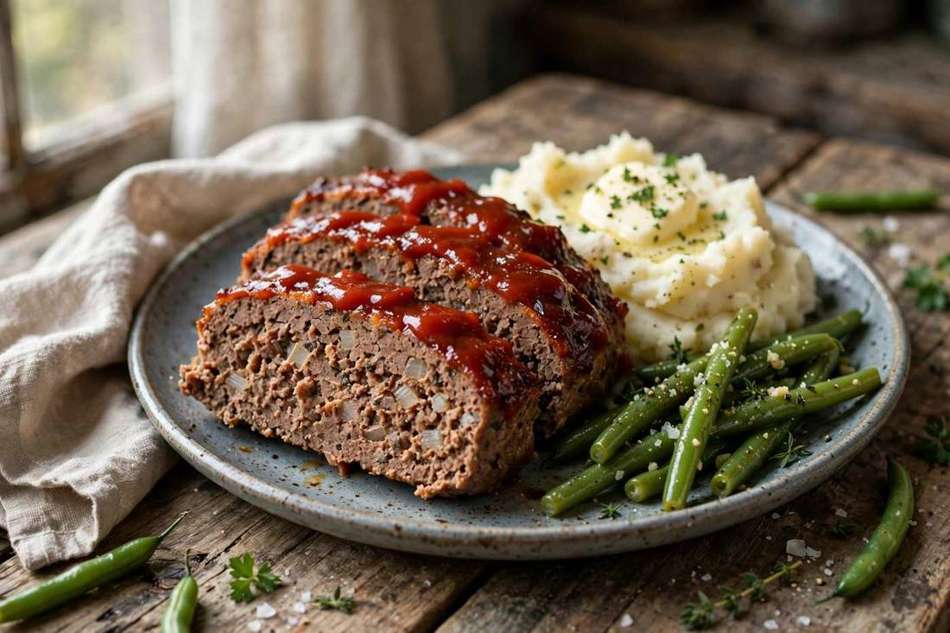
Classic partners are mashed potatoes and a green vegetable like green beans, roasted broccoli, or a simple side salad. Serve the deep, savory loaf alongside one creamy side and one bright, fresh side on the same plate. Dinner rolls are handy for scooping up any extra glaze, and a simple pan gravy works if anyone prefers it over the ketchup shell. For a lighter plate, serve smaller slices over a big green salad with the glaze drizzled on top like a dressing.
Conclusion
This classic meatloaf proves that the most loved dinners are often the simplest. Juicy seasoned beef, a soft and tender crumb, and a sweet caramelized glaze come together with pantry ingredients and one pan. It feeds a crowd, reheats beautifully, and the leftovers might be the best part. Bake this meatloaf once, and it will likely earn a regular spot in your weeknight rotation.
Read Also: Finish the meal on a sweet note with a cool, creamy banana pudding for dessert.
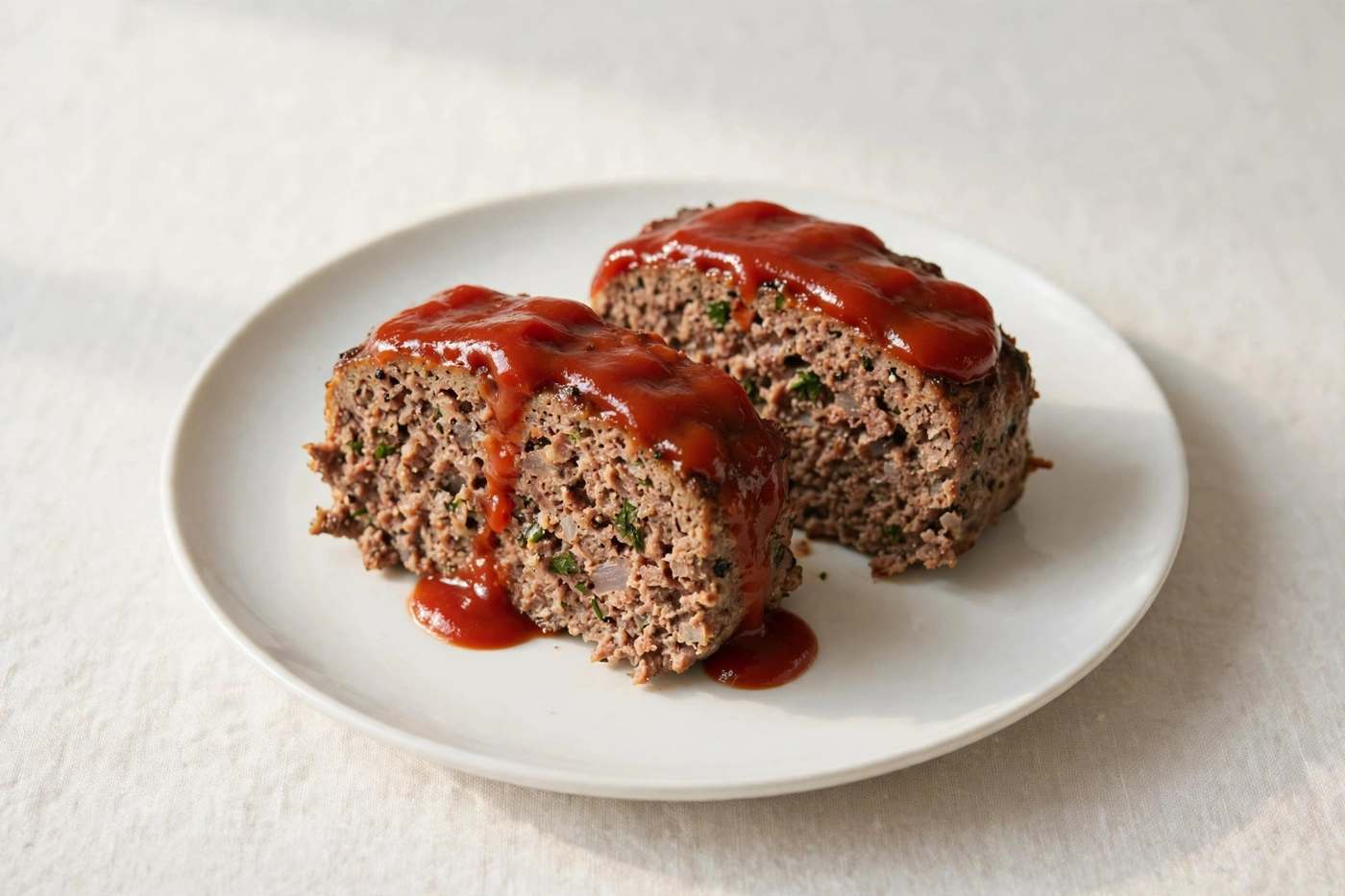
Classic Beef Meatloaf with Ketchup Glaze
Ingredients
Method
- Heat the oven to 350°F. Line a 9×13-inch baking pan with foil.
- In a large bowl, combine the breadcrumbs and milk. Let sit 5 minutes until soft.
- Add the ground beef, eggs, onion, garlic, Worcestershire sauce, salt, pepper, and paprika. Mix gently with your hands just until combined.
- Shape into a loaf about 9 inches long and 4 inches wide on the prepared pan. Smooth the top with damp hands.
- Whisk the ketchup, brown sugar, and mustard. Brush half of the glaze over the loaf.
- Bake 45 minutes. Brush on the remaining glaze and bake 25 to 30 minutes more, until the center reads 160°F on an instant-read thermometer.
- Rest 10 minutes before slicing with a serrated knife.