Kitchen Organization: A Practical Guide for Home Cooks
Good kitchen organization is one of the simplest ways to make cooking at home feel easier. When every tool has a clear place and ingredients are easy to find, dinner comes together with far less stress. Many home cooks do not need new gadgets or a bigger kitchen. They need a system that matches the way they cook, and that is what thoughtful kitchen organization provides.
A disorganized kitchen quietly costs you time and money every week. You buy a second bottle of olive oil because you cannot find the first one, or skip a recipe because the spice you need is buried in a cabinet. Small frictions like these add up until cooking feels like a chore instead of something you enjoy. Strong kitchen organization removes them one by one.
The good news is that an organized kitchen does not require a renovation or expensive storage products. You mostly need to make choices: which items earn a spot, where each one goes, and how you will keep it all tidy. This guide walks through each step, from a full declutter to cooking zones, storage ideas, and the habits that keep it working.
Why Kitchen Organization Changes How You Cook
Faster Prep and Less Time Wasted
The biggest benefit of kitchen organization is speed. When your cutting boards, knives, mixing bowls, and measuring cups live near your main work surface, you stop walking back and forth across the kitchen. Prep becomes a smooth sequence instead of a scavenger hunt, and dinner feels shorter because nothing interrupts the flow. Good kitchen organization turns a scattered process into a routine you can repeat without thinking.
Less Food Waste and Fewer Duplicate Purchases
A cluttered pantry hides food. Bags of rice migrate to the back and canned goods stack three deep while spices expire unnoticed. With solid kitchen organization, you can see what you own, so you cook with what you have and shop with a clearer list. A zone for everyday ingredients plus a monthly scan of expiration dates cuts waste and saves money at the grocery store.
Calmer, More Enjoyable Cooking
Cooking is far more pleasant in a calm space. Clear counters give you room to spread out and clean tools are easy to grab. When everyone knows where things live, kids can help find ingredients without asking every few minutes. An organized kitchen supports the cook mentally as much as physically, and that calm shows up in the food and the mood around the table.
Kitchen Organization Starts With a Full Kitchen Declutter
Before buying a single bin or label, the first move in kitchen organization is a full declutter. Storage products cannot fix a kitchen holding twice as many tools as it needs, and one focused session beats spreading the work across weeks. Seeing everything at once makes decisions easier.
Empty your cabinets, drawers, and pantry one section at a time, pulling everything onto the counter so you can see the full picture. Group like items together: baking sheets in one pile, plastic containers in another, spices in another. This reveals duplicates and forgotten items and gives you a clean surface to rebuild on.
Sort each group with a simple keep, relocate, or remove rule. Keep what you use regularly. Relocate items that belong elsewhere, like office scissors in the junk drawer. Remove anything broken, missing a partner, or untouched for a year: the chipped mug, the lid with no container, the third garlic press. Donate what still works so it leaves the house quickly.
Be honest about specialty gadgets. A gadget you only pull out once a year, like a bread machine or ice cream maker, shouldn’t take up your best cabinet space. Give it an out-of-the-way home or let it go. The goal of this stage of kitchen organization is not to own as little as possible. It is to own exactly what you use.
Once the sorting is done, wipe down the empty shelves and drawers before anything goes back. This is the perfect moment to measure shelves for future containers and to notice problems like worn shelf liner or a wobbly drawer. You now have a clean slate, and the zones you set up next will determine where each kept item lives.
Kitchen Organization by Cooking Zones
One of the most effective principles in kitchen organization is the zone system: store items by task, not just by type. Most home kitchens work well with four zones, each holding everything its task needs so you are not crossing the kitchen mid-recipe.
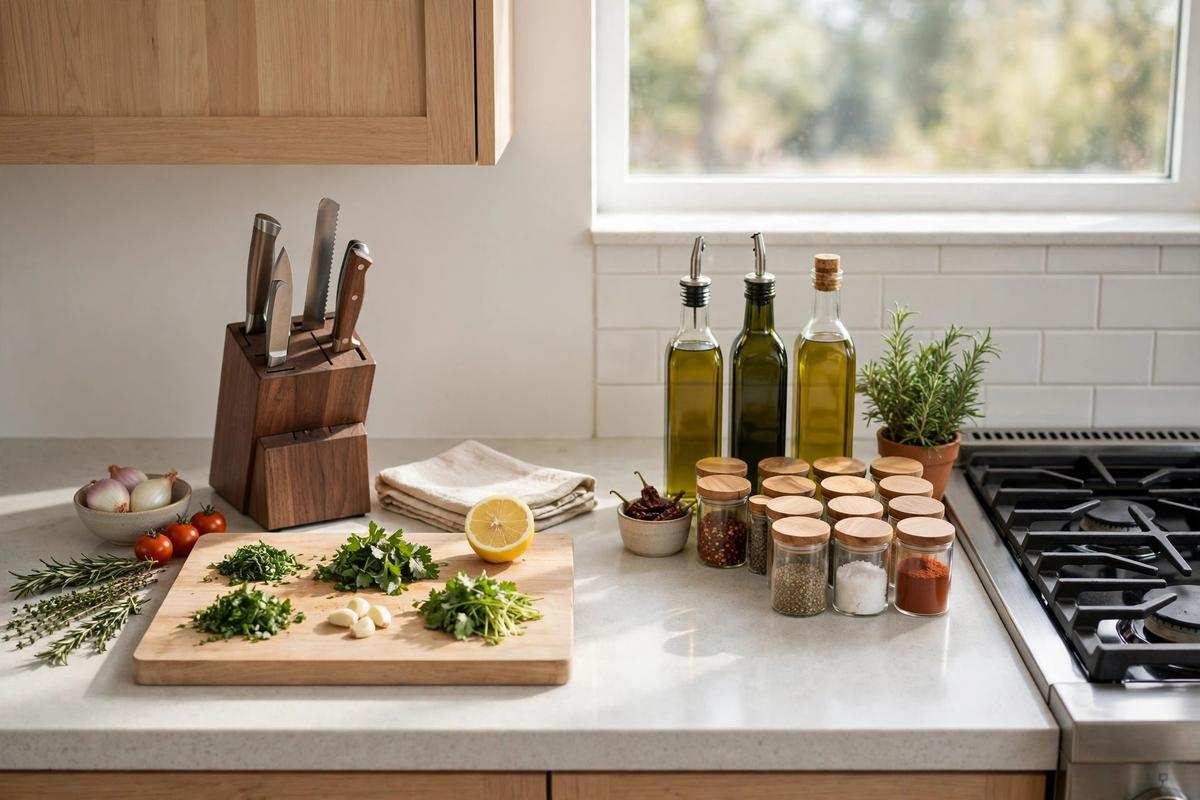
The prep zone centers on your main counter or cutting area. Within reach here are your cutting boards, chef knives, mixing bowls, measuring cups and spoons, a colander, and the trash bin set just close enough. Placed next to the sink and refrigerator, it lets you wash, chop, and measure in one tight triangle. Reserve the prime counter space for the zone you use most, and move anything that belongs elsewhere out of it.
The cooking zone covers the stove, oven, and microwave. Store pots, pans, lids, spatulas, tongs, oven mitts, and trivets within arm’s reach of the range. Keep everyday oils, salt, and pepper here, but move other spices to the prep zone to avoid heat damage. A small holder for the tools you grab constantly keeps the stovetop area tidy.
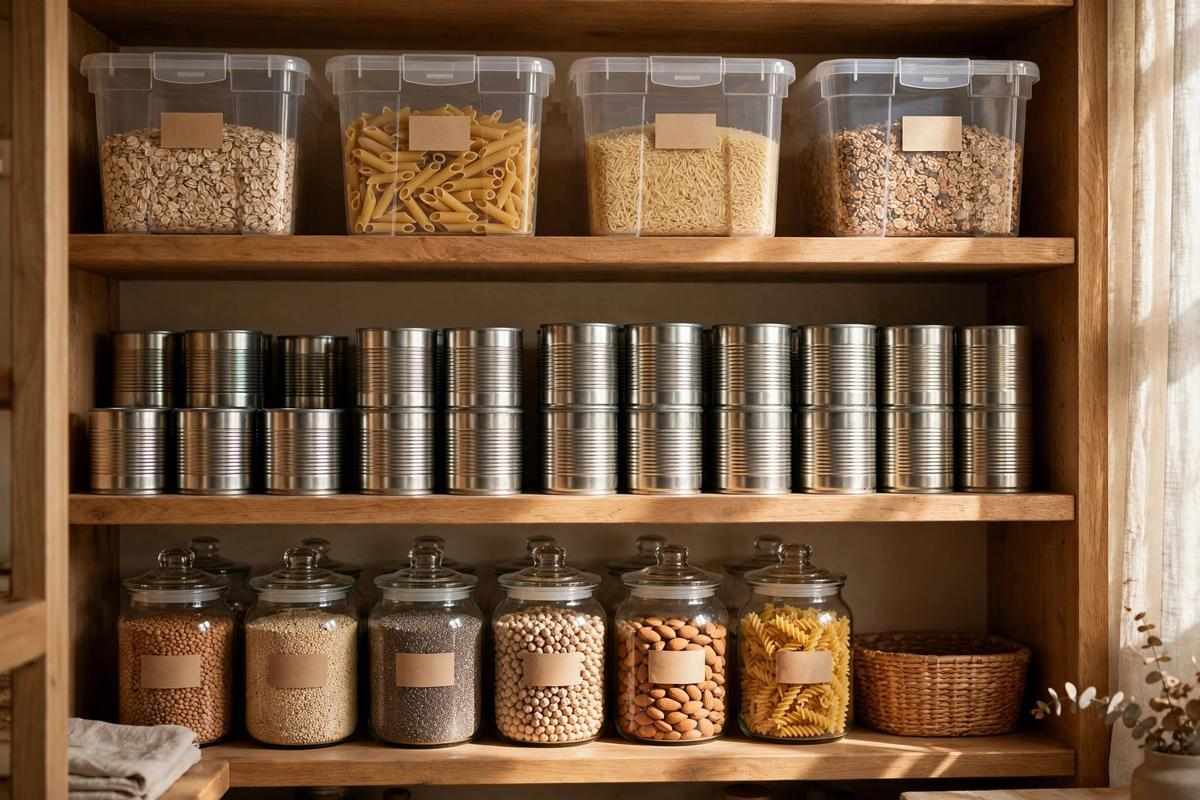
The storage zone is your pantry and food cabinets. Group food by category: breakfast items together, canned goods together, baking supplies together, snacks in one place. Put everyday items at eye level and occasional items high or low. Clear containers for flour, rice, pasta, and cereal let you see levels at a glance, which supports the waste-reduction goal of kitchen organization.
The cleaning zone lives around the sink and dishwasher. Keep dish soap, sponges, brushes, dish towels, and drying racks under or beside the sink, with trash bags and cleaning sprays in the cabinet beneath. When every cleaning supply has one home, cleanup goes faster and the kitchen returns to its organized baseline every night.
Read Also: Once your counters are clear, dessert prep feels effortless too. See how an organized kitchen makes treats like banana pudding simple to put together on a weeknight.
Smart Storage Ideas for Kitchen Organization in Small Kitchens
Small kitchens demand smarter kitchen organization, not more square footage. The secret is using space you already have but ignore: the insides of cabinet doors, the gaps between shelves, the side of the refrigerator, and the wall above the counter.
Start with vertical space. Shelf risers double the usable area inside cabinets. Hooks on cabinet doors hold measuring cups, pot lids, or cleaning supplies. A magnetic strip keeps knives accessible and frees a drawer. Over-the-door organizers create slim shelves for spices, wraps, and packets. Each move shifts items from crowded drawers into space that was sitting empty.
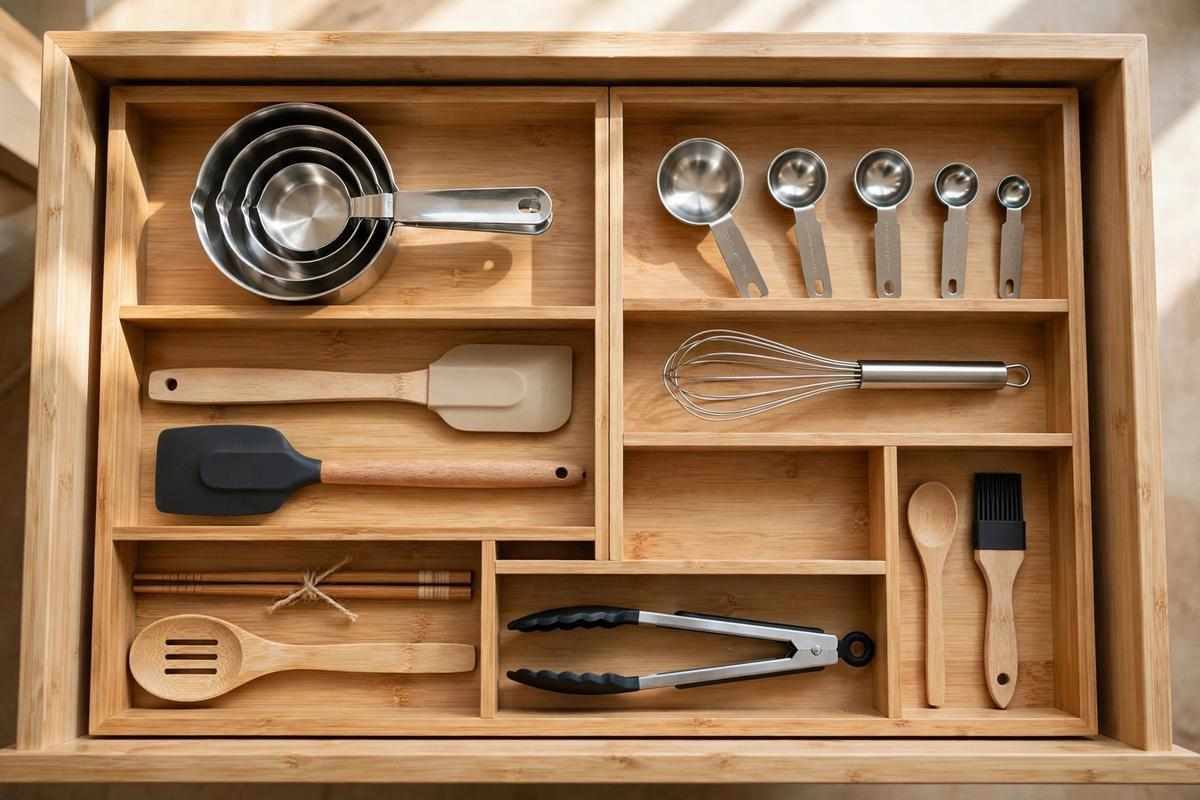
Drawer dividers are one of the highest-impact upgrades in any kitchen organization plan. With sections in place, the junk drawer turns into a handy tool station, and separators in the utensil drawer stop spatulas, whisks, and tongs from getting tangled. In deep drawers, vertical dividers let you file baking sheets and cutting boards upright like folders, so you can grab each one without unstacking.
Give your pantry clear zones with containers you can see through. Square containers fit together better than round ones and waste less shelf space. Decant flour, sugar, rice, and pasta into matching containers so everything stacks neatly. Label the front of each container with the contents and the date you opened it. Labels make a large difference, especially when more than one person cooks or shops.
Think in layers for cabinets and the refrigerator. A turntable in a deep corner cabinet brings items to the front with one spin. Tiered organizers lift back rows of cans so you can read every label. In the fridge, assign each shelf a job: ready-to-eat foods up top, raw ingredients in the middle, drinks and condiments on the door. Consistent spots are the quiet heart of lasting kitchen organization.
Finally, respect the limits of your space: one in, one out. When a new gadget enters a small kitchen, an old one leaves. This protects the work you did during the declutter and keeps cabinets from creeping back toward full. This one habit does more than any storage product you can buy.
Read Also: A well-zoned kitchen makes hands-off meals even easier. Put your streamlined prep setup to work with these slow cooker recipes that simmer away while you get on with your day.
Daily Habits That Keep Kitchen Organization Working
The best kitchen organization system still fails without maintenance, but maintenance takes only a few minutes a day once the system is set up. These habits keep the kitchen close to its organized baseline without weekend cleanouts.
Clean as you go is the single most powerful habit. Wash the cutting board while the pan heats, wipe the counter while the pasta boils, and put away each spice the moment you finish with it. These tiny actions take seconds and prevent the end-of-cooking pileup that makes cleanup feel overwhelming.
End each day with a ten-minute reset: run the dishwasher, wipe the counters and stovetop, and return stray items to their zones. Falling asleep to a tidy kitchen lets you wake up to a fresh start instead of yesterday’s clutter. This reset is the daily engine of kitchen organization.
Do a weekly five-minute sweep of one small area. Monday can be the spice shelf, Tuesday the junk drawer. Rotating through small areas keeps every spot in check without a big monthly project. Check for expired items, wipe a shelf, and return anything that drifted out of place.
Set things up so every person at home can put items away without a second thought. If family members keep leaving items on the counter, the storage spot is probably too complicated or too far away. Move it, simplify it, or add a label. Kitchen organization works when the whole household can follow it without thinking.
Frequently Asked Questions About Kitchen Organization
Where should I start with kitchen organization?
Start with a full declutter before organizing anything else. Pull everything out of one area at a time, group like items, and remove what is broken, duplicated, or unused. Only then set up zones and add storage. Organizing without decluttering just rearranges the mess. A thorough declutter reveals exactly what you have and speeds up every step that follows.
What are the best containers for kitchen organization?
Clear, stackable containers with airtight lids work best for dry goods like flour, rice, pasta, cereal, and snacks. Square shapes use shelf space more efficiently than round ones. In the refrigerator, use clear bins grouped by category. Never buy containers before you declutter and measure, since wrong sizes create more clutter than they solve. Labels on the front complete the system.
How often should I declutter my kitchen?
Do a light declutter twice a year, in spring and fall, paired with checking expiration dates in the pantry and spice cabinet. Between sessions, use the one-in-one-out rule so new items do not pile up. If drawers stick, cabinets will not close, or counters collect clutter, do a quick targeted declutter of that area right away instead of waiting.
How do I organize spices so I can actually find them?
Keep every spice in one dedicated spot near your prep zone. A tiered organizer in a cabinet, a pull-out rack, or a drawer insert all work because they let you read every label at a glance. Alphabetize or group by cuisine, whichever you will maintain. Check dates yearly and toss faded ground spices. Keep only one open container of each spice to avoid duplicates.
What are the best kitchen organization tips for a very small kitchen?
Use vertical space first: shelf risers, door hooks, wall-mounted knife storage, and over-the-door pantry organizers add storage without taking floor or counter space. Keep only multi-use tools; store single-use gadgets elsewhere or let them go. Use the one-in-one-out rule, and keep counters as clear as possible. Open counter space makes a small kitchen feel and work larger than any storage product.
How do I keep my kitchen organized once it is done?
Protect the system with three habits: clean as you go, run a ten-minute reset each evening, and sweep one small area each week. Give every item one clear home that is easy to reach, so putting things away takes less effort than leaving them out. When the whole household follows the same simple system, kitchen organization maintains itself with little effort.
Conclusion: Kitchen Organization That Lasts
Kitchen organization is not a one-time project but a way of running your kitchen that pays off every day. The declutter gives you a clean start, zones give every item a logical home, smart storage makes the most of your space, and small daily habits keep it working. These steps need no special skills or large budget, only decisions. Once made, cooking becomes faster, calmer, and far more enjoyable.
Pick one tiny job and do it today. You could clear a drawer, set up a single zone, or give the kitchen a ten-minute reset tonight. Each small win makes the next one easier, and within weeks your kitchen organization will feel less like a project and more like the natural way your kitchen works.
Read Also: Put your newly organized kitchen to work with a cozy classic. This beef stroganoff comes together smoothly when every ingredient and tool is exactly where you expect it.