Easy Fried Rice Recipe: Takeout-Style Flavor at Home in 20 Minutes
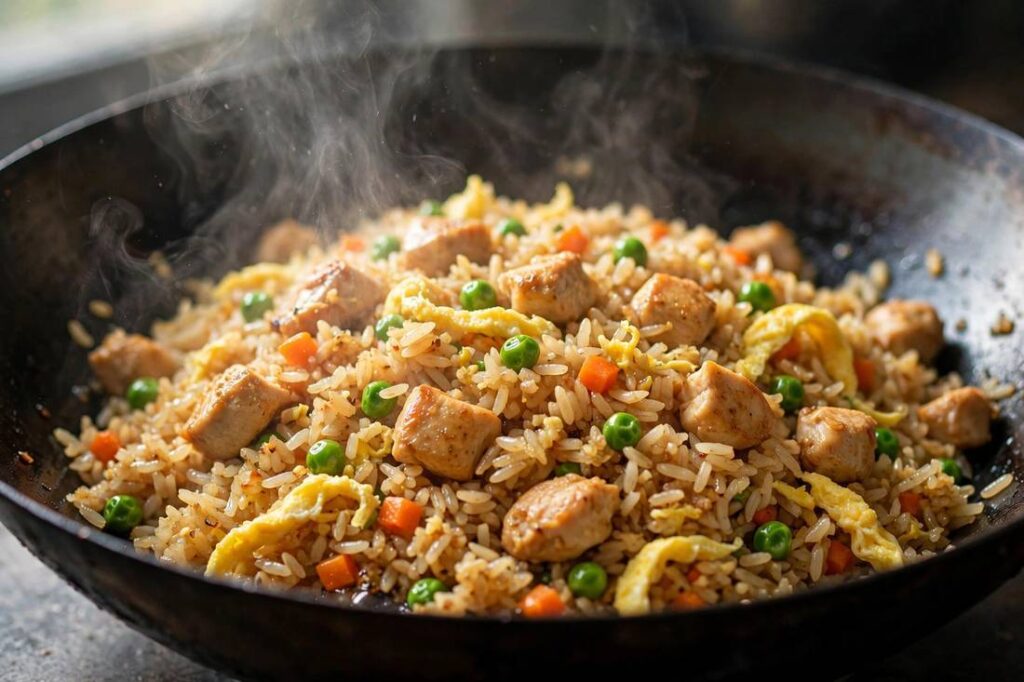
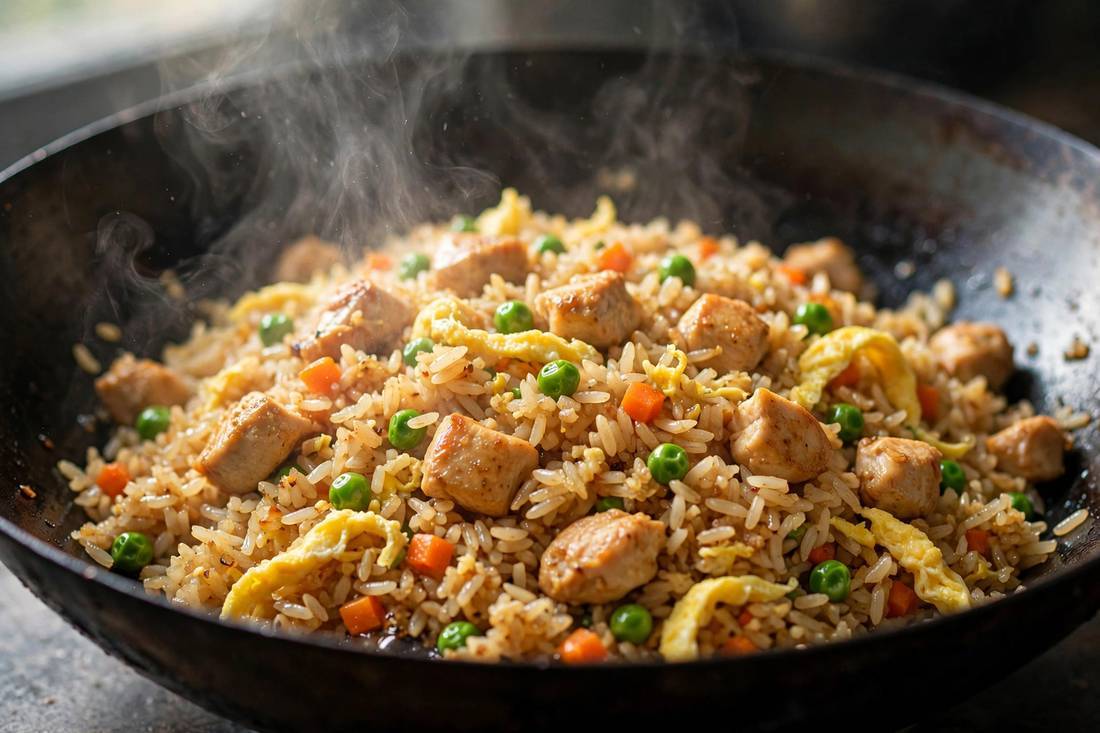
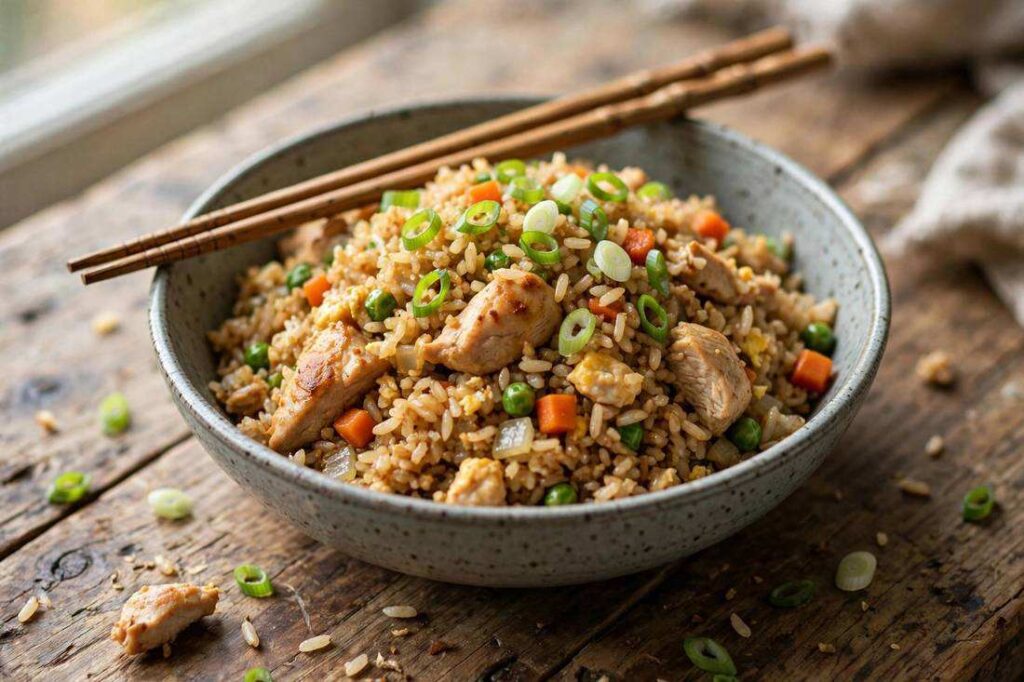
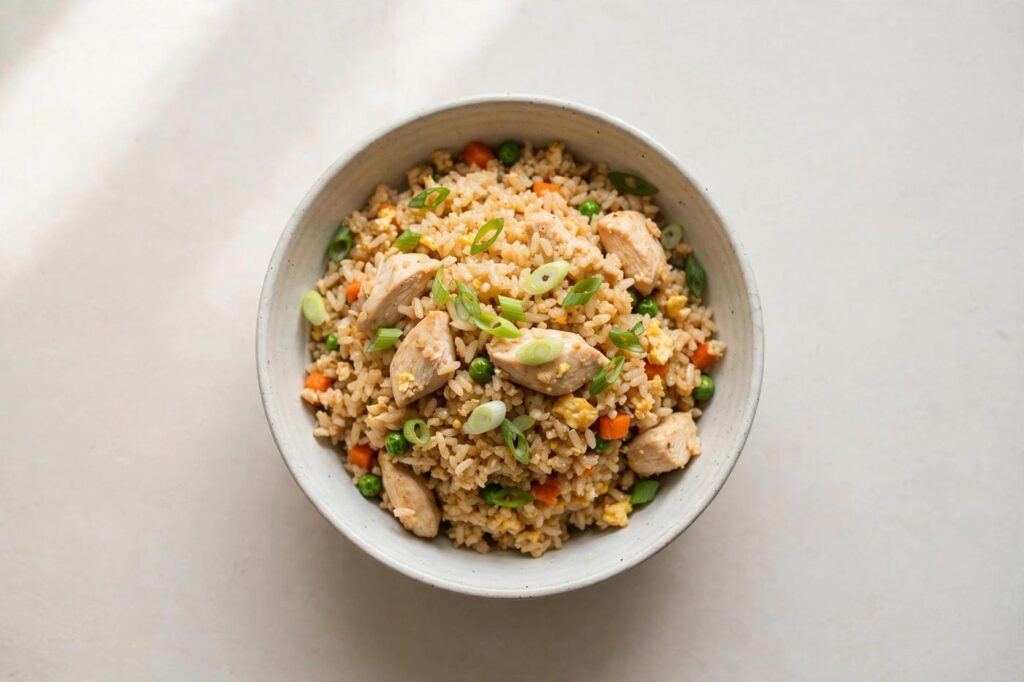
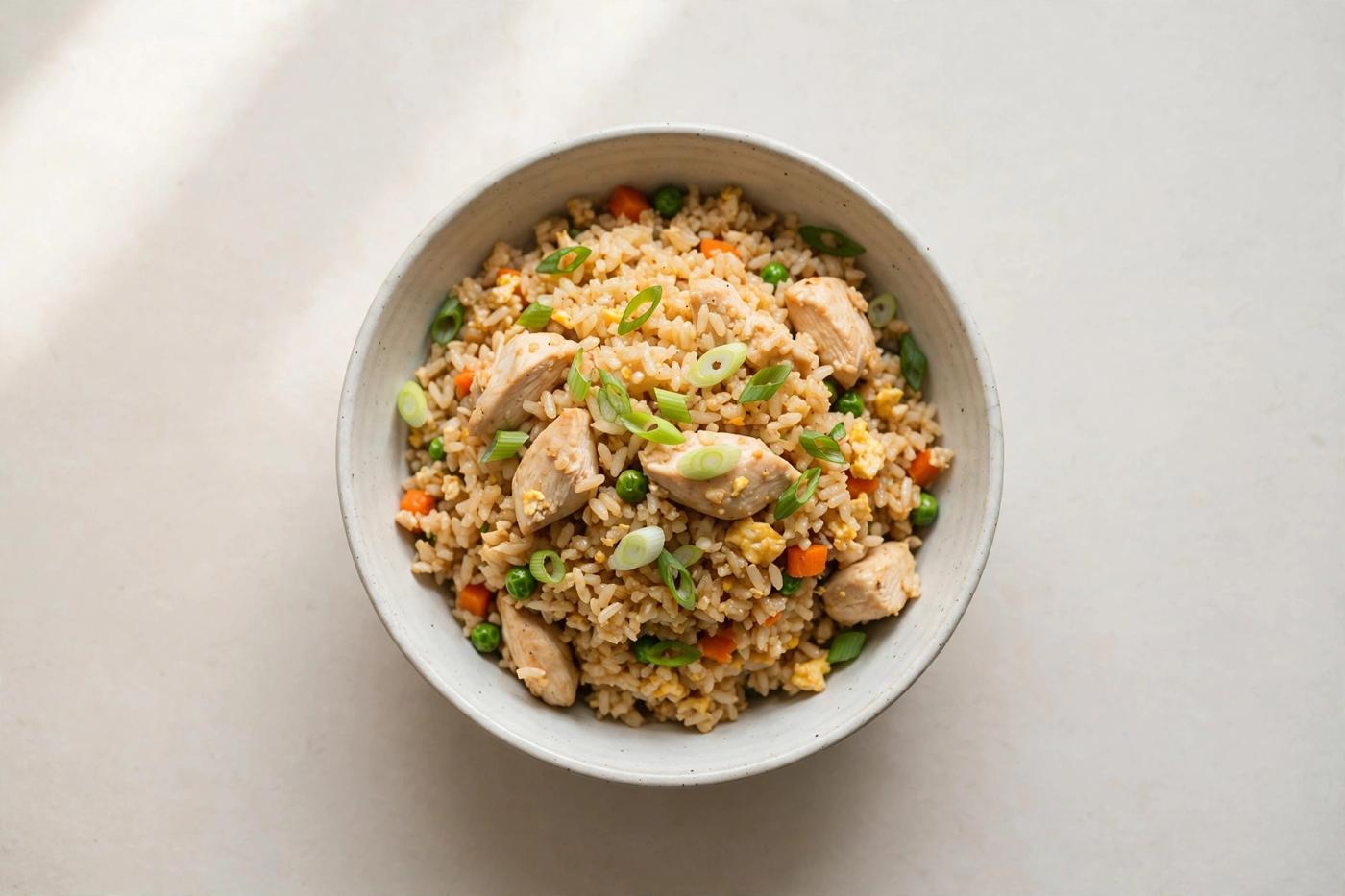
Good fried rice is one of the fastest, most satisfying dinners you can make at home. This easy fried rice comes together in about 20 minutes, uses one pan, and tastes better than most takeout. Fluffy grains of rice, tender pieces of chicken, ribbons of scrambled egg, sweet peas, and crisp carrots all get tossed in a hot pan with garlic, ginger, and soy sauce until every grain is coated and lightly toasted. It is the kind of meal that turns a quiet weeknight into something worth sitting down for.
What makes this fried rice work so well is a simple trick: day-old rice. Freshly cooked rice is soft and steamy, and it turns mushy in the pan. Rice that has chilled in the refrigerator overnight firms up, and the grains stay separate when they hit the hot oil. That is the secret behind the fluffy, distinct grains you love in restaurant fried rice. If you plan ahead by cooking rice the day before, you are already halfway to dinner.
This fried rice is endlessly flexible too. The chicken can be swapped for shrimp, turkey, or extra vegetables. The vegetables can be whatever is in your fridge. Once you learn the basic method, you will find yourself making this fried rice on repeat, because it is fast, forgiving, and always delicious.
Where Fried Rice Comes From
Fried rice dates back centuries, first appearing as a clever way to use up leftover grains. Its roots trace back to China, where cooks developed it as a smart way to use up leftover cooked rice. In a culture that wasted nothing, day-old rice was too valuable to throw away, and frying it with small bits of meat, egg, and vegetables turned leftovers into a fresh, complete meal. The most famous version, Yangzhou fried rice, comes from the city of Yangzhou and traditionally includes egg, shrimp, and diced chicken, though home cooks everywhere adapted it to what they had.
As Chinese immigrants traveled the world, fried rice traveled with them. It became a staple in Chinese American restaurants, where it evolved into the takeout classic so many people know today. Different countries made it their own along the way. Thailand has its own fragrant version with fish sauce and lime. Indonesia has nasi goreng, often topped with a fried egg. Chahan is Japan’s version, seasoned lightly with just salt and soy. Every version shares the same idea: hot pan, cooked rice, and whatever good things are on hand.
The fried rice most Americans grew up ordering is the takeout style: long grain rice, egg, peas, carrots, scallions, soy sauce, and a protein like chicken or shrimp. This recipe follows that beloved style, with a few small upgrades that make the homemade version taste even better than delivery.
The Story Behind the Dish
At its heart, fried rice is a technique more than a recipe. The method is stir frying, cooking small pieces of food very fast in a very hot pan with a little oil. The intense heat does two important things. First, it drives off surface moisture so the rice grains fry instead of steam, which gives them that lightly crisp, separate texture. Second, it creates light browning on the rice and vegetables, and that browning is where much of the flavor comes from.
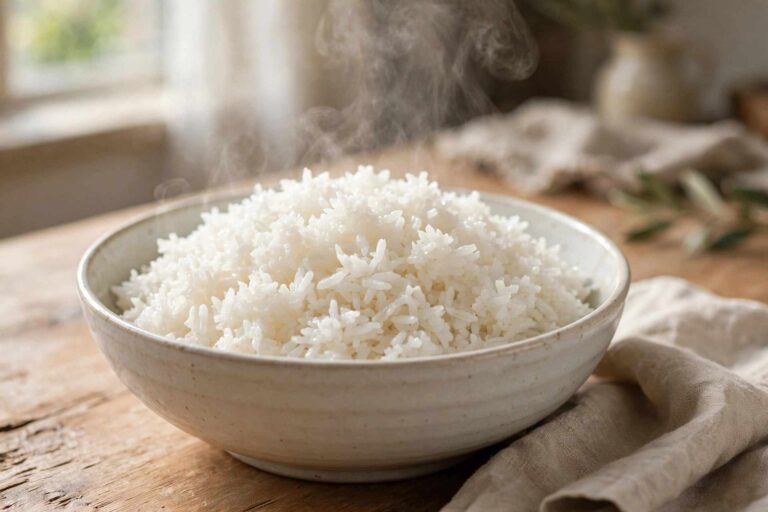
The choice of rice matters more than anything else in fried rice. Long grain white rice is the classic pick because its grains stay separate and fluffy. Jasmine rice works beautifully too and adds a gentle fragrance. The key is that the rice must be cold and at least a few hours old, ideally cooked the day before and chilled uncovered or loosely covered in the refrigerator. Chilling firms up the starches on the surface of each grain, so they do not stick together in the pan.
Soy sauce is the main seasoning in this fried rice, and it does more than add salt. It adds deep, savory flavor and gives the rice its appetizing golden brown color. A little sesame oil at the end adds nuttiness and aroma. A quick sizzle of fresh garlic and ginger in hot oil at the very beginning fills the whole dish with aroma. Together these simple seasonings create the familiar takeout flavor that makes fried rice so craveable.
What Goes Into This Fried Rice
Since the rice anchors this fried rice, it makes sense to start there. You will need about four cups of cooked long grain white rice, chilled overnight. If you only have freshly cooked rice, spread it on a baking sheet and refrigerate it for at least an hour, or even freeze it for 20 minutes, to firm it up. Chilled, dry grains are what make fried rice great more than anything else.
For the protein, boneless skinless chicken breast or thighs work wonderfully in fried rice. Cut the chicken into small, even bite size pieces so it cooks quickly and distributes well through the rice. Chicken thighs stay a little juicier, but breast works fine too. Season the pieces lightly with salt and pepper before they hit the pan. If you prefer, shrimp, diced turkey, or crumbled tofu all work with the same method.
Eggs are essential. Two or three large eggs, beaten well, get scrambled directly in the pan into soft ribbons that weave through the rice. The classic vegetables are frozen peas and diced carrots, a combination that adds sweetness, color, and a pleasant pop. Fresh is fine too, but frozen peas and carrots are convenient and work perfectly in fried rice. Sliced scallions add a fresh, mild onion bite, with the white parts cooked in and the green tops scattered over at the end.
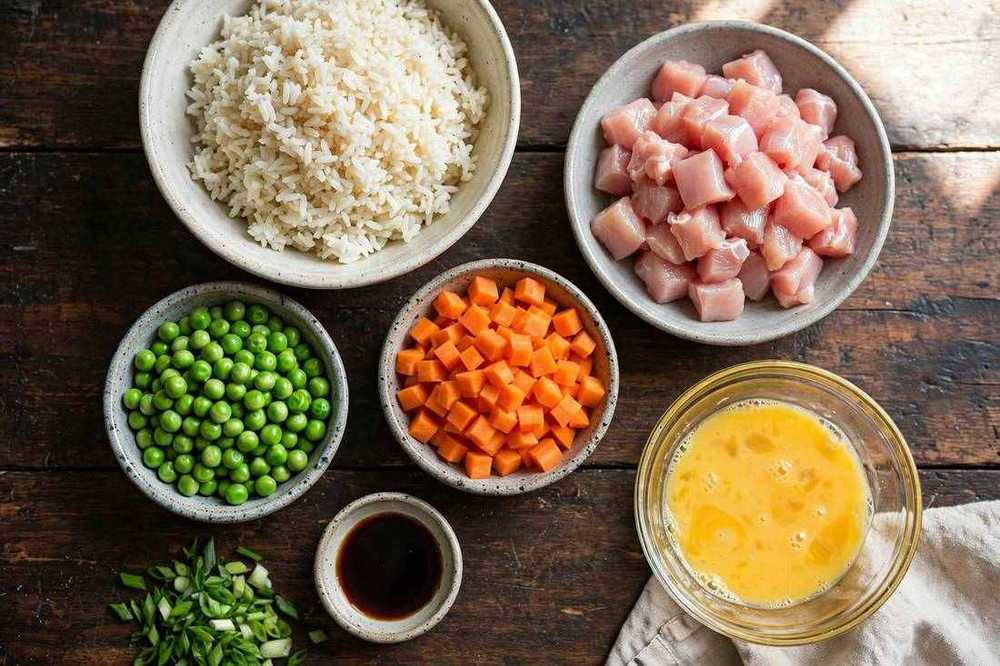
The seasoning lineup is short: soy sauce, a little sesame oil, fresh garlic, and fresh ginger. Use a regular soy sauce, not a dark or sweet one, so the flavor stays balanced and the color stays golden rather than muddy. Toasted sesame oil goes in at the very end, off the heat, because its delicate flavor fades with high heat. Fresh garlic and ginger make a noticeable difference over dried, so grate or mince them right before cooking.
How to Make Fried Rice
Great fried rice is all about preparation, because once the pan is hot, everything moves fast. Start by having every ingredient measured, chopped, and within arm’s reach of the stove. Cooks call this mise en place, and for stir frying it is not optional. You will not have time to chop scallions while the rice is in the pan. Get the cold rice, beaten eggs, diced chicken, vegetables, garlic, ginger, and soy sauce all lined up before you turn on the heat.
Heat a large skillet or wok over high heat until it is very hot, then add a tablespoon of oil with a high smoke point, like vegetable or avocado oil. Swirl to coat. Add the diced chicken in a single layer and let it sit undisturbed for a minute so it browns, then stir fry for three to four minutes until cooked through and golden at the edges. Remove the chicken to a plate. This two stage approach keeps the chicken juicy instead of steaming it along with everything else.
Read Also: Egg Roll in a Bowl
Add another drizzle of oil to the hot pan, then pour in the beaten eggs. Let them set for about 20 seconds, then scramble them into soft ribbons with your spatula and remove them to the plate with the chicken. Next, add the carrots and the white parts of the scallions with a pinch of salt. Stir fry for two minutes until the carrots start to soften, then add the peas, garlic, and ginger. Cook for just 30 seconds more until fragrant. Garlic burns fast, so keep everything moving.
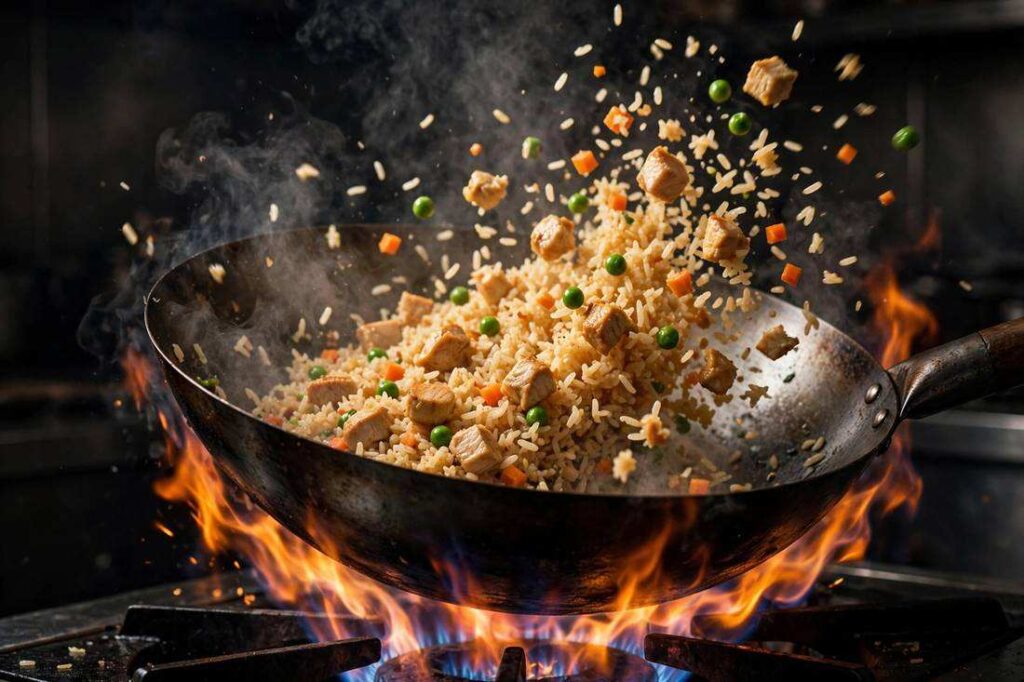
Now the main event. Add a little more oil and tip in all the cold rice, breaking up any clumps with your spatula. Spread the rice across the hot pan and let it sit for a minute without stirring so the bottom grains get a little crisp, then toss and repeat. After three or four minutes over the heat, the grains should be warmed through with light golden coloring here and there. Drizzle the soy sauce around the edges of the pan rather than directly onto the rice. It will sizzle and caramelize on the hot metal, adding deeper flavor to this fried rice.
Return the chicken and eggs to the pan and toss everything together for a final minute. Drizzle over the sesame oil, scatter the green scallion tops, and give it one last toss. Taste a spoonful. It should be savory, lightly smoky, and well seasoned. If it needs more punch, add another small splash of soy sauce. Serve this fried rice immediately, while it is steaming hot.
Tips for the Best Fried Rice
Great fried rice comes down to technique. These six tips make the difference every time.
1. Heat the pan until it is truly hot. Get the wok or skillet screaming hot first, adding the oil only once a flick of water dances and vanishes on the surface. Fierce heat fries the grains instead of steaming them, building the crisp edges that define great fried rice.
2. Do not overcrowd the pan. Too much rice at once drops the pan temperature, and the grains steam in their own moisture. Working with a smaller skillet? Split the rice into two rounds instead. A single layer with room to move always beats a heaped pan.
3. Sauce around the edges, not on top. Drizzle the soy sauce around the hot perimeter of the pan instead of onto the rice. It hits the hot metal, sizzles, and caramelizes before you toss it through, adding deeper flavor than raw sauce poured over the top.
4. Use day-old rice. As cooked rice chills, the starches firm up and each grain’s surface dries out. Cold, firm grains stay separate in the pan and fry up fluffy. Fresh, warm rice is soft and wet, and collapses into mush in the pan.
5. Scramble the eggs separately. Cook the beaten eggs alone in the hot pan into soft, thin ribbons, then remove them before they overcook. Eggs cooked with the rice steam into soggy clumps. Ribbons folded back in at the end look and taste better.
6. Finish with sesame oil off the heat. Toasted sesame oil has a delicate, nutty aroma that fades under high heat. Drizzle it over the finished fried rice after the pan leaves the burner and toss once. Scatter the green scallion tops at the same time so they stay bright.
Read Also: For more easy grain dinners, browse our rice recipes for simple sides and mains.
Fried Rice Nutrition
As a one-bowl meal, this fried rice is nicely balanced. Chicken and egg supply plenty of filling protein, peas and carrots contribute fiber and color, and the rice delivers lasting energy. Made at home with less oil than takeout, it is a lighter choice too. This is general food information, not medical advice.
Frequently Asked Questions
Can freshly cooked rice go into this fried rice?
Yes, but chill it first. Spread hot rice in a thin layer on a baking sheet and refrigerate at least one hour, or freeze 20 minutes, to firm and dry the grains. Better still, cook the rice a day ahead and keep it chilled until cooking time. Skipping this step risks gummy rice.
What protein works best in fried rice?
Chicken is the classic weeknight pick because it cooks fast and soaks up the soy sauce. Shrimp is excellent too, needing only two to three minutes. The same technique works equally well with diced turkey, crumbled tofu, or an extra egg. Cook the protein first and set it aside so it stays juicy.
What keeps my fried rice from getting mushy?
Three rules always prevent mushy fried rice. Start with cold, day-old rice so the grains are firm and dry. Maintain a very hot pan so the liquid escapes as vapor rather than steaming the grains. And let the rice sit undisturbed a minute at a time so the bottom layer gets lightly crisp.
Can this fried rice be prepped ahead of time?
It tastes best fresh from the pan, but prep everything in advance. Cook and chill the rice a day early, chop the vegetables, dice the chicken, and beat the eggs, storing each separately in the refrigerator. At dinner time the actual cooking takes about 15 minutes, so the meal still feels effortless on a busy weeknight.
Can I make this fried rice gluten-free?
Yes, with one swap. Regular soy sauce contains wheat, so use tamari, a similar savory sauce made without wheat, in the same amount. The rice, chicken, eggs, and vegetables contain no gluten ingredients. If gluten matters in your kitchen, verify the tamari bottle is labeled certified gluten-free.
How long does leftover fried rice last?
Keep any leftovers in a sealed container in the refrigerator and finish them within three to four days. Reheat in a hot skillet with a tiny drizzle of oil rather than the microwave, which makes the grains soggy. If the grains dried out, a splash of water brings them back. Refrigerate promptly. Never leave cooked rice sitting out more than two hours.
Conclusion
This easy fried rice proves the best weeknight dinners do not need to be complicated. With cold rice, a hot pan, and about 20 minutes, you get a meal that beats takeout on flavor, freshness, and value. Learn the method once, and it becomes a flexible template you will use for years.
So cook a pot of rice tonight, chill it overnight, and make this fried rice tomorrow. Dinner hits the table before the takeout menu even loads.
Read Also: For another cozy comfort classic, try our easy meatloaf recipe.
Easy Chicken Fried Rice
Ingredients
Method
- Line up every ingredient near the stove. Keep the rice cold, the eggs beaten, and the vegetables chopped before you turn on the heat.
- Heat a large skillet or wok over high heat until very hot. Add 1 tablespoon oil, swirl to coat, and add the chicken in a single layer. Sear 1 minute, then stir fry 3 to 4 minutes until cooked through and golden. Remove to a plate.
- Add a drizzle of oil to the hot pan. Pour in the beaten eggs, let set 20 seconds, then scramble into soft ribbons. Remove to the plate with the chicken.
- Add the carrots and scallion whites with a pinch of salt. Stir fry 2 minutes, then add the peas, garlic, and ginger. Cook 30 seconds more, stirring constantly.
- Add a little more oil and tip in all the cold rice, breaking up clumps with your spatula. Spread it across the pan and let it sit 1 minute so the bottom crisps, then toss. Repeat for 3 to 4 minutes until hot with lightly golden spots.
- Drizzle the soy sauce around the edges of the pan so it sizzles and caramelizes, then toss through the rice.
- Return the chicken and eggs to the pan and toss for a final minute. Drizzle over the sesame oil, scatter the green scallion tops, and toss once more.
- Taste and add another splash of soy sauce if needed. Serve the fried rice immediately while steaming hot.