Snickerdoodle Cookies: Soft Chewy Cinnamon Sugar Treats
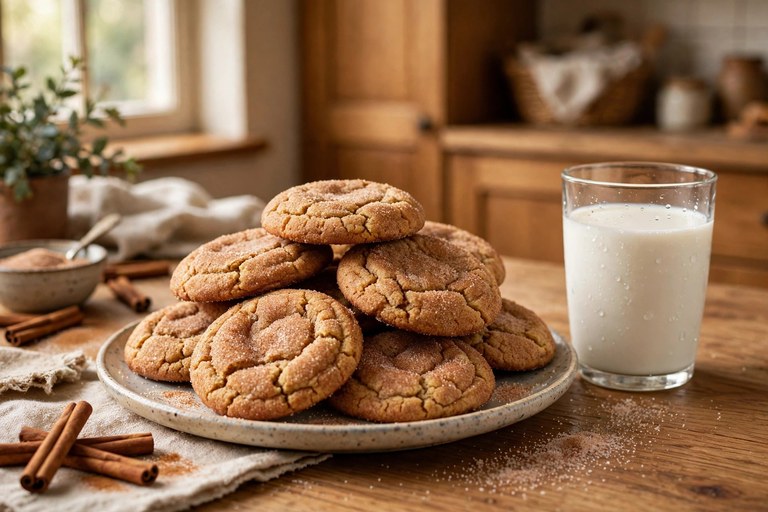
Snickerdoodle cookies are the kind of bake that fills a kitchen with a warm, sweet smell before the first tray even leaves the oven. They have crisp edges, a soft and slightly chewy center, and a crackled top rolled in cinnamon sugar. They are simple enough for a weeknight bake and special enough for a holiday tray, a bake sale, or a plate left for guests. One batch rarely lasts long, because people tend to reach for a second cookie while the first one is still warm.
What sets snickerdoodle cookies apart is balance. They are sweet without being heavy, spiced without tasting sharp, and tender without falling apart. The cinnamon sugar coating gives each bite a light crunch and a warm flavor that pairs well with milk, coffee, or tea. This guide covers where snickerdoodle cookies came from, how the dough should feel, how to shape and bake them well, and how to store them so they stay soft. You will also find practical tips for common problems, such as flat cookies, dry centers, and coating that slides off.
Introduction
Snickerdoodle cookies earn a place in a regular baking rotation because they use pantry staples and come together fast. Butter, sugar, eggs, flour, and a few seasonings are the core of the dough. There is no chilling step that takes hours, no fussy filling, and no special cutter. You mix, roll, coat, and bake. In under an hour, you can have a full tray cooling on the counter, which makes snickerdoodle cookies a reliable choice when you need something homemade without a long plan.
Another reason snickerdoodle cookies stay popular is how well they suit different occasions. They work for lunchboxes, after school snacks, cookie swaps, and dessert tables. Kids like the sweet cinnamon coating and the soft center. Adults like the old fashioned flavor and the way the cookies stay tender the next day when stored well. The recipe also scales easily. You can double it for a crowd or halve it for a small household, and the method stays the same. That flexibility, plus a flavor most people already love, is why snickerdoodle cookies have lasted so long.
Origin
The story of snickerdoodle cookies starts in New England, where early American cooks baked simple sugar cookies and flavored them with the spices they had on hand. Cinnamon was prized, and a coating of cinnamon and sugar gave a plain cookie a warmer taste and a pretty, crackled surface. Over time, one version stood out because it used cream of tartar in the dough. That ingredient gave the cookie its soft texture and a faint tang that set it apart from a plain sugar cookie. The name itself is thought to come from a German word for a snail shaped pastry, though cooks in America soon used it for this round, cinnamon coated cookie.
By the late nineteenth and early twentieth centuries, snickerdoodle cookies had become a familiar entry in home cookbooks and community recipe collections. They were the kind of recipe passed from one kitchen to another, written on cards and adjusted by each cook. Some cooks added a little more cinnamon. Others baked them a minute longer for crisper edges. The core stayed the same: a soft butter dough, a tang from cream of tartar, and a generous roll in cinnamon sugar before baking. That simple formula helped the cookie travel across the country and stay in regular use.
Traditional Background
Traditionally, snickerdoodle cookies were a home bake rather than a bakery showpiece. It was made for family suppers, church gatherings, school events, and holiday tables, where a large batch could feed many people from a short list of ingredients. The dough was mixed by hand or with a simple mixer, shaped into balls, and rolled in cinnamon sugar. No frosting was needed, and no decoration was required beyond the natural cracks that form on top during baking. That plain, honest look was part of its charm.
The classic version also reflected the cooking habits of its time. Cooks used what they had, measured with care, and baked in batches so the oven stayed busy. A tray went in, another was shaped, and the finished cookies cooled on racks or on clean cloths. The cookies were often stored in tins, which kept them soft for days. Even now, that same rhythm works well. Baking in batches lets you watch each tray closely, and a tin or airtight container keeps the texture right. The tradition is less about strict rules and more about a reliable, repeatable bake that tastes like home.
Ingredients
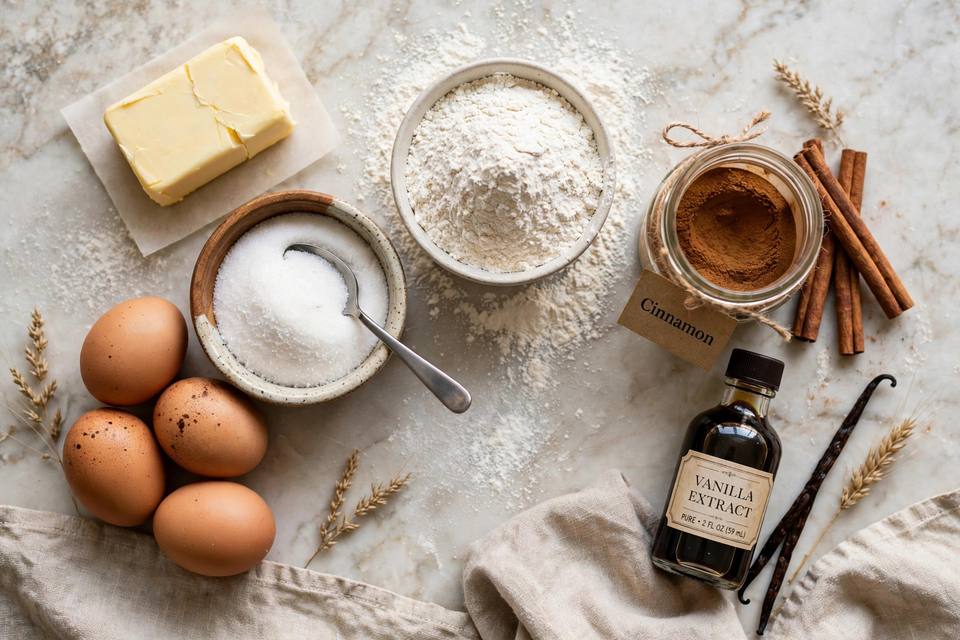
The dough starts with softened butter, which gives richness and helps the cookies spread just enough. Granulated sugar sweetens the dough and also forms part of the coating. Brown sugar is sometimes used in part for extra moisture, but a classic version relies mainly on white sugar for a clean, crisp edge. Eggs bind the dough and add tenderness, while vanilla adds a warm background flavor that supports the cinnamon without taking over. Flour gives structure, and it should be measured lightly so the dough stays soft rather than stiff.
Cream of tartar is the ingredient that makes snickerdoodle cookies different from a plain sugar cookie. It reacts with baking soda to give lift and a soft, pillowy texture, and it adds the faint tang that longtime fans expect. Without it, the cookie would taste flatter and bake up denser. Salt sharpens the other flavors and keeps the sweetness from tasting one note. For the coating, cinnamon and sugar are mixed in a small bowl. The cinnamon should be fresh and fragrant, because it is the main flavor on the outside of the cookie. A good coating uses enough cinnamon to taste warm and clear, but not so much that it turns bitter.
Method
The method starts with creaming the butter and sugar until the mixture looks pale and fluffy. This step takes a couple of minutes and matters more than it seems, because it works air into the dough and helps the cookies rise evenly. Add the eggs one at a time, mixing after each, then stir in the vanilla. In another bowl, stir together the flour, cream of tartar, baking soda, and salt until evenly mixed. Add the dry mixture to the butter mixture in two parts, mixing just until no dry streaks remain. Overmixing at this stage can make the cookies tough, so stop as soon as the dough comes together.
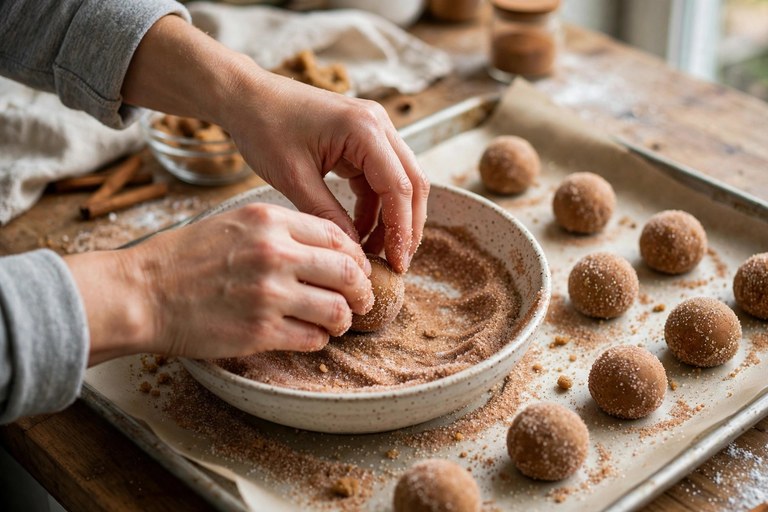
Next, shape the dough. Scoop even portions, about the size of a walnut, and roll each one into a smooth ball between your palms. Roll each ball in the cinnamon sugar mixture until it is coated all over. Place the balls on a lined baking sheet with space between them, because they will spread as they bake. Bake in a preheated oven until the edges look set and the centers still look slightly soft. That soft center is the goal. The cookies will firm up as they cool, so pulling them a minute early is better than baking them until they look fully firm in the oven.
Tips
Use butter that is soft but still cool to the touch. Butter that is too warm or melted will make the dough spread too much and the cookies will turn thin. If your kitchen is warm, chill the shaped balls for fifteen minutes before baking. That short chill helps the cookies hold their shape and keeps the centers thick. Also, measure flour by spooning it into the cup and leveling it off, rather than scooping straight from the bag. Scooping packs the flour down and can add enough extra to dry out the dough.
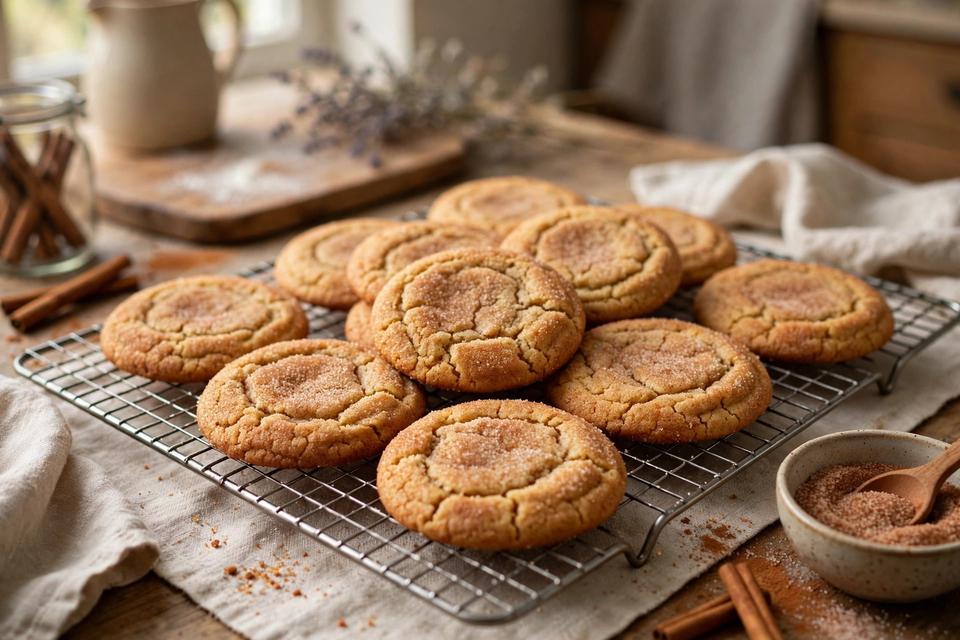
Do not skip the coating, and do not skimp on it. The cinnamon sugar layer is what gives snickerdoodle cookies their signature look and flavor. Roll each ball well, and if the coating looks thin, roll it a second time. Bake one test tray first if you are using a new oven or a new pan, so you can adjust the time by a minute if needed. Cool the cookies on the pan for five minutes before moving them to a rack. They are fragile when hot, and that short rest lets them set without losing their soft center.
Read Also: For a holiday table spread, browse these easy thanksgiving side dishes to pair with your main meal.
Nutritional Values
Snickerdoodle cookies are a treat, and their nutrition reflects that. A typical cookie made from this dough gives energy from flour and sugar, fat from butter, and a small amount of protein from egg and flour. Cinnamon adds flavor with almost no calories, and the coating is thin, so it does not change the total much. One or two cookies with a drink make a satisfying snack. A larger serving, especially alongside other desserts, adds up quickly, so portion size matters more than any single ingredient.
You can make small changes without losing the classic taste. Using a little less sugar in the coating, or baking slightly smaller cookies, gives you a lighter portion while keeping the same flavor. Serving the cookies with fruit or a glass of milk can round out a snack and help you stop at one or two. There is no need to change the core dough to enjoy snickerdoodle cookies as part of a normal eating pattern. Keep them as an occasional sweet, store them well, and enjoy them fresh when the texture is at its best.
Utensils
You need only basic tools for this bake. A large mixing bowl, a hand mixer or stand mixer, a whisk, a spatula, and measuring cups and spoons cover the mixing. A cookie scoop helps keep the balls even, which helps them bake evenly, though two spoons work fine. You will also need baking sheets lined with parchment paper, a small bowl for the cinnamon sugar coating, and a wire rack for cooling. Parchment keeps the cookies from sticking and makes cleanup easy, and a rack lets air move under the cookies so the bottoms stay crisp rather than soft from trapped steam.
A kitchen timer is useful here, because a minute can change the texture from soft to dry. An oven thermometer is helpful too if your oven runs hot or cool, since the baking time in a recipe assumes a true oven temperature. No special pans or cutters are needed, and the whole job fits on one counter. Wash the scoop and bowls while the first tray bakes, and the kitchen will be nearly clean by the time the last tray cools.
Read Also: For a cool picnic side, try this creamy macaroni salad that travels well and feeds a crowd.
FAQs
How long do snickerdoodle cookies stay fresh?
Snickerdoodle cookies stay soft for three to four days when stored in an airtight container at room temperature. Place a slice of bread in the container if you like, since it helps keep the cookies moist, and replace the slice when it dries out. Keep the container away from heat and sunlight. If the cookies start to dry out, warm one briefly in the microwave for a few seconds to soften it again.
Can I freeze the dough?
Yes, you can freeze the dough with good results. Shape the dough into balls, roll them in cinnamon sugar, and freeze them on a tray until firm. Then move the frozen balls to a freezer bag and store them for up to three months. Bake them straight from frozen, adding two to three minutes to the baking time. This is a handy way to keep fresh cookies ready without baking a full batch at once.
Why did my cookies turn out flat?
Flat cookies usually come from butter that was too soft, dough that was overmixed, or an oven that was not fully preheated. Warm butter spreads fast, so use cool, soft butter and chill the dough briefly if your kitchen is warm. Measure flour lightly, and make sure the baking sheet is cool before you load the next tray. A hot sheet starts melting the dough before it reaches the oven, which leads to thin, wide cookies.
Do I need cream of tartar?
Cream of tartar is worth using for the classic result. It gives the cookie its soft texture and faint tang, and it works with baking soda for lift. If you leave it out and use baking powder instead, the cookie will still bake, but it will taste more like a plain sugar cookie and lose the character that makes snickerdoodle cookies distinct. For the best flavor and texture, keep cream of tartar in the dough.
Can I make snickerdoodle cookies ahead for a party?
Yes, snickerdoodle cookies are a good make ahead choice. Bake them a day ahead and store them in an airtight container, or freeze the shaped dough balls and bake them on the day of the party. Freshly baked cookies smell wonderful when guests arrive, and baking from frozen dough takes only a few extra minutes. Keep a little extra cinnamon sugar on hand in case you want to roll a second batch.
Conclusion
Snickerdoodle cookies work because it is simple food done well: soft butter dough, a clear cinnamon flavor, a crackled sugar coating, and a bake that stops while the center is still tender. Get the butter temperature right, measure the flour lightly, coat each ball well, and pull the tray when the edges are set. Those four habits will give you a batch that looks good, tastes warm and sweet, and stays soft for days. Keep the classic version in your rotation, then try one small change at a time, such as a little more cinnamon in the coating or a slightly smaller scoop for lunchboxes, until you find the version your household asks for most.
Snickerdoodle cookies also reward a calm pace in the kitchen. Mix without rushing, shape the balls evenly, and let the cookies rest on the pan before moving them. That care shows in the finished tray, in even sizes, golden edges, and soft centers that hold together when you pick one up. Bake a batch for a quiet evening at home or for a table full of guests, and keep the recipe close. It is the kind of bake you will return to again and again.
Read Also: For a sweet finish to a summer meal, make these fresh strawberry desserts with ripe berries and cream.
Snickerdoodle Cookies
Ingredients
Method
- Preheat the oven to 350 degrees F and line baking sheets with parchment paper.
- Beat the softened butter and 1 and 1/2 cups sugar in a large bowl until pale and fluffy.
- Beat in the eggs one at a time, then stir in the vanilla extract.
- Whisk the flour, cream of tartar, baking soda, and salt in a separate bowl.
- Add the dry mixture to the butter mixture in two parts and mix just until combined.
- Stir the 1/4 cup sugar and cinnamon together in a small bowl for the coating.
- Scoop the dough into walnut sized balls and roll each ball in the cinnamon sugar coating.
- Place the coated balls on the prepared baking sheets with space between them.
- Bake for 10 to 12 minutes, until the edges are set and the centers look slightly soft.
- Cool the cookies on the pan for 5 minutes, then move them to a wire rack to cool fully.